If you own a home anywhere in the Niagara Region, you already know your property doesn’t get an easy ride. One month you’re raking soggy leaves in the rain, the next you’re chipping ice off the front steps, and by July you’re back out there wrestling with the lawn before the heat sets in. It’s a lot. And if you’re like most homeowners, you’re probably tackling maintenance the same way most people tackle a messy garage: only when it becomes impossible to ignore.
That reactive approach is exactly what ends up costing people the most money. A cracked downspout you meant to fix “eventually” can turn into a flooded basement. A furnace filter you forgot to swap can shorten the life of your whole HVAC system. This is where a proper year-round property maintenance checklist earns its keep. It turns a long list of vague, anxiety-inducing “someday” tasks into a simple, seasonal rhythm you can actually follow.
In this guide, we’re walking you through a complete year-round property maintenance checklist built specifically for homeowners and property managers across Niagara Falls, St. Catharines, Welland, Fort Erie, Niagara-on-the-Lake, Thorold, and Port Colborne. We’ll cover what to do each season, why it matters, the mistakes we see homeowners make over and over, and when it makes more sense to call in a professional crew instead of spending your Saturday on a ladder.
Whether you own a century home in Niagara-on-the-Lake, a newer build in Welland, or a rental property you manage from a distance, the underlying logic is the same: small, consistent effort spread across the year beats one exhausting weekend of catch-up. Bookmark this page, save it to your notes, or print it out and stick it on the fridge. However you use it, treat it as a living reference you come back to every few months rather than something you read once and forget.
Why a Year-Round Property Maintenance Checklist Matters in Niagara
Before we get into the task-by-task breakdown, it helps to understand why this region in particular demands a more disciplined approach than a generic “spring cleaning” list you’d find online.
Niagara’s Climate Puts Extra Stress on Your Property
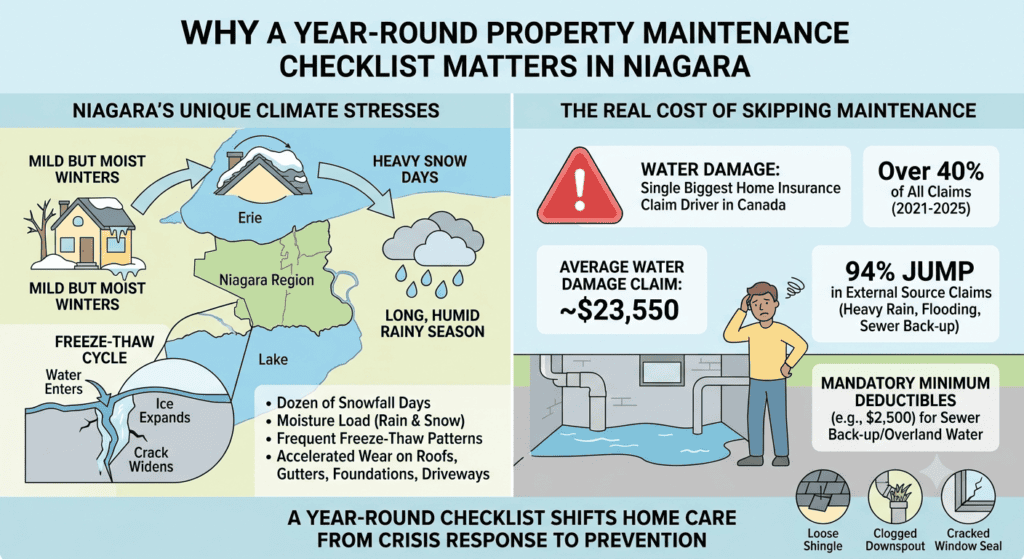
Niagara Falls sits in a genuinely unusual microclimate. The Niagara Escarpment and the region’s position between Lake Erie and Lake Ontario give the Peninsula milder winters than most of Southern Ontario, but that doesn’t mean your property gets off easy. The area still racks up dozens of snowfall days between late fall and spring, along with a long, humid rainy season that stretches through most of the year. That kind of moisture load, freeze-thaw cycling, and heavy snow accumulation is precisely what wears down roofs, gutters, foundations, and driveways faster than homeowners expect.
That same freeze-thaw pattern – where temperatures hover around freezing and swing back and forth rather than staying reliably cold – is actually harder on a home than a deep, consistent winter. Water gets into small cracks, freezes, expands, and widens the crack. Do that dozens of times a season and you’ve got a real problem by spring.
The Real Cost of Skipping Maintenance
Here’s the part that should get your attention: water damage has become the single biggest driver of home insurance claims in Canada. Water damage accounted for more than 40% of all home insurance claims in the country between 2021 and 2025, and claims tied to external sources like heavy rain, overland flooding, and sewer back-up jumped 94% in just one year. Insurance industry data also puts the average cost of a water damage claim at roughly $23,550 – a number that makes a $150 gutter cleaning look like the bargain of the century.
It gets worse for anyone hoping to just “let insurance handle it.” Some major Canadian insurers have introduced a mandatory minimum deductible of $2,500 for water damage claims tied to sewer back-up and overland water coverage, meaning a flooded basement can now cost you thousands out of pocket before your policy even kicks in. A consistent, seasonal approach to property upkeep is no longer just about curb appeal – it’s genuinely protective of your finances.
This is the whole point of a year-round property maintenance checklist: it shifts your home care from crisis response to prevention, catching small issues (a loose shingle, a clogged downspout, a cracked seal around a window) before they become five-figure repairs.
Property Maintenance Trends Shaping 2026
A few shifts happening across the Canadian property and insurance world are making a disciplined year-round property maintenance checklist even more relevant right now, not just a nice-to-have.
Insurers are getting stricter about roof age and upkeep. As claims climb, several major carriers have started tightening requirements around roof maintenance and age before they’ll issue or renew a policy at a reasonable rate. A well-documented maintenance history – inspections, repairs, replacement dates – can make a real difference at renewal time.
Deductibles for water-related claims keep rising. As mentioned above, minimum deductibles of $2,500 for sewer back-up and overland water claims are becoming standard rather than the exception. That shifts more of the financial burden for smaller, preventable incidents directly onto homeowners, which makes proactive drainage, grading, and gutter maintenance more valuable than ever.
Extreme weather events are becoming less predictable. Insurance data shows Canada absorbed a record-breaking year of weather-related insured losses recently, and Niagara isn’t immune to sudden, intense summer storms even with its comparatively mild winters. A property that’s well-maintained year-round simply handles a surprise downpour or wind event better than one that’s been neglected.
More homeowners are bundling services rather than juggling multiple contractors. We’ve seen a clear shift toward property owners wanting one team that handles lawn care in summer and snow removal in winter, rather than switching providers every six months. It’s simpler, and it means whoever is maintaining your property actually knows its history.
How to Use This Year-Round Property Maintenance Checklist
Break It Down by Season
Trying to do “all the home maintenance” in one weekend is how most checklists end up abandoned in a junk drawer. The better approach is to break tasks into four seasonal blocks that match what your property actually needs at that time of year. We’ve structured this guide that way – spring, summer, fall, and winter – so you can tackle a manageable batch of tasks every few months instead of an overwhelming pile once a year.
DIY vs. Calling in the Pros
Not every task on this list needs a professional. Swapping a furnace filter or testing a smoke detector takes five minutes and zero special equipment. But some jobs – think roof inspections, gutter cleaning on a two-storey home, or snow and ice management on a commercial parking lot – carry real safety risk or require equipment and expertise most homeowners simply don’t have. We’ll flag those as we go, because knowing when to pick up the phone instead of the ladder is part of doing maintenance properly.
A good rule of thumb: if a task involves working at height, handling large volumes of snow or ice on a schedule you can’t always control, or diagnosing something structural, it’s worth pricing out professional help even if you’re capable of doing it yourself. The value isn’t just the physical labour, it’s the time you get back and the peace of mind that comes from knowing the job was done to a consistent standard.
Spring Property Maintenance Checklist (March–May)
Spring in Niagara is where winter’s damage becomes visible. Melting snow reveals what the cold months left behind, so this is prime time to inspect, repair, and reset your property before the growing season kicks into gear.
Exterior Spring Tasks
Roof & Gutters
Start from the top down. Your roof took the brunt of winter’s ice and snow, so a visual inspection now can save you from a much bigger repair bill later.
- Look for missing, cracked, or curling shingles
- Check flashing around chimneys, vents, and skylights for gaps
- Clear gutters and downspouts of leaves, seeds, and winter debris
- Confirm downspouts direct water at least six feet away from your foundation
- Watch for granule buildup in gutters, a sign your shingles are aging
Clogged gutters are one of the most common (and most preventable) causes of basement flooding and foundation damage. If your home has more than one storey, this is a job worth handing to a professional gutter cleaning Niagara Falls crew rather than risking a fall.
Lawn & Landscaping Wake-Up
- Rake up matted, dead grass (thatch) left over from winter
- Aerate compacted soil to help roots breathe
- Apply a spring fertilizer suited to Niagara’s clay-heavy soils
- Edge garden beds and walkways
- Prune dead or damaged branches from shrubs and trees
- Inspect for winter damage to fences, retaining walls, and outdoor structures
Interior Spring Tasks
- Test smoke and carbon monoxide detectors and replace batteries
- Book an HVAC tune-up before the cooling season starts
- Inspect for signs of moisture, mold, or musty smells in the basement
- Check window and door seals for winter-caused cracking
- Clean or replace furnace and air filters
- Review your home insurance policy for any gaps in water damage coverage
Summer Property Maintenance Checklist (June–August)
Summer is when your outdoor spaces get the most use, so this season’s maintenance is largely about keeping your landscaping healthy and your property functioning efficiently through the heat.
Lawn Care & Landscaping Upkeep
- Mow regularly, adjusting height as temperatures rise to avoid scorching the grass
- Water deeply and less frequently to encourage strong root growth
- Watch for signs of pest damage or lawn disease
- Mulch garden beds to retain moisture and suppress weeds
- Trim hedges and shrubs to maintain shape and airflow
- Deadhead flowering plants to encourage continued blooming
Outdoor Living & Structural Checks
- Inspect and reseal decks or patios showing signs of wear
- Check outdoor faucets, hoses, and irrigation systems for leaks
- Clean out window wells and basement drains before summer storms
- Power wash siding, walkways, and driveways
- Inspect fencing and gates for rot or rust
Cooling & Energy Efficiency
- Replace HVAC filters monthly during peak use
- Check window and door weather stripping for drafts
- Clean dryer vents to reduce fire risk and improve efficiency
- Test sump pumps ahead of summer thunderstorms – a two-minute check that can prevent a flooded basement
Fall Property Maintenance Checklist (September–November)
Fall is arguably the most important season on this year-round property maintenance checklist. Everything you do here determines how well your property survives the winter that follows.
Preparing Your Landscape for Winter
- Rake and remove fallen leaves regularly to prevent lawn suffocation
- Aerate and overseed thin patches before the ground freezes
- Apply a fall fertilizer to strengthen roots through winter
- Cut back perennials and clear dead annuals from garden beds
- Wrap or relocate sensitive plants and shrubs
- Drain and store garden hoses; shut off exterior water lines
Weatherproofing the Exterior
- Clean gutters again once leaf-fall is complete
- Inspect roof for loose shingles before the first snowfall
- Seal cracks in driveways and walkways before freeze-thaw cycles widen them
- Check caulking around windows and doors, resealing where needed
- Inspect and service your snow removal equipment, or line up a professional snow removal St. Catharines provider before the first storm hits
- Store or cover outdoor furniture and equipment
Interior Fall Prep
- Have your furnace inspected and serviced
- Reverse ceiling fans to push warm air downward
- Check attic insulation for gaps that could cause heat loss or ice damming
- Test carbon monoxide detectors again as heating systems come back online
- Stock up on winter safety supplies: ice melt, a shovel, and emergency lighting
Winter Property Maintenance Checklist (December–February)
Winter maintenance in Niagara is less about big projects and more about consistent, ongoing vigilance. This is the season where neglect turns into real liability – both for your property and for anyone walking on it.
Snow & Ice Management
- Clear driveways, walkways, and steps promptly after every snowfall
- Apply ice melt or sand to reduce slip-and-fall risk
- Keep an eye on roof snow load after heavy storms
- Watch for ice dam formation along roof edges and gutters
- For commercial or multi-unit properties, arrange scheduled snow removal to reduce liability exposure
Preventing Frozen Pipes and Ice Dams
- Let faucets drip slightly during extreme cold snaps to keep pipes from freezing
- Insulate exposed pipes in unheated areas like garages and crawl spaces
- Keep your thermostat at a consistent temperature, even when you’re away
- Know where your main water shut-off valve is – and make sure everyone in the household does too
Indoor Winter Checks
- Monitor humidity levels to prevent condensation and mold growth
- Check for drafts around windows, doors, and outlets
- Test your sump pump and backup battery
- Clean and inspect your fireplace or wood stove before heavy use
- Replace HVAC filters at least once during the season
Monthly Maintenance Tasks You Shouldn’t Skip
Beyond the seasonal work, a handful of tasks deserve a monthly check regardless of the time of year. Building these into a simple routine – even a recurring calendar reminder – makes the seasonal jobs far less overwhelming.
- Test smoke and carbon monoxide alarms
- Check for slow drains or signs of moisture around sinks and toilets
- Inspect visible plumbing fixtures and water heater temperature settings
- Check electrical cords and outlets for damage
- Walk the exterior perimeter looking for new cracks, pooling water, or pest activity
- Clean or swap HVAC filters as needed
Common Property Maintenance Mistakes Niagara Homeowners Make
We see the same handful of mistakes repeat themselves across the properties we service every year. Avoiding them alone will put you ahead of most homeowners in the region.
- Waiting until a problem is visible. By the time you can see water staining on a ceiling, the damage has usually been building for weeks or months behind the drywall, inside the insulation, or along a structural beam you can’t easily inspect yourself. Visible damage is almost always the tail end of a problem, not the beginning.
- Ignoring gutters until they overflow. Clogged gutters are behind a huge share of basement flooding and foundation issues we get called out for, and the fix is almost always cheaper than people expect. A short seasonal cleaning appointment is a fraction of the cost of foundation waterproofing after the fact.
- Skipping the fall gutter cleaning. Homeowners often clean gutters in spring and forget that fall leaf-drop refills them right before the snow arrives.
- DIY-ing snow and ice removal on commercial properties. Slip-and-fall liability is a real risk that a scheduled professional service is built to manage.
- Forgetting the “boring” interior checks. Furnace filters and smoke detector batteries aren’t exciting, but they prevent real emergencies.
- Assuming insurance has you covered. With rising deductibles for water-related claims, prevention is far cheaper than relying on a policy payout.
- Treating landscaping as purely cosmetic. Overgrown roots, poor drainage grading, and dying trees can all cause structural problems over time.
Benefits of Hiring Professionals for Your Property Maintenance
Save Time and Avoid Costly Mistakes
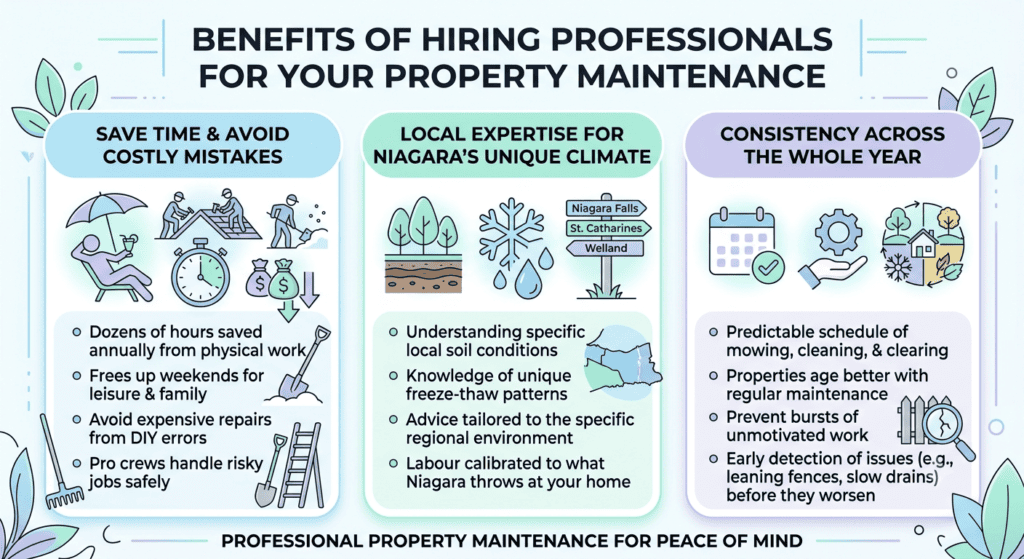
A full year-round property maintenance checklist represents dozens of hours of physical work, much of it seasonal and time-sensitive. Hiring a professional crew for the heavier or riskier jobs – roof and gutter work, snow clearing, deep lawn care – frees up your weekends and reduces the chance of an easily preventable mistake turning into an expensive repair.
Local Expertise for Niagara’s Unique Climate
A national checklist template doesn’t know that Niagara’s soil is different from Toronto’s, or that our freeze-thaw pattern behaves differently than a straightforward deep-freeze winter further north. Working with a team that maintains properties across Niagara Falls, St. Catharines, and Welland every single day means the advice – and the actual labour – is calibrated to what this specific region throws at your home.
Consistency Across the Whole Year
One of the quieter benefits of hiring a professional crew is simple consistency. A property that’s mowed, cleaned, and cleared on a predictable schedule tends to age better than one maintained in bursts of motivation. Scheduled service also means someone with an eye for detail is on your property regularly, which means small issues, a fence post starting to lean, a drain running slower than it should, tend to get flagged before they turn into something bigger.
NLLC’s Year-Round Property Maintenance Services in the Niagara Region
At NLLC, property maintenance is genuinely all we do, and we built our service lineup around exactly the checklist above so homeowners and businesses across the Niagara Region don’t have to coordinate five different companies for one property.
Lawn Care & Landscaping
Our lawn maintenance and landscaping teams handle everything from spring aeration and fertilization to summer mowing schedules and fall clean-ups, keeping your property’s curb appeal landscaping consistent through every season.
Residential & Commercial Cleaning
From routine residential and commercial cleaning to post-construction and Airbnb turnovers, our crews help keep interiors just as well-maintained as the exterior of your property.
Snow Removal
Our snow removal service covers residential driveways up through commercial parking lots, with prompt, reliable clearing that reduces liability and keeps your property accessible through every Niagara winter.
Garbage & Junk Removal
Seasonal clean-ups generate debris – old mulch, dead shrubs, storm damage, renovation waste. Our garbage removal service handles the hauling so it doesn’t sit at the curb for weeks.
If you’d rather hand off the physical work than manage it yourself, reach out to our team and we’ll build a maintenance plan around your property’s specific needs.
Year-Round Property Maintenance Checklist by Property Type
Not every property in Niagara has the same needs. A single-family home, a rental unit, and a commercial building all carry different risks and priorities, so it’s worth adjusting the checklist above based on what you actually own.
Owner-Occupied Homes
For homeowners living in the property full-time, the priority is generally long-term value protection. You’re the one who notices small changes first – a musty smell, a slightly soft spot in the flooring, ice building up in an odd spot on the roofline – so staying observant day to day is as important as the scheduled seasonal tasks. Owner-occupied homes also tend to benefit most from spreading maintenance evenly across the year, since you have the flexibility to handle smaller jobs yourself between the bigger seasonal pushes.
Rental Properties & Airbnbs
If you’re managing a rental or short-term Airbnb property, maintenance takes on an added layer of urgency because problems don’t just cost money, they cost bookings and tenant satisfaction. A clogged gutter or a musty basement that a homeowner might tolerate for a few weeks becomes a bad review or a maintenance complaint fast. Landlords and hosts should lean harder on scheduled professional cleaning between turnovers, more frequent HVAC filter changes given higher occupancy, and faster response times for anything related to water, heating, or safety devices. Building a relationship with one property care company that already knows the unit saves enormous time compared to sourcing emergency help mid-booking.
Commercial Properties
Commercial buildings and multi-unit properties carry the highest liability exposure, particularly in winter. Slip-and-fall incidents on an unshovelled sidewalk or icy parking lot can turn into significant legal and insurance headaches for a business owner or property manager. Commercial properties generally benefit from a formal, scheduled maintenance contract rather than an as-needed approach – regular grounds keeping, documented snow and ice management with timestamps, and routine cleaning schedules that keep the building presentable for customers, tenants, and employees alike. Property managers overseeing multiple sites across the region also tend to benefit from a single provider who can standardize service quality from one building to the next, rather than coordinating separate contractors for each address.
Conclusion: Keep Your Property in Top Shape All Year
A property doesn’t fall apart all at once. It happens gradually – a missed gutter cleaning here, a skipped furnace filter there – until small neglect adds up to a genuinely expensive problem. The good news is that the fix isn’t complicated. It just requires a consistent, season-by-season rhythm instead of a once-a-year scramble.
That’s exactly what this year-round property maintenance checklist is built to give you: a clear, manageable plan broken into pieces you can actually follow, tailored to what Niagara’s climate specifically demands from spring through winter.
If you’d rather leave the heavy lifting to a local team that handles this work every day, NLLC provides lawn care, landscaping, cleaning, snow removal, and garbage removal services across Niagara Falls, St. Catharines, Welland, Fort Erie, Niagara-on-the-Lake, Thorold, and Port Colborne. Contact us today or call +1 365 607 0015 for a free, no-obligation quote, and let’s build a maintenance plan that keeps your property protected all year long.
Frequently Asked Questions About Year-Round Property Maintenance
How often should I clean my gutters in Niagara? Most homes need gutter cleaning at least twice a year – once in spring after seed and debris buildup, and again in late fall after leaves have finished dropping. Homes surrounded by mature trees may need a mid-summer check as well.
What’s the most important season for property maintenance in Niagara? Fall carries the most weight. The work you do preparing your roof, gutters, landscaping, and heating system in September through November directly determines how much damage winter causes.
Do I really need professional snow removal for a residential driveway? It depends on your schedule, mobility, and how much snow your property typically receives. For homeowners who travel, work long hours, or simply want consistent, safe clearing without the physical strain, a scheduled service takes the guesswork out of it.
How can I tell if my roof needs repair after winter? Look for missing or curling shingles, granules collecting in your gutters, sagging spots, or any daylight visible through the attic. If you notice any of these, it’s worth a professional inspection before spring rains arrive.
What’s the biggest mistake homeowners make with property maintenance? Treating it as reactive rather than routine. Waiting for a visible problem, like a water stain or a bald patch of lawn, almost always means the underlying issue has been developing for a while.
Does regular maintenance actually affect my home insurance? Yes, indirectly. Insurers increasingly expect homeowners to take preventive steps against water damage, and with deductibles for water-related claims climbing, staying ahead of maintenance reduces your financial exposure even if your policy technically covers the damage.
Can NLLC handle both lawn care and snow removal for the same property? Yes. Many of our clients use us year-round, switching from lawn care and landscaping in the warmer months to snow removal once winter sets in, so their property has one consistent point of contact all year.
How much does year-round property maintenance typically cost in Niagara? Costs vary widely depending on property size, service scope, and how much work is DIY versus professional. The most reliable way to get an accurate number for your specific property is to request a free quote tailored to what you actually need.
When should I book fall gutter cleaning versus spring gutter cleaning? Spring cleaning should happen once the snow has fully melted and before spring rains ramp up, typically April. Fall cleaning is best scheduled after most leaves have dropped but before the first snowfall, which in Niagara usually means mid-to-late November.
Is landscaping maintenance really part of property maintenance, or just cosmetic? It’s functional, not just cosmetic. Proper grading and healthy soil around your foundation help direct water away from your home, overgrown roots near a driveway or walkway can cause cracking, and dead or damaged trees pose a real risk during storms. Treating your landscaping as part of your protective maintenance plan, not just curb appeal, tends to prevent bigger problems down the line.