If your lawn looks a little rough this year, you’re not alone. Most yard problems don’t come from bad luck or bad soil. They come from small, everyday habits that quietly snowball into big repair bills. A patch of dead grass here, a fungus outbreak there, and suddenly you’re staring down a sod replacement invoice that costs more than a month of professional lawn care would have.
That’s the frustrating part about lawn care mistakes. They rarely feel like mistakes when you’re making them. Mowing a little shorter to skip a week. Watering every evening because it feels thorough. Skipping aeration because the lawn “looks fine.” Each choice seems harmless in the moment, but add them up over a season and you’ve got thin turf, dead patches, and a yard that needs a full rebuild instead of a simple tune-up.
This guide walks through the most common and most expensive lawn care mistakes homeowners across Niagara Falls, St. Catharines, Welland, and the wider Niagara Region make, why they happen, and what they actually cost to fix. By the end, you’ll know exactly what to watch for and where a quick call to a professional can save you thousands down the road.
Why Small Lawn Care Mistakes Turn Into Big Bills
A lawn is a living system. Grass, soil, insects, and water all interact constantly, which means a single misstep rarely stays isolated. Mow too short one week, and the grass gets stressed. A stressed lawn has weaker roots, which lets weeds move in. Weeds compete for water and nutrients, which weakens the grass further, which invites pests. Before long, what started as one small habit has turned into a full-blown lawn rescue project.
That’s the real danger behind lawn care mistakes. They compound. A homeowner who scalps the lawn all summer might not see a dead lawn until fall, but by then the damage is done and the fix is far more expensive than the prevention would have been. Ontario’s climate makes this especially true. Cool-season grasses like Kentucky bluegrass and fescue, the varieties most common in Niagara yards, are forgiving when cared for properly and unforgiving when they’re not.
The good news is that almost every one of these mistakes is preventable once you know what to look for.
Mistake #1: Mowing the Lawn Too Short
Cutting grass short feels efficient. Fewer mowing sessions, a “neater” look, less clippings to deal with. But scalping is one of the fastest ways to damage a healthy lawn, and it’s one of the most common lawn care mistakes homeowners make without realizing it.
Grass blades capture sunlight and convert it into energy for the root system. Cut the blade too short, and you cut off the plant’s ability to feed its own roots. The lawn responds by pushing energy into surviving rather than growing, which means shallower roots, slower recovery, and a much higher chance of drought stress and weed invasion.
The Real Cost of Scalping
A scalped lawn rarely dies overnight. Instead, it thins out gradually over a season, developing bare patches that weeds and crabgrass are quick to fill. Once that happens, homeowners are often looking at reseeding or, in bad cases, a full sod replacement. Sod installation in Ontario typically runs between $1.50 and $3.50 per square foot installed, meaning a standard 1,000 square foot front lawn can cost anywhere from roughly $1,800 to $3,500 to replace. Compare that to the cost of simply mowing correctly, and the math isn’t close.
For most cool-season lawns in the Niagara Region, the ideal mowing height is 2.5 to 3.5 inches. Taller grass shades the soil, which keeps moisture in and blocks the sunlight weed seeds need to germinate. As a rule of thumb, never remove more than one-third of the blade length in a single cut.
Mistake #2: Mowing on the Wrong Schedule
Mowing too infrequently is just as damaging as mowing too short, because it forces you to cut off more than a third of the blade at once when you finally do mow. That single aggressive cut shocks the lawn the same way scalping does.
On the flip side, mowing too often, especially right after rain, compacts the soil and can spread fungal disease from wet clippings sticking to the mower deck. Most lawns in this region do best on a weekly mowing schedule during peak spring and early summer growth, tapering to every 10 to 14 days as growth slows later in the season.
Dull mower blades cause a different but equally costly problem. A dull blade tears grass instead of cutting it cleanly, leaving ragged, brownish tips that create an easy entry point for disease. Sharpening blades once or twice a season is a small maintenance task that prevents a much bigger one.
Mistake #3: Watering Incorrectly
Watering seems like the simplest part of lawn care, which is exactly why it’s one of the easiest places to get wrong. Homeowners tend to either overwater out of good intentions or underwater out of convenience, and both habits lead to the same outcome: a weaker lawn that costs more to repair.
Signs of Overwatering vs. Underwatering
Daily light watering trains grass roots to stay near the surface, since the roots never need to search deeper for moisture. Shallow roots mean a lawn that wilts fast in a heatwave and struggles to bounce back. Overwatering also creates the damp conditions that fungal diseases and certain lawn pests thrive in.
Underwatering shows up as a grayish-blue tint before grass turns brown and goes dormant. Occasional dormancy isn’t necessarily harmful, but repeated stress cycles weaken the lawn’s ability to recover season after season.
The better approach is deep, infrequent watering, generally about one to one and a half inches of water per week, split across one or two sessions rather than a daily sprinkle. Watering early in the morning, rather than in the evening, gives the grass blades time to dry out before nightfall, which cuts down significantly on fungal problems. It’s a simple adjustment that costs nothing and prevents thousands of dollars in disease treatment and reseeding down the line.
Mistake #4: Ignoring Ontario’s Cosmetic Pesticide Rules
Here’s one that catches a lot of homeowners off guard. Ontario has banned the cosmetic use of most chemical pesticides and herbicides on residential lawns and gardens since 2009. That means many of the “quick fix” weed killers and bug sprays sold in other provinces or online simply aren’t legal to use here for cosmetic purposes.
This isn’t just a legal technicality. Homeowners who don’t know the rules sometimes turn to unlicensed operators offering “guaranteed” chemical treatments, or they order restricted products online and apply them incorrectly. Beyond the risk of fines, misapplied or banned products can burn the lawn, harm pollinators, and in some cases make the underlying problem worse.
The workaround isn’t to give up on weed and pest control. It’s to lean on approved methods: keeping grass at the right mowing height to shade out weed seeds, hand-pulling weeds while the soil is damp, and using the low-risk, approved products that remain available for specific pest and health-related exceptions. A licensed provider will know exactly which treatments are compliant in the Niagara Region and which ones will land you in trouble, which is one of the clearest reasons DIY chemical treatments so often backfire.
Mistake #5: Skipping Aeration and Overseeding
Ontario’s clay-heavy soil compacts easily, especially in yards with regular foot traffic, kids, pets, or recent construction. Compacted soil blocks water, air, and nutrients from reaching the root zone, which starves the lawn even if you’re doing everything else right.
Skipping aeration is one of those lawn care mistakes that doesn’t show visible damage right away, which is exactly why it gets overlooked. Instead, the lawn just slowly thins out year after year until the homeowner is left wondering why a lawn that used to be thick and green now looks patchy no matter how much fertilizer goes down.
Professional core aeration in the Niagara Region and broader GTA typically costs somewhere between $70 and $230 depending on lawn size, with overseeding as an add-on running another $50 to $400 depending on the seed blend and coverage needed. That’s a modest annual investment compared to the cost of a full lawn renovation, which is often what’s needed once compaction and thinning have gone unaddressed for several seasons. Fall is generally the best window for aeration and overseeding in this climate, since cool temperatures and regular rainfall give new grass the best chance to establish before winter.
Mistake #6: Fertilizing at the Wrong Time or Rate
More fertilizer does not mean a greener lawn. It means a higher risk of fertilizer burn, a condition where excess nitrogen actually scorches the grass, leaving yellow or brown streaks exactly where the homeowner was trying to help the lawn most.
Timing matters just as much as quantity. Fertilizing too early, before the ground has properly warmed, wastes product and can encourage weed growth instead of grass growth. Fertilizing too late in the fall pushes new growth right before winter dormancy, leaving that tender growth vulnerable to frost damage.
Most lawns in this region do well with two applications a year, one in early spring and one in late spring or early fall, using a balanced, slow-release fertilizer appropriate for the grass type. A basic soil test, often available through garden centres or professional providers, takes the guesswork out of exactly what your lawn needs rather than applying a generic product and hoping for the best.
Mistake #7: Ignoring Pest and Grub Damage Until It’s Too Late
Grubs, the larvae of beetles like the June bug and Japanese beetle, live just below the surface and feed on grass roots. A small grub population usually goes unnoticed. A large one can turn a healthy lawn into a spongy, dead patch that peels back like a loose carpet, because the roots holding it in place have simply been eaten away.
The tricky part is that grub damage often gets misdiagnosed. Homeowners see brown patches and assume it’s a watering or fertilizing problem, so they water more or fertilize again, neither of which addresses the actual pest underneath. By the time the real cause is identified, the damage is often severe enough that the affected area needs full resodding rather than a simple treatment.
A quick way to check is the tug test: grab a section of the suspicious patch and pull. If it lifts away easily with few or shallow roots, grubs are a likely culprit. Licensed providers can apply targeted, biological grub controls that comply with Ontario’s pesticide rules and address the problem before it spreads across the whole yard. Catching grub damage early is almost always a matter of a single treatment instead of a full lawn rebuild.
Mistake #8: Installing Sod Without Proper Site Prep
Sod feels like an instant fix. Roll it out, and suddenly you have a green lawn. The problem is that sod is only as good as what’s underneath it, and skipping soil prep is one of the most expensive lawn care mistakes a homeowner can make, precisely because it’s invisible until the sod starts dying.
What Proper Sod Installation Actually Costs in Ontario
New sod needs graded, amended soil beneath it to root properly. Skip that step, lay sod over compacted or uneven ground, and you’ll often see patchy rooting, drainage puddles, and dead sections within weeks, sometimes forcing a homeowner to redo the entire project. In Ontario, professionally installed sod runs roughly $1.50 to $3.50 per square foot, which for a typical 1,000 square foot lawn lands between $1,800 and $3,500, factoring in prep, delivery, and labour. A homeowner who tries to save money by skipping prep and ends up replacing failed sod is often paying for that project twice.
New sod also needs a strict watering schedule in its first few weeks, daily light watering initially to keep the roots from drying out, tapering to a deeper, less frequent schedule once it’s established. Foot traffic should be avoided on freshly laid sod for at least two to three weeks. These aren’t optional extras; they’re the difference between sod that takes root and sod that has to be torn out and redone.
Mistake #9: Neglecting Drainage and Soil Compaction
Standing water after a rainstorm, soggy patches near downspouts, or grass that struggles no matter how well you water and fertilize elsewhere in the yard are all signs of a drainage problem, not a lawn care problem. Treating the symptom instead of the cause is a common and costly mistake.
Poor drainage encourages fungal disease, drowns root systems, and in more serious cases can lead to foundation or basement moisture issues nearby. Left unaddressed, a drainage problem doesn’t just cost you a patch of dead grass. It can turn into regrading work, French drain installation, or downspout extensions, all of which run into the thousands depending on the scope.
The earlier a drainage issue is identified, the cheaper it is to fix. Sometimes the solution is as simple as redirecting a downspout or aerating compacted soil so water can actually soak in instead of pooling on the surface. A professional assessment can usually tell you within a single visit whether you’re dealing with a quick fix or a bigger regrading project.
Mistake #10: Hiring the Cheapest, Unlicensed Provider
It’s tempting to go with whoever quotes the lowest price, especially when lawn care can feel like a commodity service. But the cheapest quote often comes from an unlicensed operator cutting corners: skipping soil prep, applying banned or improperly diluted products, or simply not having the training to diagnose what’s actually going wrong with your lawn.
The hidden cost shows up later, when a “bargain” treatment doesn’t work, damage goes undiagnosed, or a compliance issue with Ontario’s pesticide regulations creates a bigger headache than the money saved upfront. A licensed, insured provider costs more per visit on paper, but a properly diagnosed and treated lawn almost always costs less over a full season than a string of cheap fixes that don’t address the real problem.
When comparing quotes, ask about licensing, insurance, and what’s actually included. A transparent quote that breaks down labour, materials, and any prep work is a good sign. A single bundled number with no detail is often a red flag.
How Much These Mistakes Really Cost: A Quick Breakdown
It helps to see the numbers side by side. Prevention is consistently the cheaper path:
- Mowing correctly: no added cost, versus $1,800–$3,500 to resod a scalped or dead lawn
- Deep, infrequent watering: no added cost, versus fungal treatment and reseeding after disease damage
- Annual core aeration and overseeding: roughly $150–$400, versus a full lawn renovation after years of compaction
- A soil test and proper fertilizer timing: $20–$50, versus repairing fertilizer burn across the yard
- Early grub treatment: a single targeted application, versus resodding an entire dead section
- Proper sod site prep: built into a proper $1,800–$3,500 installation, versus paying for that same installation twice after failed DIY sod
Every one of these lawn care mistakes is avoidable, and every one of them is far cheaper to prevent than to repair. The pattern holds across almost every category of lawn problem: prevention tends to cost a fraction of what repair does, and the gap widens the longer a problem is left alone. A grub infestation caught in its first month might need one targeted treatment. Left until fall, it can mean tearing out and resodding an entire section of yard. A drainage issue caught early might be a $200 downspout fix. Left alone through a few wet seasons, it can undermine the soil enough to require full regrading.
DIY or Professional? How to Decide
Not every lawn task needs a professional. Mowing at the right height, pulling weeds by hand, and watering on a sensible schedule are well within reach for most homeowners with a bit of know-how. Where DIY tends to fall short is in diagnosis: knowing whether a brown patch is grub damage, fungal disease, drought stress, or a drainage problem takes experience that’s hard to build from occasional weekend yard work.
A reasonable rule of thumb is to handle the routine, low-risk tasks yourself and bring in a professional for anything that requires diagnosis, specialized equipment, or compliance with Ontario’s pesticide regulations. Aeration equipment, soil testing, and licensed pest treatments all fall into that second category. Trying to DIY a problem that actually needed a trained eye is one of the more expensive lawn care mistakes on this list, precisely because it delays the correct fix while the underlying issue keeps spreading.
A Season-by-Season Lawn Care Calendar for Niagara Homeowners
Most lawn care mistakes happen because a task gets done at the wrong time of year rather than because it’s skipped entirely. Ontario’s four distinct seasons each call for different priorities, and getting the timing right is often the difference between a lawn that thrives and one that limps through the year.
Early Spring (Late March to Early May): This is cleanup season. Rake out matted, dead grass left behind by snow mould, clear debris, and do a first light mow once the ground has firmed up. Resist the urge to fertilize the moment it warms up. Applying too early wastes product on grass that isn’t actively growing yet and can give weeds a head start instead.
Late Spring to Early Summer (May to June): This is peak growing season and the window for a first fertilizer application, a soil test if you haven’t had one recently, and the start of a consistent weekly mowing routine. It’s also a good time to spot and treat weeds by hand while the soil is soft enough to pull roots cleanly.
Summer (July to August): Heat and lower rainfall put stress on lawns, which is exactly when overwatering or scalping mistakes do the most damage. Raise the mower deck slightly, water deeply but less often, and watch for early grub activity, since adult beetles typically lay eggs in early to midsummer.
Fall (September to November): This is the single most important season for long-term lawn health in this climate. Core aeration, overseeding, and a final fertilizer application all belong here, giving the lawn time to build strong roots before winter dormancy. Fall is also the ideal window for sod installation, since cooler temperatures and steady rainfall dramatically improve rooting success compared to a summer install.
Winter (December to March): Active lawn care mostly pauses, but this is a good time to plan. Book aeration or sod projects for the following season early, since spring and fall slots with reputable providers fill up quickly once the weather turns.
Following a calendar like this doesn’t guarantee a flawless lawn, but it closes off most of the windows where the mistakes above tend to creep in.
The Smarter Path: Preventive Lawn Care in Niagara
The theme running through every mistake on this list is the same: small, consistent care beats reactive, expensive fixes. A lawn that gets mowed at the right height, watered deeply instead of often, aerated annually, and checked for pests before damage spreads rarely needs a dramatic (and expensive) rescue.
This is exactly the kind of ongoing care a professional lawn care and landscaping team is built around. Rather than waiting for a problem to become visible, a scheduled maintenance program catches compaction, pest pressure, and nutrient gaps early, when the fix is simple instead of costly.
Benefits of Hiring Professional Lawn Care
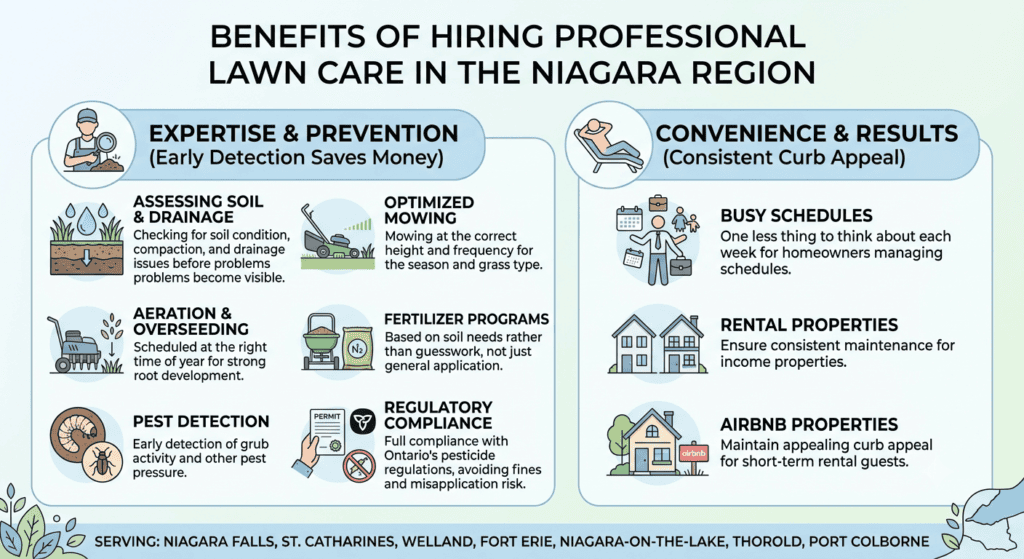
Homeowners across Niagara Falls, St. Catharines, Welland, Fort Erie, Niagara-on-the-Lake, Thorold, and Port Colborne increasingly choose professional lawn care not because they can’t mow their own grass, but because a trained team catches the small issues before they become expensive ones. A professional visit typically includes:
- An assessment of soil condition, compaction, and drainage before problems become visible
- Mowing at the correct height and frequency for the season and grass type
- Aeration and overseeding scheduled at the right time of year
- Fertilizer programs based on soil needs rather than guesswork
- Early detection of grub activity and other pest pressure
- Full compliance with Ontario’s pesticide regulations, avoiding fines and misapplication risk
For homeowners managing a busy schedule, a rental property, or an Airbnb that needs consistent curb appeal, handing lawn care off to a dedicated team also means one less thing to think about each week.
Frequently Asked Questions
How short should I cut my grass in the Niagara Region? Most cool-season lawns in this climate do best kept between 2.5 and 3.5 inches. Cutting shorter increases the risk of scalping, weed invasion, and drought stress.
How often should I water my lawn? Aim for one to one and a half inches of water per week, delivered in one or two deep sessions rather than daily light watering. Morning watering helps the grass dry out before evening, which reduces fungal risk.
Can I use weed killer on my lawn in Ontario? Ontario’s cosmetic pesticide ban restricts most chemical herbicides and pesticides for cosmetic lawn use. Some low-risk, approved products remain available, and licensed providers know which treatments stay within the rules.
How do I know if my lawn has grub damage? Try the tug test: pull on a patch of suspicious brown grass. If it lifts easily with shallow or missing roots, grubs are a likely cause, and it’s worth getting it assessed before the damage spreads.
When is the best time to aerate a lawn in Ontario? Early fall is generally ideal, since cooler temperatures and consistent rainfall give the lawn time to recover and any overseeding time to establish before winter. Spring is a solid second option.
Is DIY sod installation worth trying to save money? Only if the soil underneath is properly graded and amended first. Skipping that step is one of the most common reasons DIY sod fails within weeks, often costing homeowners more than a properly installed lawn would have in the first place.
How much does professional lawn care typically cost? Pricing varies with lawn size and service scope, but most Niagara homeowners find that scheduled maintenance costs far less over a season than repairing damage from missed mowing, watering, or pest problems.
What’s the fastest way to fix a lawn that’s already in bad shape? It depends on the cause. A professional assessment can tell you within a single visit whether the fix is a treatment, aeration and overseeding, or, in more advanced cases, a partial or full sod replacement.
The Bottom Line
Lawn care mistakes rarely look like mistakes while they’re happening. They look like a shorter mow to save time, a daily sprinkle instead of a deep soak, or a season skipped without aeration. But each of those small choices adds up, and by the time the damage is visible, the fix usually costs far more than the prevention would have.
The homeowners who avoid these costly surprises aren’t necessarily the ones with the most free time. They’re the ones who catch small issues early, whether that’s through their own attention to detail or a professional team keeping an eye on things throughout the season.
If your lawn is already showing signs of stress, or you’d simply rather not gamble on trial and error this season, the team at NLLC serves homeowners across Niagara Falls, St. Catharines, Welland, and the surrounding Niagara Region with lawn care, landscaping, and property maintenance built around prevention, not just quick fixes. Reach out through our contact page for a free assessment, and let’s figure out exactly what your lawn needs before a small issue turns into an expensive one.