Owning a home or managing a rental property in the Niagara Region comes with a rhythm most people only notice once they’ve lived through a full year here. The lake-effect humidity of July gives way to the leaf-drop chaos of October, which gives way to the freeze-thaw cycles that quietly chew through driveways and foundations every winter. If you’ve ever found yourself scrambling to find a snow removal company mid-storm, or discovering a soggy basement after the spring melt, you already know why a property maintenance checklist isn’t a nice-to-have. It’s the difference between planned, affordable upkeep and expensive, stressful emergencies.
This guide breaks down exactly what to do to your property every season of the year, why it matters specifically for homes and businesses in Niagara Falls, St. Catharines, Welland, Fort Erie, Niagara-on-the-Lake, Thorold, and Port Colborne, and where you can lean on professionals instead of doing it all yourself. Whether you own a single-family home, manage a short-term rental, or oversee a commercial property, you’ll walk away with a clear, actionable plan for spring, summer, fall, and winter.
Why a Property Maintenance Checklist Matters More in Niagara Than Almost Anywhere Else
Niagara sits between Lake Erie and Lake Ontario, and that geography shapes everything about how a property ages here. The lakes moderate winter temperatures compared to inland Ontario, but they also mean more freeze-thaw cycles – the back-and-forth between freezing and thawing that’s brutal on concrete, asphalt, and roofing. Every time water gets into a crack and freezes, it expands and widens that crack a little more. Left unaddressed for a few seasons, a hairline crack in your driveway becomes a full repaving job.
At the same time, Niagara’s fertile soil and mild growing season (the same conditions that make the region famous for peaches, cherries, and vineyards) mean lawns and gardens grow fast and need consistent attention, or they get away from you quickly. And with roughly 65 snowfall days a year and average winter lows that regularly dip below freezing from December through February, snow and ice management isn’t optional – it’s often a legal responsibility.
A property maintenance checklist gives you a system instead of a scramble. Instead of reacting to problems as they show up, you’re working through a known list of tasks tied to what the season actually demands. That’s true whether you’re maintaining a single house or overseeing several rental units – the logic scales, and the payoff (fewer surprise repairs, a property that holds its value, tenants and guests who don’t complain) is the same.
Spring Property Maintenance Checklist (March – May)
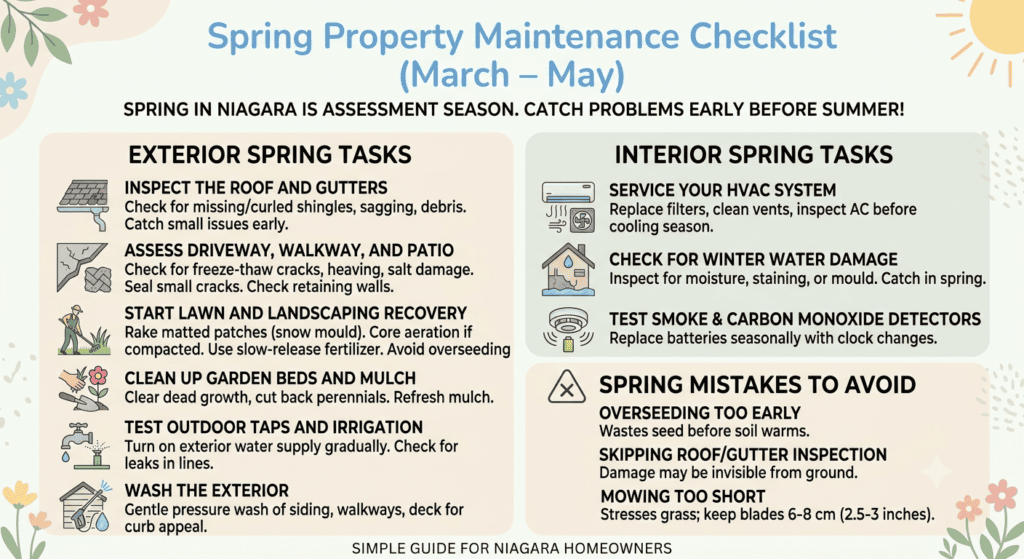
Spring in Niagara is assessment season. Snow melts, the ground thaws, and everything winter did to your property – good or bad – becomes visible. This is when you catch problems early, before summer heat or fall leaf-drop makes them worse or harder to see.
Exterior Spring Tasks
Inspect the roof and gutters. Walk the perimeter of your home and look up. Check for missing, curled, or cracked shingles, and look at your gutters and downspouts for sagging, separation, or debris still packed in from fall. Winter ice and heavy snow loads are hard on rooflines, and a small issue caught in April is a repair; the same issue ignored until a June downpour is a ceiling stain.
Assess driveway, walkway, and patio surfaces. After a winter of freeze-thaw cycles and road salt, concrete and asphalt often show new cracks or heaving. Small cracks can be sealed before they widen; larger heaves may need professional leveling. This is also the time to check retaining walls and interlocking stone for shifting.
Start your lawn and landscaping recovery. Winter is genuinely hard on Ontario lawns – not just dormant, but actively damaged by snow mould, salt runoff, and frost heave. Walk your lawn and look for matted grey or pink patches (snow mould) and rake them lightly to encourage airflow; most recover on their own. Early spring is also the window for core aeration if your lawn feels compacted or drains poorly, since aeration works best while turf is actively growing and under less stress. If you’re planning to overseed bare or thin patches, pair it with aeration for better seed-to-soil contact, and use a slow-release, climate-appropriate fertilizer rather than pushing rapid top growth too early.
Clean up garden beds and mulch. Clear last year’s dead growth, cut back perennials, and refresh mulch to suppress early weeds and retain soil moisture as temperatures climb.
Test outdoor taps and irrigation. Turn your exterior water supply back on gradually and check for leaks at hose bibs, sprinkler heads, and any irrigation lines that were winterized in the fall.
Wash the exterior. A gentle pressure wash of siding, walkways, and the deck removes a winter’s worth of grime, salt residue, and mildew, and it’s usually the single biggest visual upgrade you can make to curb appeal in one afternoon.
Interior Spring Tasks
Service your HVAC system before cooling season. Replace filters, clean vents, and have your air conditioning inspected before the first real heat wave. A neglected AC unit not only costs more to run, it’s more likely to fail on the hottest day of the year, which is exactly when you’ll wait longest for a technician.
Check for winter water damage. Inspect basements, crawl spaces, and attics for signs of moisture, staining, or mould that may have developed during winter thaws. Catching this in spring, before humid summer weather accelerates mould growth, is far cheaper than dealing with it in August.
Test smoke and carbon monoxide detectors, and replace batteries as a seasonal habit tied to the spring clock change.
Spring Mistakes to Avoid
The most common spring mistake is overseeding too early, before the soil has fully warmed, which wastes seed and money. The second is skipping the roof and gutter inspection because “everything looks fine from the ground” – most roof damage is only visible up close or from the attic. And the third is mowing too short right out of winter, which stresses grass that’s already recovering; keep blades around 6–8 cm (2.5–3 inches) for a healthier, deeper root system all season.
Summer Property Maintenance Checklist (June – August)
Summer in Niagara is peak-use season – for your lawn, your outdoor living spaces, and, if you rent out a property, for guest turnover. The goal shifts from recovery to consistency: keeping growth, heat, and heavy use from undoing your spring work.
Lawn Care & Landscaping in Peak Season
Mow regularly but never scalp the grass; consistent height reduces water loss and crowds out weeds naturally. Water deeply and infrequently – a couple of long soaks a week beats daily light watering, which trains roots to stay shallow and makes your lawn less drought-resistant during a hot, dry stretch. Watch for signs of lawn stress like browning in patches, which can indicate grub damage or drought stress rather than just heat. Trim hedges and shrubs regularly to maintain shape and prevent overgrowth from blocking windows, walkways, or sightlines near driveways.
Outdoor Living Spaces & Turnover Cleaning
Summer is when decks, patios, and outdoor furniture get the most use, so this is the season to reseal or stain a wood deck, check for loose boards or railings, and give outdoor cushions and furniture a proper clean. If your property is a short-term rental or Airbnb, summer is also your busiest turnover period – a consistent, professional cleaning routine between every guest stay isn’t just about appearances; it directly affects your reviews, rebooking rates, and how well the property holds up over a busy season.
Pest Prevention & Exterior Upkeep
Check window and door screens for tears, inspect for wasp nests forming under eaves or decks, and look for any gaps around the foundation or utility entry points where pests could get inside. Clean out gutters at least once mid-summer if you have overhanging trees – even though fall is the big gutter season, a mid-summer thunderstorm can reveal clogs before they cause real damage.
Fall Property Maintenance Checklist (September – November)
If spring is assessment season, fall is preparation season – and in Niagara, it’s arguably the most important stretch on the entire property maintenance checklist. Everything you do (or skip) here determines how your property handles winter.
Gutter Cleaning & Roof Prep
Clean your gutters thoroughly once the bulk of leaves have dropped, and plan for a second pass later in the fall if you have maple, oak, or other heavy-shedding trees nearby – a single fall cleaning often isn’t enough for tree-heavy properties. Clogged gutters heading into winter are one of the most common causes of ice dams, which can force water back under shingles and into your attic or walls. While you’re up there (or watching a professional do it), check flashing around chimneys and vents, and confirm downspouts direct water at least a few feet away from your foundation.
Lawn Aeration, Overseeding & Winterizing the Landscape
Fall, not spring, is actually the best window for aeration and overseeding on cool-season lawns common across Ontario – typically late August through mid-September in Southern Ontario. Cooler temperatures and more consistent moisture give new grass a much better chance to establish before winter than a rushed spring seeding does. Apply a winterizer fertilizer in late fall to strengthen root systems heading into dormancy, and keep mowing and raking through leaf-drop; a thick layer of wet leaves left on the lawn all winter will smother and kill the grass underneath.
Winterizing Irrigation, Pipes & Exterior Systems
Before the first hard freeze, drain and blow out irrigation lines with compressed air to prevent pipes from cracking. Disconnect and store garden hoses, and shut off and drain exterior hose bibs. Inside, this is also the season to check attic insulation and seal drafts around windows and doors – small, inexpensive fixes now that meaningfully lower heating costs once the furnace is running full-time.
Snow Clearing Rules Every Niagara Property Owner Should Know
Winter preparation in Niagara isn’t just practical – increasingly, it’s a legal obligation too. The City of Niagara Falls adopted a new Snow Clearing By-law, and as of October 1, 2026, residents are required to clear sidewalks adjacent to their property within 24 hours of the substantial end of a snowfall. Similar sidewalk-clearing responsibilities already exist in other Niagara municipalities and across Ontario more broadly, and failing to comply can mean fines or, in some cases, liability if someone is injured because of a hazard you created (like a downspout draining directly onto a public sidewalk, which then freezes). Fall is the right time to line up a reliable plan for the season ahead, whether that’s committing to shovel consistently yourself or arranging professional coverage so you’re never caught off guard by an early-morning snowfall.
Winter Property Maintenance Checklist (December – February)
Winter in Niagara means daily highs frequently sitting between -1°C and 2°C from December through February, regular snowfall, and the freeze-thaw pattern that defines how hard the season is on a property. The checklist here is shorter, but the tasks matter just as much as any other season.
Snow & Ice Management
Keep driveways, walkways, and steps cleared consistently – not just after the storm ends, but during extended snowfalls if accumulation is heavy. Apply ice melt or sand on walkways and stairs, paying particular attention to north-facing areas that stay icy longer because they get less direct sun. If you’re managing a rental or commercial property, remember that consistent, prompt clearing isn’t optional; it’s core to your liability and, in many municipalities, a bylaw requirement with a strict time window after snow stops falling.
Roof & Ice Dam Prevention
Watch your roofline after heavy snowfalls for ice dams – thick ridges of ice that form at the eaves and can force meltwater back under your shingles. Good attic insulation and ventilation prevent the uneven roof temperatures that cause ice dams in the first place, so if you’re seeing them repeatedly, it’s often an insulation problem rather than a roofing one.
Indoor Winter Checks
Keep an eye on interior humidity (dry winter air is normal, but very low humidity stresses wood floors and furniture), test your carbon monoxide detectors given how much time furnaces and fireplaces run this time of year, and let faucets drip during extreme cold snaps if any pipes run along exterior walls, to reduce freeze risk.
Property Maintenance Checklist by Property Type
Not every property needs the exact same approach. Here’s how the seasonal checklist shifts depending on what you own or manage.
Residential Homes
For most homeowners, the checklist above covers it – the priority is pacing tasks across the year so nothing piles up, and building simple habits (checking filters when the season changes, walking the exterior after major storms) rather than treating maintenance as one big annual project.
Rental & Short-Term Rental Properties
Rental and Airbnb properties carry extra weight on cleanliness and turnaround speed, since guest reviews are directly tied to how the space looks and smells on arrival. A consistent, professional cleaning schedule between every stay – not just a quick tidy – protects your rating and your booking calendar. Landscaping and snow clearing also matter more here, since first impressions from the curb affect reviews just as much as the interior does, and a guest slipping on an uncleared walkway is a liability problem, not just an inconvenience.
Commercial Properties
Commercial sites usually carry stricter obligations: parking lots and sidewalks often fall under tighter snow-clearing windows because of public foot traffic, landscaping needs to stay presentable during business hours, and garbage and waste management has to run on a predictable schedule that doesn’t disrupt operations. Property managers overseeing multiple commercial sites benefit most from a single maintenance partner who can coordinate lawn care, cleaning, snow removal, and garbage removal together rather than juggling separate vendors for each.
Common Property Maintenance Mistakes Niagara Property Owners Make
A few patterns show up again and again, regardless of property type:
- Treating maintenance as reactive rather than scheduled. Waiting for a problem to appear before addressing it almost always costs more than catching it on a seasonal schedule.
- Skipping fall gutter cleaning because “it’s not urgent yet.” By the time an ice dam forms in January, the damage is already inside your walls.
- Overseeding in spring instead of fall. It’s tempting, since spring is when everyone’s thinking about their lawn, but fall consistently gives better germination results for the cool-season grasses common in this region.
- Assuming the city handles all snow clearing. Many Niagara municipalities only maintain a portion of the total sidewalk network, and new bylaws are shifting more responsibility directly onto property owners.
- Underestimating how much winter salt and freeze-thaw cycles affect concrete and asphalt. A driveway that looks fine in November can develop serious cracking by March if water gets into existing hairline fractures and repeatedly freezes.
- Ignoring drainage and grading around the foundation. Water that pools near your foundation instead of draining away is a slow but serious threat – over a few wet seasons it can lead to basement seepage, cracked footings, and mould, and it’s often fixable with something as simple as extending a downspout.
- Forgetting that maintenance needs change as a property ages. A checklist built for a five-year-old build usually isn’t enough for a twenty-year-old one; older roofs, aging irrigation lines, and settled concrete all need closer, more frequent attention.
How to Build a Property Maintenance Checklist You’ll Actually Follow
Knowing what needs doing is only half the problem – the other half is actually sticking to it. A few habits make that much easier.
Tie tasks to something you already do. Pairing gutter cleaning with the fall clock change, or HVAC filter swaps with the first hot week of the year, turns maintenance into a habit instead of a separate thing to remember.
Keep a simple written or digital record. Even a basic note of what was done and when – aeration in September, roof inspected in April – becomes genuinely valuable if you ever sell, since a documented maintenance history reassures buyers and can support a stronger asking price.
Separate “urgent” from “routine.” Roof leaks, burst pipes, and blocked gutters heading into a freeze are urgent. Mulching and hedge trimming are routine and can flex around your schedule. Treating everything as equally urgent is a fast way to burn out and skip the list entirely.
Build in a buffer before extreme weather. Don’t wait until the night before a snow warning to think about who’s clearing your walkway, or until a heatwave is forecast to check your air conditioning. Aim to have each season’s major tasks done a few weeks before that season’s weather typically peaks.
Know what to hand off. A realistic checklist accounts for your own time and comfort level. Tasks that involve height, heavy equipment, or strict timing (like snow clearing under a 24-hour bylaw window) are usually worth outsourcing, freeing you to focus on the parts of property care you’re actually equipped to do yourself.
DIY vs. Hiring a Professional Property Maintenance Team
Plenty of tasks on this checklist are genuinely manageable yourself – replacing HVAC filters, testing detectors, light garden cleanup. But a few categories consistently make more sense to hand off:
Roof and gutter work at height carries real fall risk, especially on wet or icy surfaces, and a professional can spot early damage (flashing issues, granule loss, subtle sagging) that’s easy to miss from the ground.
Lawn aeration, overseeding, and fertilization programs benefit from equipment and product timing that most homeowners don’t have easy access to, and getting the timing wrong (as noted above) can waste an entire season’s growth window.
Snow and ice management, particularly with a strict bylaw window now in effect in Niagara Falls, is often easier to guarantee with a scheduled service than to manage personally around work, travel, or simply being asleep when an overnight storm rolls through.
Turnover cleaning for rentals is close to impossible to do consistently well without dedicated staff, especially if you’re managing more than one unit or trying to hit tight guest turnaround windows.
If you’d rather have one team handle lawn care, landscaping, cleaning, garbage removal, and snow clearing together instead of coordinating separate vendors for each, NLLC’s full range of property care services is built around exactly that kind of year-round coverage across Niagara Falls, St. Catharines, Welland, and the wider Niagara Region.
Current Trends Shaping Property Maintenance in 2026
A few shifts are worth knowing about heading into this year’s maintenance cycle. Municipalities across Ontario, Niagara Falls included, are tightening snow-clearing enforcement and shifting more sidewalk responsibility onto property owners, which makes a reliable winter plan more important than it was even a couple of years ago. Homeowners are also increasingly using documented maintenance histories – essentially a running record of what’s been done and when – as a selling point, since buyers and agents are more willing to pay closer to asking price when they can see consistent, proven upkeep rather than guessing at a property’s condition. And on the lawn care side, more homeowners are shifting overseeding and aeration from a spring afterthought to a planned fall task, which lines up with what the science has said for years about cool-season grass establishment.
Alongside these shifts, more homeowners are also budgeting for maintenance the way they’d budget for a mortgage or property taxes – as a predictable annual line item rather than an unexpected cost that shows up whenever something breaks. That mindset alone tends to prevent the biggest, most expensive repairs, simply because small issues get caught and handled while they’re still small.
The Benefits of a Year-Round Property Maintenance Partner
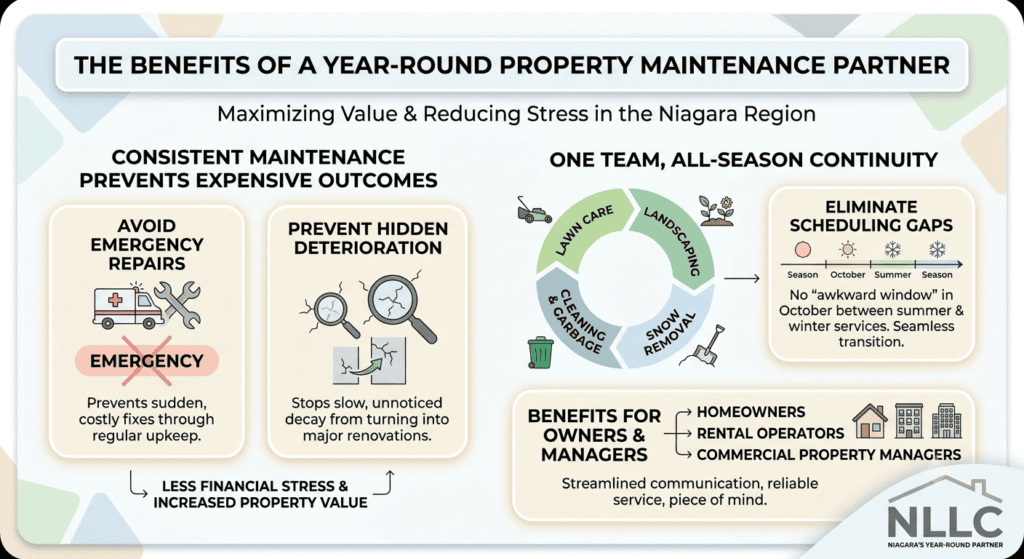
The properties that hold their value best in Niagara aren’t the ones with the biggest one-time renovations – they’re the ones maintained consistently, season after season, by people who know what the local climate actually does to a home. A single property maintenance checklist you actually follow prevents the two most expensive outcomes in homeownership: emergency repairs and slow, hidden deterioration you don’t notice until it’s a major job.
Working with one team across lawn care, landscaping, cleaning, garbage removal, and snow removal also means fewer scheduling gaps between seasons – no awkward window in October where your summer landscaper has stopped and your winter snow contractor hasn’t started yet. That kind of continuity is exactly what NLLC has built its business around for homeowners, rental operators, and commercial property managers throughout the Niagara Region.
Ready to Simplify Your Property Maintenance?
A property maintenance checklist only works if someone actually follows through on it, season after season. If you’d rather hand that off to a team that already knows what Niagara winters, summers, and everything in between demand from a property, get in touch with NLLC for a free quote. From lawn care and landscaping to residential and commercial cleaning, garbage and junk removal, and reliable snow removal across Niagara Falls, St. Catharines, Welland, Fort Erie, and Niagara-on-the-Lake, one call covers the whole year.
Frequently Asked Questions
How often should I clean my gutters in Niagara? Twice a year at minimum – once in spring to clear winter debris and once in fall after leaves drop – but properties with heavy tree cover often need a third cleaning mid-fall or an extra pass in summer.
When is the best time to aerate and overseed my lawn? Late August through mid-September is the ideal window for Southern Ontario’s cool-season lawns. Spring aeration is a workable second choice, but fall consistently produces better germination and root establishment.
Am I legally required to clear snow from my sidewalk in Niagara Falls? As of October 1, 2026, Niagara Falls residents must clear sidewalks adjacent to their property within 24 hours after a snowfall substantially ends, under the city’s new Snow Clearing By-law. Other Niagara municipalities have their own similar requirements, so it’s worth confirming the specific rule for your address.
What’s the biggest mistake homeowners make with seasonal maintenance? Treating it reactively instead of on a schedule – waiting until a gutter overflows or a lawn is visibly patchy before addressing it, rather than working through predictable seasonal tasks before problems show up.
Do rental and Airbnb properties need a different maintenance approach? Yes. Turnover cleaning quality directly affects guest reviews and rebooking rates, and curb appeal (lawn care, clear walkways, clean exteriors) matters more since first impressions form before a guest even opens the door.
Is it worth hiring a professional for snow removal instead of doing it myself? For many homeowners, yes – particularly with stricter bylaw enforcement now in effect. A scheduled service guarantees compliance even if you’re traveling, at work, or asleep when overnight snow falls, which removes a real source of liability risk.
How much should I budget for annual property maintenance? General guidance suggests budgeting roughly 1–4% of your property’s value per year for maintenance, adjusting upward for older properties and downward for newer builds, though this varies by property type and how much is handled professionally versus DIY.
What should I do first if I’m starting a maintenance checklist from scratch? Start with a walk-through of your exterior – roof, gutters, driveway, foundation, and lawn – noting anything that looks off. That single walk-through will tell you which season’s tasks are most urgent for your specific property right now.
Can I combine multiple services, like lawn care and snow removal, with the same company? Yes, and it’s usually more efficient than juggling separate contractors – one team that handles landscaping, cleaning, garbage removal, and snow clearing together can coordinate scheduling across seasons without the gaps that happen when different vendors hand off responsibility for your property at different times of year.