If you’ve ever stood in your kitchen wondering whether it’s “time” to clean again, you’re not alone. It’s one of the most common questions homeowners across St. Catharines, Niagara Falls, Welland, and the rest of the Niagara Region ask themselves – and the honest answer is that there’s no single number that works for every household. Your ideal routine depends on how many people live in your home, whether you have pets, how much foot traffic your floors see, and even the time of year.
This guide breaks down exactly how often you should schedule house cleaning, room by room and season by season, using the most current 2026 data and expert recommendations. Whether you’re building a DIY routine or deciding when to bring in a professional cleaning team, you’ll walk away with a schedule you can actually stick to.
Why Your Cleaning Schedule Matters More Than You Think
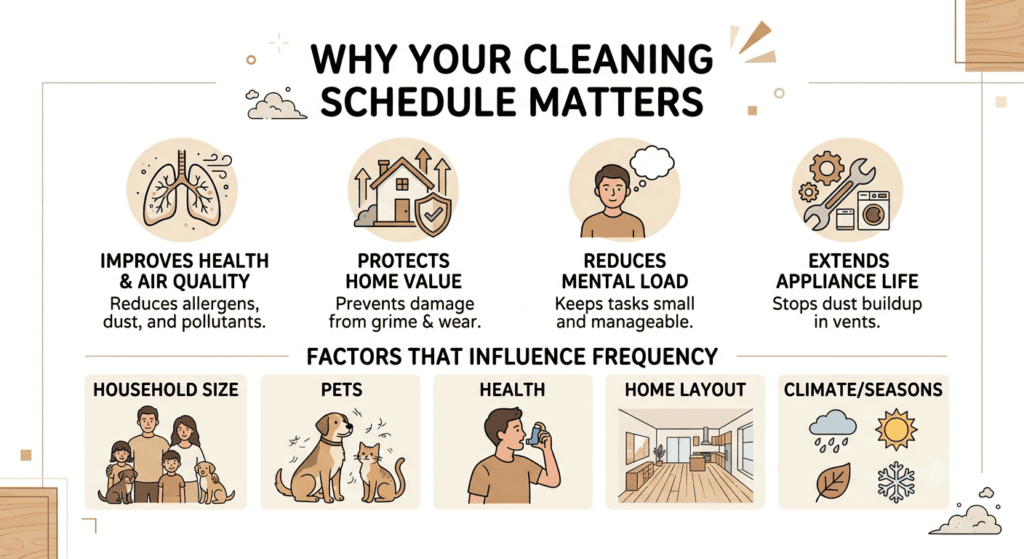
Before getting into the specifics, it helps to understand why frequency matters so much in the first place. A lot of homeowners treat cleaning as a purely cosmetic task – something you do so the house “looks nice” for guests. But the timing of your cleaning routine actually affects your health, your home’s condition, and even your day-to-day stress levels.
Health and Indoor Air Quality
Dust, pet dander, pollen, and everyday grime don’t just sit on surfaces – they circulate through the air you breathe every day. Health experts note that breaking cleaning tasks into daily, weekly, and monthly routines helps reduce allergens and consistently protect indoor air quality, and that individuals with asthma or allergies can see worsened symptoms like coughing and shortness of breath when household dust and pollutants build up unchecked. Even people without existing respiratory issues can experience fatigue and headaches from a home that’s gone too long between cleanings.
This is especially relevant in the Niagara Region, where humid summers and pollen-heavy spring seasons can make allergens a real problem indoors if your home isn’t cleaned on a consistent rhythm.
Protecting Your Home’s Value
Grime doesn’t just look bad – it causes actual wear and tear. Grease left too long on a stovetop becomes harder to remove without damaging the finish. Hard water stains etch into bathroom fixtures the longer they sit. Dust that accumulates in air vents and around appliances can shorten their lifespan and reduce efficiency. A consistent cleaning schedule protects the investment you’ve made in your home, whether you’re planning to stay for decades or sell in a few years.
Reducing Mental Load
There’s also a psychological cost to an inconsistent schedule. When cleaning tasks pile up, what could have been a 10-minute daily task turns into an hours-long weekend chore. Cleaning experts often describe this as the difference between “keeping up” and “catching up” – and catching up is almost always more stressful, more time-consuming, and more exhausting than staying ahead of the mess in small, manageable steps.
Factors That Determine How Often You Should Clean
There isn’t a one-size-fits-all formula, but there are a handful of factors that consistently shape how often a household needs to clean.
Household Size and Lifestyle
More people in a home means more dishes, more laundry, more bathroom use, and more general wear on every surface. A single person living alone might comfortably stretch bathroom cleaning to once a week, while a family of five with young kids may need bathroom touch-ups two or three times a week just to keep things sanitary.
Pets
Pet owners almost always need a tighter cleaning schedule than pet-free households. Shedding fur, tracked-in dirt, and the occasional accident mean floors need more frequent vacuuming – sometimes daily in high-traffic areas – and furniture, bedding, and air vents need extra attention to manage pet dander and odor.
Allergies and Health Sensitivities
If anyone in your household deals with allergies, asthma, or another respiratory condition, a more frequent cleaning schedule directly supports their comfort and health. Dust, dander, and mold spores accumulate quickly, and letting them build up for weeks at a time can make symptoms noticeably worse.
Home Size and Layout
Larger homes take longer to clean overall, but that doesn’t necessarily mean they need more frequent attention – it usually just means each cleaning session takes more time. Open-concept layouts with lots of hard flooring may show dust and dirt more quickly than smaller, carpeted spaces, which can influence how often specific rooms need touch-ups.
Climate and Season
This is where local context really matters. Niagara’s four distinct seasons each bring their own cleaning challenges: spring pollen and mud, humid summer months that encourage mold and mildew in bathrooms, falling leaves and debris tracked in during autumn, and winter salt, slush, and dry indoor air that stirs up dust. Your cleaning schedule should flex a little with the seasons rather than staying static all year.
The Daily Cleaning Checklist (10–15 Minutes)
Daily cleaning isn’t about deep scrubbing – it’s about preventing small messes from snowballing into big ones. A focused 10 to 15 minutes each day covers:
- Wiping down kitchen counters and the stovetop after cooking
- Washing dishes or running the dishwasher
- Wiping bathroom counters and sink after use
- Making beds
- A quick sweep of high-traffic floors, especially near entryways
- Picking up clutter from common areas before it accumulates
- Taking out kitchen trash if it’s full
This daily reset is the foundation that makes every other part of your cleaning schedule easier. Skip it for a week, and even your weekly clean starts to feel like a deep clean.
The Weekly Cleaning Checklist
Once a week, plan for a more thorough pass through the home. Most households find that setting aside 45 to 60 minutes, either all at once or broken into a few sessions across the week, covers the essentials:
- Vacuuming all carpets and rugs
- Mopping hard floors
- Scrubbing the toilet, sink, and shower or tub
- Wiping mirrors and bathroom surfaces
- Dusting visible surfaces, shelves, and furniture
- Changing and washing bed linens
- Wiping down light switches, doorknobs, and remotes
- Emptying all trash and recycling bins throughout the house
Bedding deserves special mention here. Because bodies shed skin cells and oils overnight, unwashed sheets can harbor bacteria and start to smell if left too long – which is exactly why most cleaning experts recommend washing them weekly rather than stretching it to every other week.
The Biweekly House Cleaning Schedule: The Sweet Spot for Many Households
For homeowners who don’t want the commitment of weekly cleaning but still want a consistently tidy home, biweekly service tends to be the most popular middle ground – particularly for professional cleaning. Every-other-week cleaning keeps buildup manageable without the cost of a weekly visit, which is why it’s often described as the “sweet spot” between a spotless home and a reasonable budget.
Biweekly works especially well for smaller households, homes without pets, or anyone supplementing professional visits with their own light daily and weekly upkeep in between. If your home tends to stay relatively low-traffic during the week, biweekly cleaning is usually enough to keep things looking and feeling fresh.
The Monthly Cleaning Checklist
Monthly cleaning tackles the tasks that don’t need weekly attention but shouldn’t be ignored for months at a time:
- Cleaning interior and exterior windows
- Wiping down kitchen appliances inside and out (microwave, oven exterior, fridge exterior)
- Dusting baseboards, door frames, and window sills
- Vacuuming upholstered furniture
- Organizing closets and cabinets
- Cleaning ceiling fans and light fixtures
- Wiping down walls and doors where marks accumulate
If you rely purely on a monthly schedule without any weekly maintenance in between, expect each session to feel more like a mini deep clean, since more grime has had time to set in.
Seasonal and Deep Cleaning: How Often You Really Need It
This is one of the most common points of confusion. A deep clean is different from your regular weekly or biweekly maintenance – it targets the areas that get overlooked in routine cleaning, like behind appliances, inside cabinets, baseboards, window tracks, grout lines, and light fixtures.
Deep cleaning frequency for most homes lands somewhere between two and four times a year, though this shifts depending on your household. Homes with pets, kids, or heavy foot traffic often benefit from deep cleaning closer to every three months, while lower-traffic homes can often stretch to twice a year and still stay in good shape.
Spring Cleaning in Niagara
Spring is the classic deep-cleaning season, and for good reason. After a Niagara winter of closed windows, road salt tracked indoors, and dry heated air circulating dust, spring is the natural reset point. It’s also a good time to check exterior drainage, inspect for winter damage, and clear away any debris that built up around the property over the colder months.
Fall Preparation Before Winter
Before the Niagara winter sets in, a fall deep clean helps your home go into the colder months in good shape. This is the time to deep clean the basement, check window and door seals, dry-clean heavier bedding, and give bathrooms and kitchens the deep attention they need before the household spends more time indoors.
Room-by-Room Cleaning Frequency Guide
Not every room needs the same level of attention. Here’s a realistic breakdown of how often each key space in your home actually needs cleaning.
Kitchen
The kitchen accumulates grease and food residue faster than almost any other room in the house. Daily wipe-downs of counters and the stovetop are essential, weekly cleaning should cover the sink, cabinet fronts, and floors, and a deeper clean of the oven, refrigerator interior, and range hood should happen roughly every two to three months.
Bathrooms
Bathrooms need weekly scrubbing at minimum – toilets, sinks, tubs, and shower walls – because moisture creates the perfect environment for mold and mildew. Deeper attention to grout, caulking, shower glass, and exhaust fans is generally recommended every two to three months, since hard water stains and mold develop gradually and become tougher to remove the longer they’re left.
Bedrooms
Bedrooms collect dust but generally stay cleaner than high-traffic spaces. Weekly vacuuming and linen changes keep them fresh, while ceiling fans, baseboards, under-the-bed areas, closets, and window treatments only need attention every four to six months.
Living Areas
Living rooms and other common spaces need weekly vacuuming and dusting, with occasional deeper attention to upholstery, air vents, and window tracks every few months, especially if pets spend time on furniture.
Floors and Carpets
Floors should be swept or vacuumed weekly at minimum, and more often in homes with pets or young kids. Carpets benefit from a professional deep clean roughly once or twice a year to remove embedded dirt and allergens that regular vacuuming can’t fully reach.
How Often Should You Schedule House Cleaning If You Hire a Professional?
Once you’ve mapped out your own routine, the next question is how often to schedule house cleaning through a professional service. The right frequency really comes down to your lifestyle, budget, and how much upkeep you’re willing to do yourself between visits.
Weekly Professional Cleaning
Weekly service is the best choice for households that want their home consistently under control with minimal effort on their part. It works particularly well for busy families, homes with pets, or anyone managing allergies who wants dust and dander kept to a minimum at all times.
Biweekly Professional Cleaning
As mentioned earlier, biweekly house cleaning is the most commonly booked frequency for a reason – it strikes a strong balance between cost and results. It’s a great fit for smaller households or anyone comfortable doing light daily tidying between professional visits.
Monthly Professional Cleaning
Monthly service works well as a maintenance reset rather than a full replacement for your own routine. It’s best suited to lower-traffic homes, or as a supplement for homeowners who handle weekly cleaning themselves but want a professional deep clean once a month to hit the spots that are easy to miss.
What Professional House Cleaning Costs in Niagara (2026)
House cleaning cost in Ontario has settled into a fairly predictable range in 2026, though your exact quote will depend on home size, condition, and how often you book.
Across the province, standard cleaning typically runs $120 to $350 per visit, with hourly rates generally falling between $30 and $55 per cleaner. Deep cleaning tends to cost more, often in the $200 to $700 range depending on square footage and how much buildup needs to be addressed, while move-in and move-out cleaning – which requires the most thorough top-to-bottom attention – usually lands between $250 and $750.
Locally, Niagara Region pricing tends to sit close to the Ontario average, with standard cleans for a typical home starting in the low-to-mid $200s and scaling up based on square footage and number of bathrooms. Recurring bookings almost always come with a discount: many companies offer roughly 10 to 20 percent off for weekly or biweekly clients compared to one-time visits, which is one more reason a consistent schedule tends to pay off financially as well as practically. Keep in mind that Ontario’s 13% HST applies to professional cleaning services, so it’s worth confirming whether a quoted price is before or after tax.
DIY vs. Professional Cleaning: Which Is Right for You?
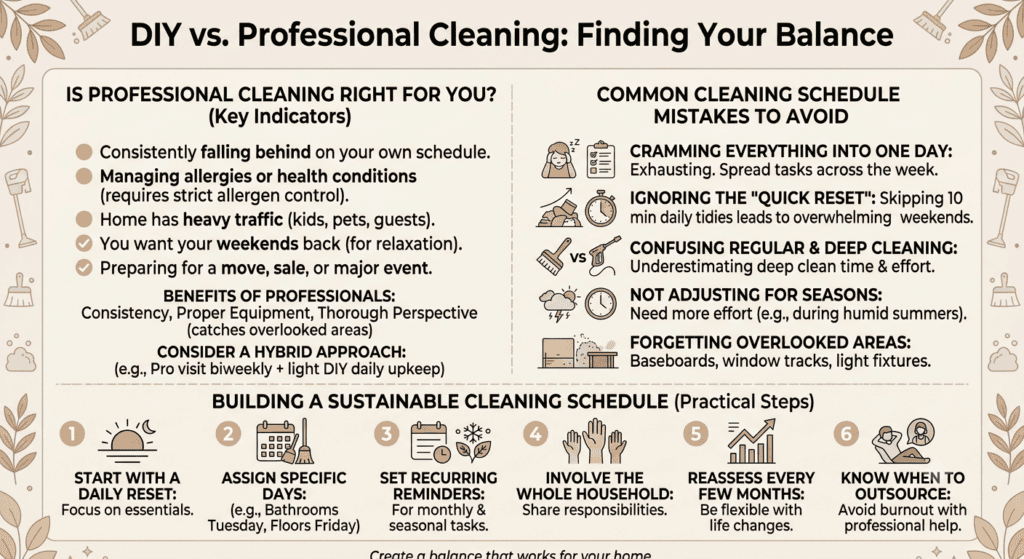
Plenty of households manage perfectly well with a DIY schedule, especially when they stay consistent with daily and weekly habits. But there are a few signs it might be time to bring in professional help:
- You consistently fall behind on your own schedule despite good intentions
- You’re managing allergies or a health condition that requires stricter allergen control
- Your home sees heavy traffic from kids, pets, or frequent guests
- You simply want your weekends back
- You’re preparing for a move, a sale, or hosting a major event
Professional cleaners bring consistency, proper equipment, and an outside perspective that catches things a busy homeowner might overlook. Many households land on a hybrid approach – a professional biweekly or monthly visit paired with light daily upkeep in between.
Common Cleaning Mistakes That Throw Off Your Schedule
Even well-intentioned homeowners run into the same handful of scheduling mistakes:
Trying to do everything in one day. Cramming daily, weekly, and monthly tasks into a single marathon session is exhausting and unsustainable. Spreading tasks across the week is far more manageable.
Ignoring the “quick reset.” Skipping the 10-minute daily tidy is the single biggest reason weekly cleaning starts to feel overwhelming. Small daily habits prevent big weekend catch-up sessions.
Treating deep cleaning and regular cleaning as the same thing. Regular cleaning maintains what’s already reasonably clean; deep cleaning resets a space that’s built up months of grime. Confusing the two often means underestimating how long a deep clean will actually take.
Not adjusting for the season. A schedule that works in a low-humidity winter month might not be enough during a humid Niagara summer when mold and mildew develop faster in bathrooms.
Forgetting overlooked areas. Baseboards, window tracks, light fixtures, and behind large appliances are easy to skip during routine cleaning and quietly build up dirt for months at a time.
Building a Cleaning Schedule That Actually Works for You
The best cleaning schedule isn’t necessarily the most intensive one – it’s the one you’ll actually maintain. A few practical steps make it easier to stick with:
- Start with your daily reset. This is the non-negotiable foundation everything else builds on.
- Assign specific days to specific tasks. Bathrooms on Tuesday, floors on Friday – rotating tasks across the week prevents any single day from feeling overwhelming.
- Set a recurring reminder for monthly and seasonal tasks. These are the easiest to forget because they don’t come up every week.
- Involve the whole household. Cleaning is far more manageable when tasks are shared rather than falling on one person.
- Reassess every few months. Life changes – a new pet, a new baby, a move – and your schedule should flex with it.
- Know when to outsource. There’s no reward for burning out trying to do it all yourself when professional help is available and affordable.
Sample Weekly Cleaning Schedule by Day
Spreading tasks across the week is one of the most effective ways to keep a house cleaning schedule sustainable. Here’s an example of how you might break it down:
- Monday: Kitchen deep wipe-down – appliance fronts, inside the microwave, sink scrub
- Tuesday: Bathrooms – toilets, sinks, tubs, mirrors, and floors
- Wednesday: Dusting – shelves, furniture, electronics, and light fixtures
- Thursday: Floors – vacuum carpets and rugs, mop hard surfaces throughout the home
- Friday: Laundry and linens – wash sheets, towels, and any weekly loads
- Saturday: Living areas and bedrooms – tidy, organize, and handle any leftover tasks
- Sunday: Light reset – quick walkthrough, plan the week ahead, take stock of what needs attention
This kind of rotation means no single day requires more than 20 to 30 minutes of focused cleaning, which makes the whole system far easier to maintain than trying to tackle everything in one long weekend session.
Cleaning Schedule Guidelines for Different Household Types
Because household composition has such a big impact on cleaning needs, it helps to see how the general guidelines shift depending on who’s living in your home.
Single professionals or couples without pets generally do well with a weekly cleaning routine and a deep clean every four to six months. Lower foot traffic and fewer people mean less buildup between sessions.
Families with young children typically need more frequent attention to floors, bathrooms, and high-touch surfaces like doorknobs and light switches. A twice-weekly bathroom touch-up and daily floor sweep, combined with weekly full cleaning, usually keeps things manageable. Deep cleaning every two to three months is a reasonable target.
Pet owners should expect to vacuum more frequently – often every two to three days in high-shedding households – along with regular attention to furniture, pet bedding, and air vents to manage dander. A biweekly or monthly professional deep clean can help address embedded fur and odor that regular vacuuming doesn’t fully remove.
Households managing allergies or asthma benefit from the tightest schedule of the group, since dust, dander, and pollen buildup can directly affect symptoms. Daily dusting of high-touch surfaces, weekly HEPA vacuuming, and more frequent washing of bedding all help keep allergen levels down.
Renters preparing to move, or homeowners preparing to sell, are really in a different category altogether – this calls for a one-time, top-to-bottom move-in or move-out clean rather than a recurring schedule, since the goal is a completely reset space rather than ongoing maintenance.
Short-term rental and Airbnb hosts operate on an entirely different rhythm, since the “schedule” is really dictated by guest turnover rather than the calendar. Every checkout typically requires a full reset – laundry, sanitizing high-touch surfaces, restocking supplies, and a thorough walkthrough – often within just a few hours before the next check-in.
How NLLC Can Help You Stay on Top of It All
If reading through all of this has you thinking “I’d rather just have someone handle this,” you’re far from alone – and that’s exactly where a trusted local team comes in. NLLC (Niagara Landscaping, Lawn Care & Cleaning) has been serving homeowners and businesses across St. Catharines, Niagara Falls, Welland, Fort Erie, Niagara-on-the-Lake, Thorold, Port Colborne, and the wider Niagara Region with dependable, professional property care.
NLLC’s cleaning services cover the full range this guide has walked through, including residential cleaning on a weekly, biweekly, or monthly schedule, commercial cleaning for businesses that need a spotless space for staff and customers, and Airbnb turnover cleaning for hosts who need a fast, reliable reset between guests. If you’re relocating, NLLC also offers move-in/move-out cleaning to get a property truly spotless before or after a move, along with window cleaning, janitorial services, and disinfection services for households and workplaces that need an extra layer of sanitization.
Beyond cleaning, NLLC also handles lawn care and landscaping, garbage and junk removal, and snow removal – making it possible to cover nearly every aspect of property upkeep through one trusted local team instead of juggling multiple contractors.
Whatever frequency fits your household best, you don’t have to figure it out or manage it alone. Reach out to NLLC through their contact page for a customized quote, or call +1 365 607 0015 to talk through a schedule that fits your home, your budget, and your life.
Final Thoughts
There’s no universal answer to how often you should schedule house cleaning – it depends on your household size, pets, allergies, home layout, and the season. What matters most is building a rhythm you can actually maintain: daily resets to prevent buildup, weekly maintenance to keep things consistently fresh, monthly attention to the details, and seasonal deep cleans to reset the areas routine cleaning misses.
Whether you handle it yourself or bring in a professional team, the goal is the same – a home that stays comfortable, healthy, and welcoming without taking over your entire schedule. And if you’d rather leave the scrubbing to the experts, NLLC is ready to help homeowners across the Niagara Region build a cleaning schedule that actually works.
Frequently Asked Questions
How often should you schedule house cleaning if you live alone? A single-person household can often manage comfortably with a weekly cleaning routine, supplemented by quick daily resets in the kitchen and bathroom. Deep cleaning two to four times a year is usually plenty.
Is biweekly cleaning enough for a family with kids? It depends on the family. Biweekly professional cleaning paired with your own light daily and weekly upkeep works well for many families, though households with very young children or pets often prefer weekly service for more consistent results.
How often should carpets be professionally cleaned? Most homes benefit from a professional carpet clean once or twice a year, or more frequently in homes with pets, allergies, or heavy foot traffic.
What’s the difference between regular cleaning and deep cleaning? Regular cleaning maintains a home’s day-to-day cleanliness – floors, surfaces, bathrooms, and general tidying. Deep cleaning goes further, addressing buildup in areas like behind appliances, inside cabinets, baseboards, and window tracks, and is typically needed every three to six months rather than every week.
Does the season really affect how often I should clean? Yes. Humid summer months in Niagara can accelerate mold and mildew growth in bathrooms, while winter brings salt, slush, and dry indoor air that stirs up dust. Adjusting your schedule slightly with the seasons keeps your home consistently comfortable year-round.
How much does professional house cleaning cost in the Niagara Region? Standard cleaning typically starts in the low-to-mid $200 range for an average home, with deep cleaning and move-out cleaning costing more depending on square footage and condition. Recurring weekly or biweekly bookings usually come with a discount compared to one-time visits.
Should I clean before the cleaners arrive? A general tidy-up – putting away clutter and personal items – helps your cleaning team focus their time on actual cleaning rather than organizing, and often results in a more thorough clean for the same visit length.
How do I know if I need to increase my cleaning frequency? If you’re noticing more dust between cleanings, allergy symptoms flaring up, lingering odors, or simply feeling like you’re always “catching up,” it’s usually a sign your current schedule isn’t quite matching your household’s needs.
Can I switch between weekly and biweekly cleaning depending on the season? Yes, and many households do exactly this. It’s common to book weekly service during busier or higher-traffic seasons – like summer, when kids are home and doors are opening and closing constantly – and scale back to biweekly during quieter months. A good local cleaning provider can usually accommodate seasonal adjustments without locking you into a rigid contract.
What should I do if I’ve fallen far behind on cleaning? Don’t try to catch up in a single session – it’s overwhelming and easy to burn out on. Start with the highest-impact areas (kitchen and bathrooms), then work through the rest of the home over a few days, or consider booking a one-time deep clean to reset everything at once before returning to a regular maintenance schedule.