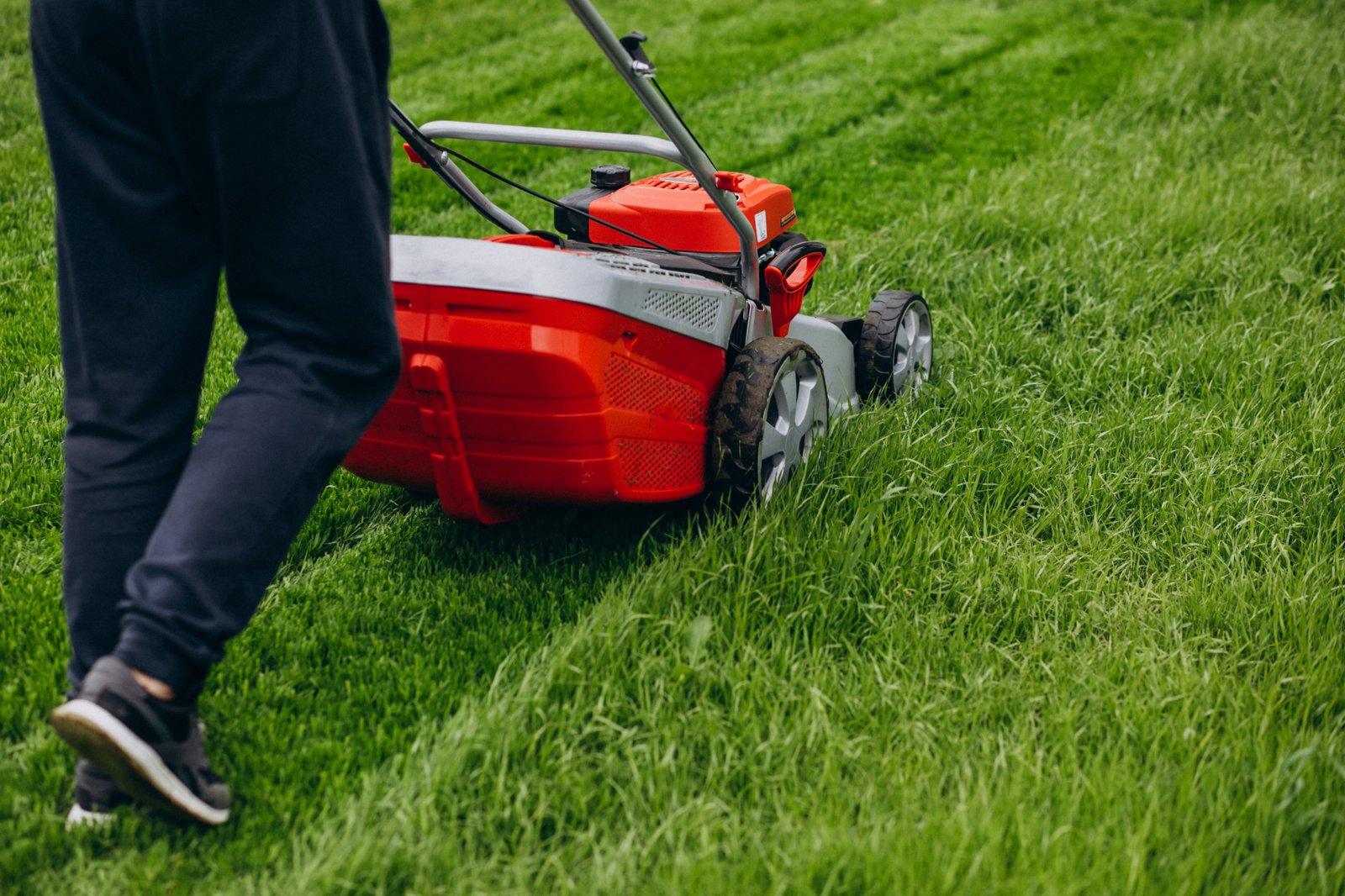
Walk down any street in Niagara Falls, St. Catharines, or Welland and you can usually guess which homes are about to sell. It’s not the ones with the newest siding or the shiniest front door. It’s the ones where the lawn is thick and green, the beds are edged, the walkway is clear, and everything looks cared for. That “cared for” feeling is worth real money, and it happens before a buyer ever touches the front door handle.
If you’ve been wondering whether it’s actually worth spending time and money on your yard, or whether it’s just something homeowners tell themselves to justify a Saturday spent pulling weeds, the short answer is yes. Landscaping increase property value is one of the best-documented facts in residential real estate, and the data behind it has only gotten stronger in the past couple of years.
This guide walks through exactly why that’s true, what the research actually says, and ten specific outdoor upgrades that Niagara Region homeowners can use to add real dollars to their home’s value, whether they’re planning to list next spring or simply want their property to be worth more five years from now.
Landscaping isn’t just mowing the lawn once a week and calling it done. It’s an ongoing investment, the same way you’d think about a kitchen renovation or a new roof. The difference is that landscaping tends to pay you back faster, cost less upfront, and improve your day-to-day life while you wait for the return. That combination is hard to find anywhere else in home improvement.
Does Landscaping Increase Property Value?
This is the question every homeowner asks before they spend a dollar on their yard, and it’s a fair one. Fortunately, there’s more research on this topic than almost any other category of home improvement, and it consistently points the same direction.
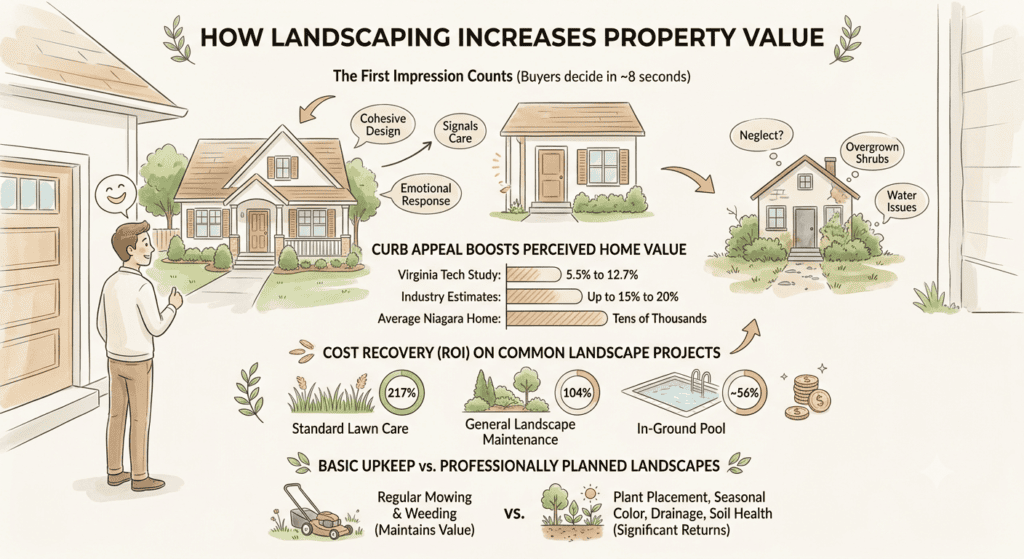
A widely cited Virginia Tech study found that high-quality landscaping can increase a home’s perceived value by roughly 5.5% to 12.7% compared to an identical property with no landscaping at all. Other industry estimates place the ceiling even higher, with exceptional landscaping adding up to 15% to 20% to a home’s market value in strong markets. On an average Niagara Region home, that range represents tens of thousands of dollars, often for a fraction of that amount in actual project cost.
The numbers get even more specific when you look at cost-recovery data. According to joint research from the National Association of Realtors and the National Association of Landscape Professionals, standard lawn care service returns roughly 217% of its cost at resale, and general landscape maintenance returns around 104%. Compare that to an in-ground pool, which typically recovers only about 56% of its cost, and it becomes clear why real estate professionals push landscaping so hard before a listing goes live. Exterior-focused renovations sit among the least expensive projects a homeowner can take on, yet they deliver some of the largest returns because they shape a buyer’s emotional response before they’ve even walked through the front door. Thinking about landscaping ROI this way helps homeowners prioritize their budget: the goal isn’t to spend the most money, it’s to spend it on the projects that buyers and appraisers actually notice and reward.
Why Buyers Judge the Exterior Before They Judge Anything Else
Real estate agents will tell you the sale is often won or lost in the first eight seconds, which is roughly how long it takes a buyer to form an opinion while still standing in the driveway. That opinion colours everything that happens once they step inside. A home with a patchy lawn and overgrown shrubs makes buyers wonder what else has been neglected, even if the roof was replaced last year and the furnace is brand new. A home with a tidy, well-planned yard signals the opposite: this property has been looked after, and that impression carries through the entire showing.
Nearly all real estate professionals now consider curb appeal essential to attracting buyers, and the large majority proactively recommend landscaping improvements before a home goes on the market. That’s not marketing spin. It reflects what agents see happen at open houses week after week.
DIY Landscaping vs. Professionally Planned Landscapes
There’s an important distinction between landscaping that happens to look decent and landscaping that was actually designed to increase value. A homeowner who mows regularly and pulls the odd weed is doing basic upkeep, and that upkeep does help. But a professionally planned landscape considers plant placement, seasonal colour, soil health, drainage, and how the entire property reads as a cohesive whole. That level of planning is where the bigger returns tend to show up, particularly for homeowners preparing to list within the next year or two. It’s also where a lot of homeowners get it wrong on their own, spending money on the wrong plants for their soil or grading a bed in a way that sends water toward the foundation instead of away from it.
With that foundation in place, let’s get into the ten specific upgrades that make the biggest difference.
1. Start With a Healthy, Well-Kept Lawn
Every high-ROI landscaping list starts in the same place, and for good reason. Your lawn is the largest single visual element of your property, and it’s the one buyers see from the moment they turn onto the street.
A healthy lawn checklist includes:
- Consistent green colour achieved through proper watering and soil health, not just fertilizer
- Active weed control so dandelions and crabgrass don’t dominate the space between mowings
- Regular mowing at the correct height for your grass type, since cutting too short stresses the turf and invites weeds
- Clean lawn edging along driveways, walkways, and beds, which creates the crisp lines that read as “professionally maintained” even before anyone examines the details
- Seasonal fertilization timed to Southern Ontario’s growing season, with a heavier feed in fall to build root strength before winter
The financial case for this one is almost absurdly strong. Standard lawn care service has been shown to return over double its cost at resale, making it one of the highest cost-recovery projects in the entire home improvement category, ahead of most kitchen and bathroom updates. It’s also the cheapest item on this list to get right, particularly if you’re already paying for regular lawn care services rather than trying to squeeze it in around a busy schedule.
2. Add Trees That Increase Long-Term Value
Trees are the closest thing to a compounding investment that landscaping has to offer. A tree planted today is worth more in ten years than it is now, which is the opposite of almost every other home improvement.
Mature, well-placed trees can add measurable value to a property while also cutting cooling costs in summer through strategic shade. Trees positioned on the south and west sides of a home can meaningfully reduce energy bills during hot Niagara summers, a detail that resonates with buyers who are thinking about long-term ownership costs, not just the sale price today.
Species that perform well in the Niagara Region and broader Southern Ontario climate include native options like red maple, honey locust, and mountain ash, all of which tolerate the region’s freeze-thaw winters and occasional summer dry spells without excessive maintenance. Native redbud and serviceberry work well as smaller ornamental trees for properties without room for a full canopy species.
Placement matters as much as species selection. A tree planted too close to the foundation can cause root intrusion problems down the road, while one planted too far from any structure loses its energy-saving benefit. A thoughtful planting plan balances shade, root spread at maturity, and sightlines from the street, so the tree adds to the property’s appeal rather than blocking the house from view entirely.
3. Create Functional Spaces for Outdoor Living
If there’s one trend that has reshaped landscaping priorities over the past couple of years, it’s this one. Buyers in 2026 aren’t satisfied with a bare concrete slab anymore. They’re actively looking for homes with finished outdoor rooms where they can entertain, unwind, or work from home on a nice day, and they’re willing to pay a premium for a property that already has that space built out.
An outdoor living space can include:
- Patios with defined seating and dining zones
- Fire pits that extend usable outdoor time into the shoulder seasons
- Decks that connect the home’s interior to the backyard
- Outdoor dining areas positioned near the kitchen for easy indoor-outdoor flow
The data backs up why buyers respond so strongly to these spaces. A well-designed patio can add roughly 8% to 10% to a home’s overall value while recovering a strong share of its installation cost at resale. The reason is straightforward: buyers see a finished outdoor room as more square footage they can actually use, not just a yard they’ll need to figure out how to landscape themselves after closing.
The projects that hold their value long-term are the ones built on a proper foundation, meaning correctly compacted base material and grading that pushes water away from the patio and the home. Homeowners who hire the cheapest bid often see pavers heave and settle within a couple of years because that base work was rushed, which undercuts the entire investment.
4. Install Walkways and Stone Features
Hardscaping refers to the non-living, structural elements of a landscape: stone pathways, interlocking pavers, retaining walls, and front entrance features. Unlike plants, these elements don’t die in a hard winter or need replacing every few years, which is exactly why buyers respond well to them.
Key structural upgrades to consider:
- Stone or paver pathways connecting the driveway to the front entrance, replacing worn concrete or a muddy dirt path
- Interlocking pavers for patios, walkways, or driveway aprons that hold up to Niagara’s freeze-thaw cycles when installed correctly
- Retaining walls on sloped properties, which solve erosion problems while adding visual structure
- Front entrance improvements, including updated steps, lighting fixtures, and planted borders that frame the entryway
These structural elements complement the softer, plant-based parts of a yard by giving the whole property a sense of permanence and intentional design. They also deliver value in every season, since a well-built stone pathway looks just as sharp buried in November slush as it does in July. That year-round consistency is part of why these structural upgrades consistently rank among the top improvements for both visual appeal and functional use of the property, offering a level of property value landscaping impact that softscaping alone can’t match.
5. Upgrade Landscape Lighting
Lighting is one of the most underrated upgrades on this list, largely because homeowners tend to think about their yard only during daylight hours. But a huge share of home showings, evening walks by prospective buyers, and general first impressions happen after the sun goes down.
Landscape lighting upgrades worth prioritizing:
- Pathway lighting along walkways and steps, both for safety and for visual interest after dark
- Accent lighting on trees, architectural features, or garden beds to create depth
- LED fixtures, which have become the standard for their low energy use and long lifespan compared to older halogen systems
- Security-focused lighting near entry points, which buyers increasingly view as a practical safety feature rather than a luxury add-on
A well-lit exterior does double duty. It makes the home feel safer and more finished during evening showings, and it lets homeowners actually enjoy their backyard after work throughout the summer months, not just on weekend afternoons.
6. Focus on Low-Maintenance Landscaping
One of the clearest shifts in buyer preference over the past few years is a move away from high-maintenance, labour-intensive gardens toward yards that look great without demanding constant attention. Intricate, time-consuming plantings can actually deter buyers who are picturing their own weekends, not a second job of weeding and pruning.
Low-maintenance strategies that work well in the Niagara climate include:
- Native plants such as purple coneflower, black-eyed Susan, and wild bergamot, which are adapted to local soil and rainfall patterns and require far less babying than imported ornamentals
- Drought-tolerant perennials like catmint, sedum, yarrow, and Russian sage for sunny beds that can go longer between waterings during dry summer stretches
- Proper mulching, which suppresses weeds, retains soil moisture, and gives beds a finished, tidy appearance without constant upkeep
- Reduced lawn footprint in favour of planted beds in areas that are difficult to mow or don’t get enough sun to support healthy turf
Native species also bring an added benefit that’s becoming more important to buyers: they support local pollinators and wildlife while requiring less water and fewer chemical inputs than non-native alternatives. That sustainability angle is increasingly part of the pitch when a home goes to market, particularly for buyers who plan to be hands-on with their own yard after moving in.
7. Solve Drainage and Grading Problems
This upgrade doesn’t photograph well, and it’s easy to overlook because the payoff is invisible until something goes wrong. But drainage and grading issues sit at the intersection of landscaping and structural protection, and buyers’ inspectors know exactly what to look for.
Common problems worth addressing before they escalate:
- Water pooling near the foundation after rain, which signals improper grading and can lead directly to basement moisture issues
- Soil erosion on sloped sections of the yard, often visible as exposed roots or bare patches where topsoil has washed away
- Negative grading, where the ground slopes toward the house instead of away from it
- French drains, which redirect groundwater away from the foundation on properties where surface grading alone isn’t enough
The financial argument here is stark. Foundation repair from water damage can run well into the tens of thousands of dollars, while proper grading and drainage work typically costs a small fraction of that. One prevented water intrusion event can pay for the drainage fix three to five times over, and most home insurance policies don’t cover gradual water damage, which makes prevention the homeowner’s only real protection.
Correcting grading and drainage issues doesn’t just protect the structure. It also protects every other landscaping investment on this list, since standing water and erosion can undo a patio, kill a newly planted bed, or wash out mulch within a single wet season.
8. Keep Landscaping Professionally Maintained
A beautifully installed landscape that gets neglected for even a single season starts to lose the exact value it was designed to add. Maintenance is what protects the investment over time, and it’s where a lot of homeowners underestimate how much ongoing work a yard actually needs.
Core maintenance tasks include:
- Seasonal cleanup, particularly spring debris removal and fall leaf clearing before snowfall
- Shrub and hedge trimming to keep plantings from overtaking walkways or windows
- Consistent lawn care through the growing season, including mowing, edging, and weed management
- Garden bed maintenance, including deadheading spent flowers and refreshing mulch annually
- Periodic property inspections to catch small issues like a cracking paver or a struggling shrub before they become expensive problems
Homeowners who treat maintenance as a one-time project rather than an ongoing commitment often find their yard slides backward within a year or two. A consistent maintenance plan, whether handled personally or through a landscaping company, is what keeps a property’s exterior at the level buyers expect when it eventually goes on the market. It’s also far cheaper to maintain a healthy landscape than to rebuild a neglected one from scratch, since replacing dead plants, dead turf, and worn-out beds costs significantly more than the ongoing upkeep would have.
9. Add Seasonal Colour Throughout the Year
A yard that peaks for three weeks in June and looks tired the rest of the year isn’t making the most of its potential. Thoughtful seasonal planning keeps a property looking intentional across all four seasons, which matters because buyers view homes year-round, not just in peak spring listing season.
Ideas for extending seasonal interest:
- Perennials with staggered bloom times so something is always flowering from spring through fall
- Flower beds near the entrance and along walkways, positioned where they’ll be seen from the street
- Decorative planters on porches and steps, which are easy to refresh seasonally without disturbing permanent beds
- Evergreen shrubs that provide structure and colour through the winter months when perennials have died back
- Winter interest landscaping, including ornamental grasses left standing through the cold months and trees with interesting bark or branch structure
This is one of the more affordable upgrades on the list, and it’s also one of the most visible. A rotating display of seasonal colour signals ongoing care in a way that a static, unchanging yard simply can’t match.
10. Bring In the Professionals
Every upgrade on this list can technically be done by a determined homeowner with a weekend and a truck rental. But there’s a reason professional landscaping services consistently outperform DIY efforts when it comes to actual resale value.
A professional brings:
- Better design planning that considers how the entire property functions together, not just one bed or feature at a time
- Proper plant selection matched to your specific soil type, sun exposure, and the Niagara Region’s hardiness zone, which reduces the risk of costly replacements down the road
- Long-term savings from avoiding common DIY mistakes, like planting the wrong species too close to the foundation or grading a bed incorrectly
- Increased resale value driven by a cohesive, professionally executed look that buyers and appraisers both recognize
- Reduced ongoing maintenance costs through smart plant and material choices upfront that don’t require constant intervention later
The gap between a DIY landscaping project and one designed by professionals often isn’t obvious at first glance. It shows up two or three years later, when the DIY beds are struggling and the professionally planned ones are thriving with minimal input. For homeowners who are serious about landscaping for resale, that difference is worth the upfront investment.
Common Landscaping Mistakes That Hurt Property Value
Not every yard project adds value. Some actively work against a homeowner’s goals, and it’s worth knowing what to avoid before spending time or money.
- Overgrown trees and shrubs that block windows, crowd walkways, or overwhelm the scale of the house
- Dead or patchy grass that signals neglect from the moment a buyer pulls into the driveway
- Poor drainage left unaddressed, which can scare off buyers during a home inspection
- Overly elaborate design elements, such as too many garden ornaments, mismatched materials, or an excessive number of stone and paved features competing for attention
- High-maintenance gardens that require constant, specialized care most buyers won’t want to take on
- Neglected edging along beds and walkways, which makes even a healthy lawn look unfinished
- Inconsistent maintenance, where parts of the yard are clearly cared for and others are visibly ignored
The theme across all of these mistakes is the same: buyers are drawn to landscapes that feel intentional and manageable, not extravagant or overwhelming. A tidy, well-planned yard almost always outperforms a bigger, more elaborate one that looks like it needs a full-time gardener.
Why Canadian Homeowners Choose Professional Landscaping
Canadian properties face a set of challenges that make professional landscaping particularly valuable compared to milder climates. Winters bring hard freezes, spring brings runoff and thaw, and summer can swing between heavy rain and dry stretches within the same season.
Key regional factors include:
- Seasonal weather extremes, including snow load, ice, and freeze-thaw cycles that stress poorly installed stonework and kill non-hardy plant species
- Rain and thaw drainage demands, which make proper grading and drainage planning more important here than in regions with steadier year-round weather
- Plant selection for hardiness zones, since a plant that thrives through a hot summer but can’t survive a Niagara winter is a wasted investment
- Year-round maintenance planning, from spring cleanup through fall leaf removal and everything in between
- Long-term investment protection, since correctly installed structural features and properly selected plants hold their value through harsh winters instead of needing replacement every few years
This is exactly why residential landscaping in the Niagara Region benefits from local expertise. A landscaping company that understands the specific freeze-thaw patterns, soil conditions, and native plant options for Niagara Falls, St. Catharines, Welland, and the surrounding communities can design a yard that performs well through every season, not just the ones that look good in photos.
Frequently Asked Questions
How much can landscaping increase my home’s value? Research consistently points to a range of 5% to 15%, with some studies showing up to 20% in strong markets. On an average-priced home, that can translate into tens of thousands of dollars in added value, often for a fraction of that amount spent upfront.
What’s the single highest-ROI landscaping project? Basic, consistent lawn care tends to top every list, with cost recovery well above 200% at resale. It’s also the cheapest project on this list, making it the easiest place to start.
Should I landscape before listing my home, or focus on the interior first? Ideally, both matter, but a strong exterior first impression often gets buyers through the door in the first place, and that impression sets the tone for how they judge everything else in the home. Many real estate professionals recommend addressing landscaping issues before investing heavily in interior cosmetic updates, since a neglected yard can undercut an otherwise strong listing.
Is it worth hiring a professional, or can I handle landscaping myself? DIY upkeep like mowing and basic weeding is worth doing regardless. But for design decisions, plant selection, grading, and stonework, professional planning tends to produce a stronger, more durable result and avoids costly mistakes that show up years later. This is especially true in Canadian landscaping projects, where freeze-thaw cycles punish shortcuts that might go unnoticed in milder climates.
What landscaping features should I avoid before selling? Overly elaborate or highly specialized gardens, unusual paving materials that clash with the home’s style, and anything that signals high ongoing maintenance can work against you. Buyers generally respond best to clean, cohesive, low-maintenance designs.
How often should landscaping be maintained to protect its value? Most properties benefit from a consistent seasonal schedule: spring cleanup, regular mowing and bed maintenance through summer, and fall cleanup before winter. Letting maintenance lapse for even one season can noticeably reduce a yard’s appearance and, by extension, its value.
Does landscaping actually protect my home, or is it purely cosmetic? It’s both. Proper grading and drainage protect the foundation from water damage, mature trees reduce energy costs, and well-placed stonework prevents erosion. The cosmetic benefits get the most attention, but the protective ones often matter more financially over time.
Are native plants really better for Niagara Region properties? In most cases, yes. Native species like coneflower, black-eyed Susan, and native tree varieties are adapted to local soil, rainfall, and winter conditions, which means less replacement, less watering, and less overall maintenance compared to non-native alternatives.
The Bottom Line
Landscaping isn’t an expense you write off once the receipt is filed away. It’s an investment that keeps paying, whether that’s through a stronger sale price down the road, lower energy bills from well-placed shade trees, fewer costly drainage repairs, or simply enjoying a backyard that actually feels finished. A professionally maintained outdoor space improves the first impression a home makes, protects the property from water and erosion damage, creates functional living areas buyers are actively looking for, and builds equity in a way that few other home improvements can match. Ultimately, this is why landscaping increase property value calculations show up so consistently across studies, markets, and price points: the improvements that make a yard more enjoyable to live in are frequently the same ones that make it more valuable to sell.
Even homeowners with no plans to sell anytime soon benefit from getting this right. A well-designed, properly maintained landscape means less time spent fighting an unruly yard, lower long-term maintenance costs, and a property that continues to gain value quietly in the background.
If you’re ready to turn your yard into one of your home’s biggest assets, NLLC provides landscaping, lawn care, and property maintenance services throughout Niagara Falls, St. Catharines, Welland, Fort Erie, Niagara-on-the-Lake, Thorold, Port Colborne, and the surrounding Niagara Region. Request a free quote today and find out exactly what your outdoor space could be worth.