
Winter doesn’t just disappear when the snow melts – it leaves a mark on your home. After months of freezing temperatures, ice, wind, and heavy snow loads, most Canadian houses come out of winter carrying at least a little bit of hidden damage. Some of it is obvious, like a cracked walkway or a gutter hanging loose. A lot of it isn’t, which is exactly why a spring property maintenance checklist matters so much for homeowners across Ontario and the Niagara Region.
Here’s the thing about a Canadian winter: it’s not one event, it’s a cycle. Temperatures swing above and below freezing dozens of times between November and April. Water gets into tiny cracks in your foundation, siding, and roofing, freezes, expands, and forces those cracks wider. Then it thaws, refreezes, and does it again. Add in road salt, heavy snow loads on your roof, and ice damming along your eaves, and you’ve got a recipe for problems that quietly get worse all winter long – problems you usually can’t see until the snow is gone.
That’s why spring is the season homeowners can’t afford to skip. A thorough, room-by-room and yard-by-yard inspection now can save thousands of dollars later. Consider this: water damage is the single leading cause of home insurance claims in Canada, responsible for roughly a third of all property damage payouts, and claims tied to water entering homes from the outside jumped sharply in the past year alone. Much of that damage traces back to the same culprits – clogged gutters, cracked foundations, and neglected drainage – all things a spring maintenance routine is built to catch.
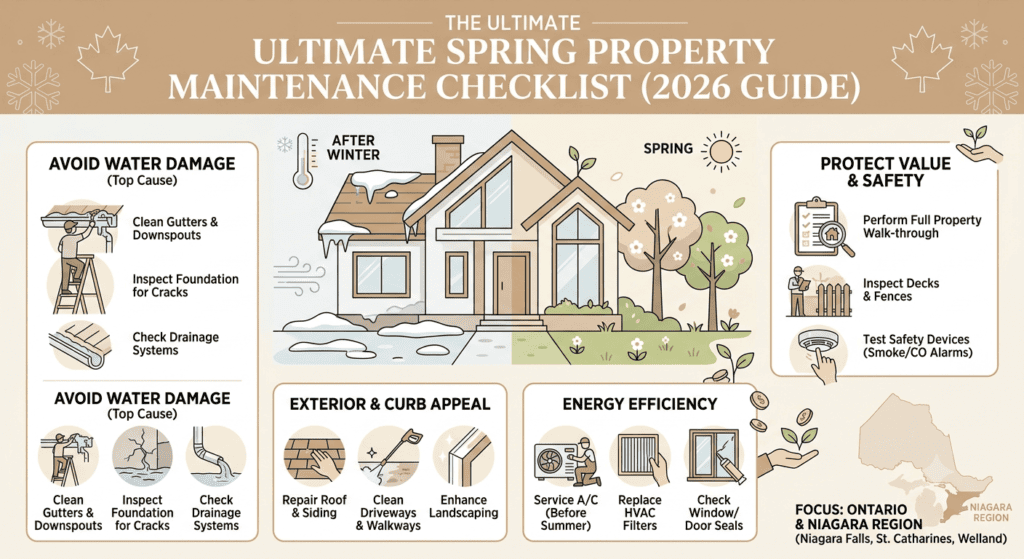
Beyond avoiding costly repairs, spring maintenance pays off in a handful of other ways too:
- Avoid expensive repairs. Small issues caught in April are cheap to fix. The same issues ignored until August can mean thousands in emergency repairs, or worse, a basement flood.
- Improve energy efficiency. Drafty windows, clogged HVAC filters, and poor insulation all waste energy – and money – every single month they go unaddressed.
- Protect your property value. A well-maintained exterior, roof, and foundation directly affects resale value and how your home is assessed by appraisers and home inspectors.
- Enhance curb appeal. Salt stains, grime, and winter debris make even a beautiful home look tired. A clean exterior is one of the fastest ways to make a strong first impression.
This guide walks through a complete, room-by-room and yard-by-yard spring property maintenance checklist built specifically for Canadian conditions – with a focus on what homeowners in Niagara Falls, St. Catharines, Welland, and across the Niagara Region should be watching for after a long winter. Whether you tackle every task yourself or bring in professionals for the heavier jobs, this checklist will help you protect your investment, avoid preventable claims, and get your property looking its best before summer arrives.
Why This Spring Matters More Than Usual
Every spring brings its own weather pattern, and this year’s forecast is a good reminder that “spring” doesn’t always mean an easy, gradual thaw. Long-range forecasters have flagged a slower, more changeable start to the season across Ontario, with periods of lingering cold and additional snow or ice possible well into April before a warmer, drier pattern takes hold in May. That kind of back-and-forth is exactly what drives the freeze-thaw damage this checklist is designed to catch – every extra swing between freezing and thawing is another chance for water to work its way into a crack, refreeze, and force it wider.
The Niagara Region sees its own share of severe spring weather too, from windstorms and hail to freezing rain events that can down branches, damage roofing, and knock out power. Add in the annual spring thaw, when rising temperatures release large volumes of meltwater into rivers and storm systems while the ground below is often still partially frozen and unable to absorb it, and you’ve got a season where drainage, gutters, and grading genuinely matter. This is also why regional conservation authorities routinely issue spring flood and safety advisories, reminding residents that runoff and rapid snowmelt can overwhelm ditches, culverts, and low-lying yards even when there’s no major storm in the forecast.
None of this is meant to be alarming – it’s simply the reality of maintaining a Niagara Region property maintenance routine that actually works. Homeowners who treat spring as a genuine inspection season, rather than just a weekend of yard cleanup, are the ones who catch problems while they’re still small.
1. Inspect Your Roof for Winter Damage
Your roof takes the brunt of every winter storm, and it’s usually the last thing homeowners think to check – until there’s a stain on the ceiling. Start with a visual inspection from the ground using binoculars, or from a ladder if you’re comfortable and safe doing so. Never walk on a wet or icy roof.
What to look for:
- Missing, cracked, or curling shingles
- Cracked or lifted flashing around chimneys, vents, and skylights
- Ice dam damage along the eaves (dark staining, sagging, or granule buildup in the gutters)
- Loose or damaged roof vents
- Chimney cracks, loose mortar, or a damaged cap
- Signs of leaks inside the attic – water stains, damp insulation, or a musty smell
Ice dams deserve special attention in this climate. They form when heat escaping from your attic melts snow on the upper roof, which then refreezes at the colder eaves, creating a dam that forces water back up under your shingles. This is one of the most common – and most expensive – sources of roof damage across Ontario every winter, and it’s often invisible until spring thaw reveals soaked insulation or a stained ceiling.
Pro Tip: If you spot cracked shingles, soft spots, or any sign of an active leak, don’t wait. Schedule a professional roof inspection right away. A qualified roofer can also tell you whether your roof is nearing the end of its service life – most asphalt shingle roofs in this climate last 15 to 25 years, and a spring inspection is a good time to start budgeting for replacement if yours is getting close.
It’s also worth checking your chimney cap and flashing seams a little more closely than a quick glance from the ground allows, since these are consistently the first places a roof starts to leak. Flashing works by directing water around penetrations in the roof surface – chimneys, skylights, plumbing vents – and any gap, even a small one, gives meltwater a direct path into your attic. If your home backs onto mature trees, take a moment to check for granule buildup in low spots on the roof and in the gutters below; heavy granule loss is a sign the shingles are aging faster than expected and may need attention sooner than their listed lifespan suggests.
2. Clean Gutters and Downspouts
If you only do one thing on this entire list, make it this one. Clogged gutters are consistently ranked as one of the highest-ROI maintenance tasks a homeowner can do, and for good reason – the cost of ignoring them is dramatically higher than the cost of cleaning them.
What this involves:
- Removing leaves, seed pods, shingle grit, and winter debris from the gutters
- Checking for clogs in the downspouts and clearing them
- Confirming water flows freely and drains properly during a test with the garden hose
- Extending downspouts so water discharges at least 1.5 to 2 metres away from your foundation
Why it matters: When gutters overflow, water doesn’t go where it’s supposed to – it pools right at your foundation. Over time, that pooling water works its way into basement walls, causing cracking, efflorescence, and eventually flooding. A blocked gutter system is also one of the leading contributors to ice dam formation in winter, which means neglecting your gutters in spring sets you up for roof problems the following year too.
Professional gutter cleaning across Ontario typically runs somewhere between $150 and $350 depending on your home’s size, number of storeys, and how clogged the system is, and most companies recommend having it done at least twice a year – once in spring to clear winter debris, and again in fall after the leaves drop. For homes with heavy tree coverage, a mid-summer check is worth considering too.
3. Examine Your Home’s Exterior
Walk the full perimeter of your home slowly, ideally with your phone camera in hand so you can photograph anything that looks off. This is your chance to catch small cosmetic issues before they become structural ones.
Check for:
- Cracked or warped siding
- Peeling or bubbling exterior paint
- Loose or shifting bricks
- Cracked or crumbling stucco
- Failing or missing exterior caulking around windows, doors, and utility penetrations
- Visible foundation cracks
A hairline crack in your caulking might look harmless, but it’s an open door for moisture. Once water gets behind siding or into a masonry joint, freeze-thaw cycling turns a small problem into a big one fast – a $5 tube of caulk applied in April can prevent a repair bill in the hundreds or thousands down the road. The same logic applies to foundation cracks: a crack the width of a hairline today can widen significantly after another winter of freezing and thawing if it’s left unaddressed.
4. Inspect Windows and Doors
Your windows and doors are one of the biggest sources of energy loss in a Canadian home, and winter is hard on the seals that keep drafts out.
Look for:
- Damaged, cracked, or compressed weather stripping
- Broken or failing window seals (look for fogging between panes – a sign the seal has failed)
- Noticeable drafts around frames
- Torn or damaged window screens
- Grime, salt residue, and winter buildup on the glass
Benefits of addressing these now:
- Lower energy bills, since a sealed home works less to maintain temperature
- Better insulation heading into both the hot summer months and next winter
- Improved comfort, since drafts and cold spots near windows are one of the most common homeowner complaints in older housing stock
Re-caulking and replacing weather stripping are inexpensive, weekend-friendly DIY jobs, but if you notice fogged glass or warped frames, that usually points to a seal or structural issue that’s best assessed by a window professional.
5. Service Your HVAC System
Your furnace has been working overtime for months, and your air conditioner is about to start its busy season. Spring is the ideal window to get both checked before you actually need them.
What to do:
- Replace furnace and AC air filters (Natural Resources Canada recommends changing filters at least once per season, more often if you have pets)
- Schedule a professional HVAC tune-up
- Clean vents and clear debris from around the outdoor AC unit
- Check and, if needed, recalibrate your thermostat
- Test your air conditioning before the first real heat wave hits
Why servicing now saves money: A professional AC tune-up in Ontario typically costs somewhere in the range of $120 to $250, and a combined furnace-and-AC seasonal plan often falls between $250 and $450. Compare that to an emergency repair call in the middle of a July heat wave, when demand – and pricing – both spike. Well-maintained HVAC systems also run more efficiently, and neglected systems tend to fail years earlier than properly serviced ones. Booking your tune-up in spring, before the rush, is usually both cheaper and faster than waiting until summer.
6. Check Plumbing for Leaks
Hidden leaks are sneaky. They can run for weeks or months before you notice a water stain, a musty smell, or a spike in your water bill – and by then, real damage has already been done.
Inspect:
- Outdoor faucets for cracks caused by winter freezing (a classic sign of a burst pipe behind the wall)
- Garden hose connections
- Exposed basement pipes for moisture, corrosion, or drips
- Under sinks in kitchens and bathrooms
- Your water heater for rust, corrosion, or pooling water at the base
- Toilets for running water or a wobbly base, which can indicate a failing wax seal
Hidden water damage risk: Even a small, slow leak under a sink can lead to mold growth, warped subflooring, and cabinet damage long before it’s visible. Given that water damage remains the top cause of home insurance claims across the country, a 20-minute plumbing check each spring is one of the cheapest forms of insurance you can give yourself.
7. Inspect the Foundation
Spring thaw has a way of exposing foundation problems that stayed hidden all winter under snow and frozen ground.
Look for:
- New or widening cracks in poured concrete or block foundations
- Standing water anywhere near the foundation wall
- Soil erosion that’s pulled grading away from the house
- Drainage patterns that direct water toward, rather than away from, your home
Ontario’s freeze-thaw cycle is especially hard on foundations because water that seeps into small cracks expands by roughly 9% when it freezes, physically prying the crack wider each time the temperature swings. That’s why a crack that looked stable in November can be noticeably worse by April. If you find cracks wider than about 3mm, or any sign of bowing or shifting, it’s worth having a structural professional take a look before it becomes a much larger – and much more expensive – repair.
Grading is worth a closer look too, and it’s one of the most overlooked parts of foundation health. The ground around your home should slope gently away from the foundation wall – roughly 15cm of drop over the first two metres is a common rule of thumb. Over a few winters, settling soil, shifting mulch beds, and repeated freeze-thaw heaving can flatten that slope or even reverse it, which quietly redirects water straight back toward your foundation instead of away from it. If you notice water pooling near the house after rain, or if a downspout discharges onto a flat or inward-sloping section of yard, regrading that area is a relatively small, inexpensive fix compared to the water damage it prevents. This is also a good time to confirm that any sump pump you rely on is tested and working, since spring thaw is when sump pumps see their heaviest workload of the entire year.
8. Pressure Wash Exterior Surfaces
Once the bigger inspections are done, it’s time to deal with the layer of grime, salt, and mildew that builds up on every exposed surface over a Canadian winter.
Surfaces to cover:
- Driveways
- Walkways
- Decks
- Patios
- Siding (note: most siding types, including vinyl and stucco, should be soft-washed with low pressure rather than blasted at high pressure, which can force water behind panels or strip paint)
- Fences
Benefits:
- Removes mold and mildew before it spreads further
- Strips away salt residue that continues to degrade concrete and masonry if left in place
- Immediately improves curb appeal
- Prevents long-term staining that becomes much harder – and more expensive – to remove the longer it sits
A full exterior pressure washing package covering the driveway, walkways, deck, and fence typically runs somewhere between $400 and $900 in Ontario, depending on square footage and how neglected the surfaces are. Bundling these services into one visit is usually 10 to 20% cheaper than booking each one separately, and booking in spring – before the summer rush – tends to get you better availability and pricing.
9. Refresh Your Landscaping
Your yard takes a beating over winter too, and spring is the natural reset point.
Tasks to tackle:
- Remove dead plants, leaves, and debris from garden beds
- Trim trees and shrubs, ideally while they’re still dormant in early spring, before buds appear
- Fertilize the lawn to encourage healthy spring growth
- Edge garden beds for a clean, defined look
- Add fresh mulch to retain moisture and suppress weeds
- Test and inspect your irrigation system and sprinkler heads before you actually need them
Pay particular attention to tree branches hanging over or near your roof. Overhanging limbs scrape shingles during windstorms, drop debris into your gutters all season, and create a highway for squirrels and other pests looking for a way into your attic. If a branch is too large or too high to prune safely yourself, it’s worth calling in a professional tree service rather than risking a fall or damaging your roof.
10. Inspect Decks, Patios & Fences
Wood structures are especially vulnerable to a Canadian winter, since moisture, freezing, and thawing all work against the wood fibers at once.
Check for:
- Loose or warped boards
- Popped or rusted nails and fasteners
- Soft spots or visible rot
- Splinters and rough, weathered surfaces
- Loose or wobbly railings
- Faded or failing stain and sealant
Do a simple water test: splash some water on your deck boards. If it beads up, the seal is still doing its job. If it soaks in immediately, it’s time to reseal before the wood absorbs another season of moisture.
Safety should be the top priority here, especially with railings. A loose railing might look like a minor cosmetic issue, but it’s a genuine fall risk, particularly for kids and older family members. Tighten or replace hardware immediately if anything feels unstable underfoot or under hand.
11. Test Outdoor Safety Features
Spring maintenance isn’t just about preventing property damage – it’s also about keeping your household safe.
Test and inspect:
- Exterior lighting (replace burnt-out bulbs, check for water intrusion in fixtures)
- Motion sensors
- Smoke alarms (test monthly, replace batteries at minimum once a year)
- Carbon monoxide detectors
- Security cameras
- Door locks and deadbolts
Winter storms and ice can knock exterior lighting fixtures loose, drain motion sensor batteries, and leave smoke and CO detector batteries weaker than you’d expect after months of cold. Since these devices are literally your first line of defense in an emergency, spring is a natural, easy-to-remember time to run through every one of them.
12. Clean and Inspect the Garage
The garage is one of the most overlooked spaces on any spring maintenance checklist, yet it takes a huge amount of abuse over winter from road salt, slush, and temperature swings.
Tasks:
- Lubricate garage door hinges, rollers, and tracks
- Test the garage door opener and its auto-reverse safety feature
- Clean the floor thoroughly to remove accumulated salt residue, which corrodes concrete over time
- Organize tools and seasonal equipment
- Inspect weather seals around the garage door for gaps, cracking, or wear
A garage door that’s sticking, grinding, or slow to respond is often just crying out for lubrication and a minor adjustment – a cheap fix compared to a full opener or spring replacement if the underlying wear is ignored.
13. Prepare Outdoor Living Spaces
With warmer weather on the way, it’s time to bring your outdoor living areas back to life.
Cover:
- Clean and inspect patio furniture for rust, wear, or loose hardware
- Inspect your BBQ, including gas lines and connections, before the first cookout
- Check fire pit safety – clearance from structures, proper ventilation, and any damage to the pit itself
- Test outdoor electrical outlets, ideally GFCI-protected ones, for proper function
- Inspect umbrellas and shade structures for tears or rust
- Check pergolas and other outdoor structures for loose fasteners or wood damage after a winter of snow load
These spaces are where a lot of summer memories happen, so a bit of upfront prep now means you’re not scrambling – or dealing with a gas leak or a wobbly fire pit – the first warm weekend of the season.
14. Schedule Professional Property Maintenance
Some spring tasks are absolutely DIY-friendly. Others genuinely benefit from a professional’s equipment, training, and eye for detail – especially anything involving heights, structural assessment, or specialized tools.
Consider bringing in professionals for:
- Pressure washing and exterior cleaning
- Gutter cleaning and downspout clearing
- Roof inspection and repair
- Full property inspection
- Seasonal lawn care and landscaping maintenance
- Snow-to-spring transition cleanup (removing salt residue, de-icing damage, and winter debris)
Homeowners across Niagara Falls, St. Catharines, Welland, Fort Erie, Niagara-on-the-Lake, Thorold, Port Colborne, and throughout the Niagara Region increasingly bundle these seasonal services together – one visit for gutters, driveways, decks, and general exterior cleanup – which tends to be more efficient and cost-effective than booking each task separately. It also means everything gets done on the same schedule, instead of some tasks quietly slipping through the cracks as the season gets busy.
Spring Property Maintenance Checklist (Quick Reference)
Print this out, stick it on the fridge, and check off one or two items every weekend between April and June.
- ☐ Inspect roof for winter damage
- ☐ Clean gutters and downspouts
- ☐ Check foundation for cracks and drainage issues
- ☐ Inspect siding, stucco, and brick
- ☐ Service HVAC system
- ☐ Replace air filters
- ☐ Check plumbing for leaks
- ☐ Wash exterior surfaces
- ☐ Pressure wash driveway and walkways
- ☐ Trim trees and shrubs
- ☐ Fertilize lawn
- ☐ Clean and reseal deck
- ☐ Test smoke and CO detectors
- ☐ Inspect and lubricate garage door
- ☐ Prepare patio and outdoor living spaces
Common Spring Maintenance Mistakes to Avoid
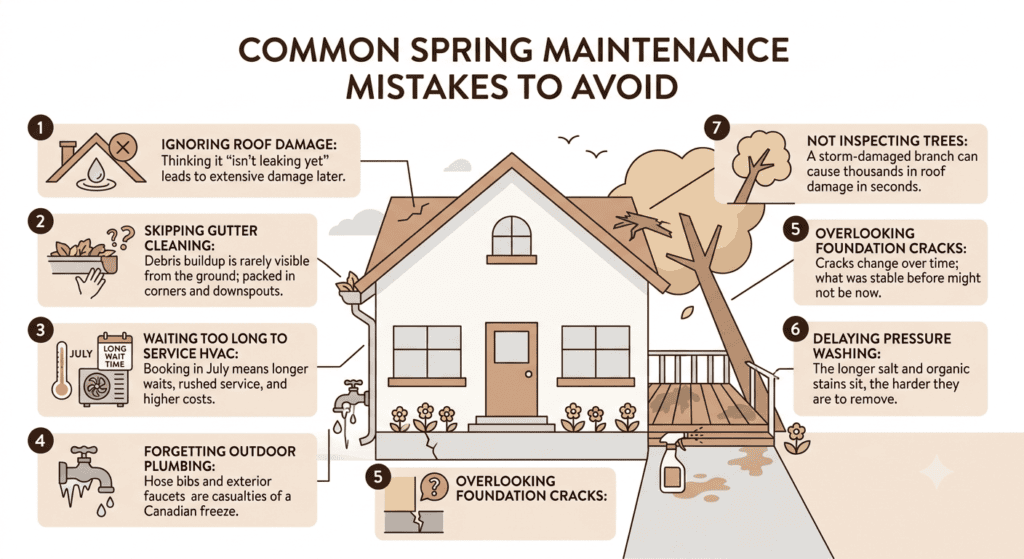
Even well-intentioned homeowners fall into the same traps every year. Watch out for these:
- Ignoring roof damage because it “isn’t leaking yet.” By the time water is visibly dripping inside, the damage is often already extensive.
- Skipping gutter cleaning because “it looks fine from the ground.” Debris buildup is rarely visible from the driveway – it’s usually packed into the corners and downspouts.
- Waiting too long to service the HVAC system. Booking in July means longer wait times, rushed technicians, and higher emergency-service pricing.
- Forgetting outdoor plumbing. Hose bibs and exterior faucets are among the most common casualties of a Canadian freeze.
- Overlooking foundation cracks because “it’s always been like that.” Cracks change over time. What was stable last spring might not be this spring.
- Delaying pressure washing. The longer salt residue and organic staining sit on concrete and wood, the harder – and more expensive – they are to remove.
- Not inspecting trees near the home. A single storm-damaged branch can cause thousands in roof damage in seconds.
Why Preventive Spring Maintenance Saves Money
It’s easy to see spring maintenance as a chore. It’s more accurate to see it as one of the best financial decisions a homeowner makes all year.
- Lower repair costs. Catching a hairline foundation crack or a small roof leak in spring is dramatically cheaper than dealing with a full basement flood or a collapsed ceiling later.
- Better energy efficiency. Sealed windows, clean HVAC filters, and a properly serviced furnace and AC all reduce your monthly utility bills.
- Increased property value. Homes with documented, consistent maintenance histories tend to appraise better and raise fewer red flags during a buyer’s home inspection.
- Improved home safety. Working smoke detectors, stable railings, and a well-maintained garage door protect the people who live in the home, not just the structure itself.
- Longer lifespan of exterior materials. Roofing, siding, decking, and masonry all last longer when moisture and freeze-thaw damage are addressed early instead of left to compound.
- Reduced risk of water damage. Since water damage remains the single most common reason Canadians file a home insurance claim, and insurers have been raising water-damage deductibles in response, a proactive gutter, foundation, and plumbing check is genuinely one of the most effective ways to protect both your home and your premiums.
Conclusion
A Canadian winter never leaves a home exactly the way it found it. Between freeze-thaw cycles, ice dams, road salt, and months of accumulated grime, every part of your property – roof, foundation, gutters, deck, and everything in between – takes on some level of wear. The good news is that spring gives you a clear window to catch that damage early, before it turns into a five-figure repair or an insurance claim you’d rather avoid.
Work through this checklist a section at a time. Handle what you’re comfortable doing yourself, and don’t hesitate to bring in professionals for the jobs that call for the right equipment, training, or a head for heights. The homeowners who tackle spring maintenance early are consistently the ones who avoid the expensive surprises later in the year – and who get to actually enjoy their outdoor spaces once summer finally arrives.
Address the small stuff now. Your home, your wallet, and your future self will thank you.
Spring maintenance adds up fast – gutters, pressure washing, lawn care, and general property upkeep all in the same short window. NLLC handles it all in one visit across Niagara Falls, St. Catharines, Welland, and the wider Niagara Region. [Request your free spring maintenance quote today] and get your property summer-ready without spending every weekend on a ladder.
FAQ Section
1. When should I start spring maintenance on my home in Canada?
Most of Ontario is ready for exterior spring maintenance by mid-to-late April, once the ground has fully thawed and the risk of another hard freeze has passed. Interior tasks like HVAC filter changes can start earlier.
2. How often should gutters be cleaned in the Niagara Region?
Twice a year is the standard recommendation – once in spring to clear winter debris, and again in fall after leaves drop. Homes with heavy tree coverage may need a mid-summer check as well.
3. What’s the first thing I should check after winter?
Your roof and gutters. These take the most direct damage from snow, ice, and freeze-thaw cycling, and problems here quickly lead to water intrusion elsewhere in the home.
4. Do I need a professional for foundation cracks, or can I fix them myself?
Hairline cracks under about 3mm can often be monitored, but anything wider, or any crack showing signs of bowing, shifting, or active water intrusion, should be assessed by a structural professional.
5. Is pressure washing safe for all exterior surfaces?
No. Concrete and most brick handle high pressure well, but vinyl siding, painted wood, and stucco should be soft-washed at lower pressure to avoid forcing water behind panels or stripping finishes.
6. How much does a full spring exterior cleanup typically cost in Ontario?
A bundled package covering gutters, driveway, walkways, deck, and fence pressure washing generally runs between $500 and $1,200, depending on property size and condition. Booking services together is usually cheaper than separate visits.
7. Why does water damage matter so much for home insurance in Canada?
Water damage is the leading cause of home insurance claims nationally, and claims tied to external water sources have risen sharply in recent years. Regular gutter, foundation, and plumbing maintenance is one of the most effective ways to reduce that risk.
8. What spring maintenance tasks improve energy efficiency?
Replacing HVAC filters, re-caulking windows and doors, replacing worn weather stripping, and scheduling an HVAC tune-up are the highest-impact, lowest-cost tasks for improving efficiency before summer.