If you’ve ever stood in a garage full of old paint cans, a broken treadmill, and a mattress that’s seen better days, you’ve probably asked yourself the same question homeowners across Niagara Falls, St. Catharines, Welland, and Fort Erie ask every week: will a junk removal company actually take all of this?
The honest answer is “mostly, yes – but not everything.” A junk removal company can legally haul away the vast majority of household clutter, from couches to construction debris, but there’s a shorter list of items that are off-limits for safety, environmental, or legal reasons. Knowing that list before you book a pickup saves you a wasted trip, an awkward phone call, and sometimes an extra fee you didn’t expect.
This guide breaks down exactly what a professional crew can carry out of your home, what needs special handling, what they legally cannot touch, and how Niagara Region’s own waste rules fit into the picture. Whether you’re clearing out a rental property, prepping a house for sale, or just tired of tripping over the same pile in the basement, you’ll walk away knowing precisely what to expect on pickup day.
How a Junk Removal Company Actually Decides What It Can Take
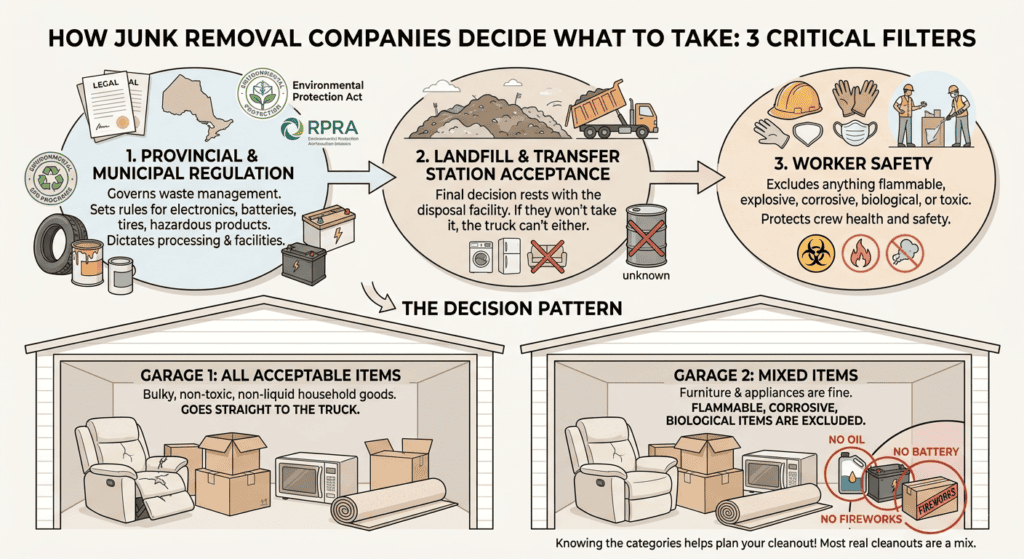
Every professional hauling crew works within three overlapping sets of rules, and understanding them explains almost every “yes,” “maybe,” and “no” you’ll run into.
Provincial and municipal regulation. In Ontario, waste is governed by the Environmental Protection Act and a growing list of Extended Producer Responsibility (EPR) programs run through the Resource Productivity and Recovery Authority (RPRA). These programs set rules for how batteries, electronics, tires, and hazardous products must be collected and processed, and they determine which facilities are even allowed to accept certain materials.
Landfill and transfer station acceptance policies. Even if a company is willing to load an item onto the truck, the local landfill or transfer station has the final say on what it will accept at the tipping floor. If the facility won’t take it, the truck can’t either.
Worker safety. Anything that could catch fire, explode, leak, or expose a crew member to disease or toxic fumes is automatically excluded, regardless of what any regulation technically allows. Reputable companies build this into their policies whether or not a law specifically requires it.
Put those three filters together and you get a fairly predictable pattern: bulky, non-toxic, non-liquid household items are almost always fine, while anything flammable, corrosive, biological, or radioactive is almost always excluded. Everything else falls somewhere in between, and that’s usually where homeowners have questions.
Here’s a simple way to picture it. Imagine two garages side by side. The first is packed with a broken recliner, a stack of cardboard boxes, an old microwave, and a rolled-up rug – every item in that garage can go straight onto the truck without a second thought. The second garage has the same clutter, but also a half-full can of motor oil, a car battery, and a box of expired fireworks tucked in the corner. The furniture and appliances in that second garage are still fine to remove. The oil, battery, and fireworks are not, and no amount of asking nicely changes that – they need a completely different disposal path. Most real cleanouts look like a mix of the two garages, which is exactly why it helps to know the categories in advance rather than finding out item by item on pickup day.
What a Junk Removal Company Can Remove (The “Yes” List)
Let’s start with the good news, because it covers the overwhelming majority of what actually piles up in a home over the years.
Furniture and Household Goods
This is the bread and butter of residential junk removal. Sofas, loveseats, dining sets, bed frames, dressers, bookshelves, office desks, entertainment units – if two people can carry it out the door, a crew can typically take it. Torn upholstery, water damage, missing drawers, and general wear don’t disqualify furniture from removal (they just mean it’s headed for disposal instead of donation).
Old rugs, curtains, bagged clothing, toys, kitchenware, and general “garage junk” also fall into this easy category. If your home is full of things you’ve been meaning to get rid of for years, this is where most of it lives.
Appliances (Once Refrigerant Is Handled)
Stoves, dishwashers, washers, dryers, and water heaters are standard pickups for any experienced crew. Refrigerators, freezers, air conditioners, and dehumidifiers are also accepted, but they contain refrigerant gases that must be recovered before the unit is scrapped or recycled. A properly run junk removal company either handles this recovery step itself or routes the appliance to a facility licensed to do it – this is one of the few “yes” items where the process behind the scenes matters more than what happens on your driveway.
Electronics and E-Waste
Televisions, computers, monitors, printers, stereo equipment, and small electronics are almost always accepted. In Ontario, electronics fall under a producer responsibility program, which means there are dedicated recycling channels for them separate from general landfill waste. A good hauling company will route your old laptop or CRT television to a certified e-waste recycler rather than a general dump, which is worth asking about directly if data security or environmental responsibility matters to you.
Yard Waste and Landscaping Debris
Branches, hedge trimmings, old fencing, small garden sheds (usually broken down first), and general yard debris are standard removals, particularly for a company that also handles landscaping – bundling a yard cleanup with a junk removal appointment is a common and efficient combination for Niagara properties heading into spring or fall.
Construction and Renovation Debris
Drywall, wood scraps, flooring, cabinetry, doors, and similar renovation leftovers are generally acceptable, though they’re often billed by volume or weight rather than a flat per-item rate because of how heavy this category can get. If you’re mid-renovation, it’s worth asking your provider whether they offer a dedicated bin or a scheduled multi-load pickup, since construction debris tends to accumulate faster than a single truckload can handle.
Garages, Basements, and Attic Cleanouts
Full-property cleanouts are really just a combination of everything above, handled as a single job. This is where a junk removal company earns its keep – instead of sorting a decade of accumulated belongings item by item, a crew walks through, tells you what’s going and what needs separate handling, and clears the space in a few hours.
Items That Need Special Handling (The “Maybe” List)
Some items aren’t outright banned, but they come with extra steps, extra fees, or extra questions you should ask before booking.
Mattresses and Box Springs
Mattresses are almost always accepted, but they’re bulky, hard to compact, and – unlike tires or electronics – Ontario currently has no province-wide stewardship program that funds their recycling. That means municipalities set their own disposal costs, and those costs get passed along in different ways depending on the provider and the region. It’s a normal, routine pickup – just don’t be surprised if it carries a modest per-unit charge separate from lighter furniture items.
Tires
Most companies will take a handful of tires but may limit large quantities, since Ontario’s Tires Regulation channels them through a dedicated producer-funded recycling stream with its own fee structure. If you’re clearing out a full set of four to eight tires from a garage, mention this upfront so your provider can plan for the correct disposal route.
Paint
Wet, unopened, or partially full paint cans are treated as hazardous liquid waste in almost every jurisdiction. Fully dried paint (a can with solid, hardened contents – kitty litter or a commercial hardening agent works well for this) is generally fine to include with regular junk, since it’s no longer classified as a liquid. If you have several cans sitting around, drying them out before your appointment is the easiest way to make sure they leave with everything else.
Large Appliances With Refrigerant
As mentioned above, fridges, freezers, and air conditioning units are “yes” items, but only once the refrigerant has been safely recovered. Ask your provider directly whether this is handled in-house or through a partner facility – it’s a quick question that tells you a lot about how seriously a company takes environmental compliance.
What a Junk Removal Company Cannot Take (The “No” List)
Now for the shorter, firmer list. These exclusions are consistent across almost every reputable hauling company because they’re rooted in safety and legal liability, not company preference.
Hazardous and Chemical Waste
Motor oil, solvents, pesticides, fertilizers, pool chemicals, cleaning chemicals, and any liquid classified as flammable, corrosive, or toxic cannot ride in a standard junk removal truck. These materials require specialized transport and disposal at a licensed hazardous waste facility. In Niagara Region, that means a household hazardous waste depot rather than a regular junk pickup.
Asbestos and Contaminated Building Materials
Older insulation, popcorn ceilings, certain floor tiles, and pipe wrap installed before the 1990s can contain asbestos. This material is heavily regulated, and no standard junk removal crew is licensed or equipped to handle it. If you suspect a renovation debris pile might contain asbestos, the material needs to go through a certified abatement contractor first – not a general hauling service.
Batteries, Especially Lithium-Ion
Car batteries, lithium-ion batteries from power tools and e-bikes, and other rechargeable battery packs carry a real fire risk if damaged or compressed inside a truck. These need to go through dedicated battery recycling programs rather than a general junk load. This is one of the fastest-growing exclusions as more households accumulate battery-powered tools and devices.
Medical and Biohazardous Waste
Sharps, prescription medications, and anything classified as biomedical waste require specialized handling under health regulations and are never accepted by a general junk removal service. Pharmacies and healthcare facilities typically offer safe drop-off options for these items.
Explosives, Ammunition, and Pressurized Tanks
Propane tanks, fireworks, ammunition, and other pressurized or explosive materials are an obvious safety exclusion for any hauling company. These require disposal through specialized services or, in some cases, local law enforcement or fire department guidance.
Niagara Region Rules Every Homeowner Should Know in 2026
Local rules matter just as much as general industry standards, and Niagara Region has its own infrastructure for the categories a standard junk removal load can’t include.
Household Hazardous Waste Depots
Niagara Region operates household hazardous waste depots – including a location in Thorold – where residents can drop off chemicals, paints, solvents, and similar materials year-round, free of charge for residential quantities. These depots are for household waste only; commercial or industrial hazardous material isn’t accepted through the same channel. If your junk removal appointment turns up a shelf of old chemicals, this is where they need to go instead.
Electronics Recycling in Niagara
Niagara residents have free electronics drop-off available at regional depots, including the Bridge Street Waste and Recycling Drop-Off Depot in Fort Erie. A responsible junk removal provider will already have a relationship with e-waste recyclers, but it’s worth knowing this option exists if you’re handling a small batch of electronics yourself.
Mattress and Tire Disposal Fees Locally
Because Ontario has no province-wide mattress recycling program, Niagara Region sets its own disposal surcharge for mattresses dropped at regional landfills, separate from what a private junk removal company might charge for pickup and hauling. Tire recycling, on the other hand, runs through Ontario’s producer-funded program under the Tires Regulation, with fees set independently by different Producer Responsibility Organizations – which is part of why tire recycling costs can vary depending on where and how they’re processed.
Signs It’s Time to Call a Junk Removal Company
Most people wait longer than they need to before booking a cleanout. A few common triggers are worth acting on sooner rather than later:
- You’re prepping a home for sale. Realtors consistently point to decluttering as one of the highest-return, lowest-cost improvements before listing. A cluttered garage or basement can make a property feel smaller and less cared-for than it actually is.
- A tenant just moved out. Landlords and property managers across Niagara often need a fast turnaround between tenants, and a full cleanout in a single visit is usually faster than doing it in stages.
- You’re settling an estate or downsizing a family member’s home. These cleanouts tend to involve decades of accumulated belongings, mixed in with furniture, electronics, and the occasional item that needs special handling – exactly the kind of job a professional crew is built for.
- A renovation just wrapped up. Contractors don’t always haul away every scrap of drywall, flooring, or cabinetry, and construction debris tends to sit in a driveway or dumpster longer than planned.
- You’re simply out of storage space. If a spare room, garage, or basement has slowly become storage for things you don’t use, that’s often the clearest sign a single cleanout appointment will do more than months of “I’ll deal with it eventually.”
In every one of these situations, the underlying question is the same one this guide answers: what can actually go, and what needs a different path.
What Affects Junk Removal Pricing
Cost is one of the first things homeowners ask about, and it depends on a handful of predictable factors rather than a flat, one-size-fits-all rate.
Volume and weight. Most companies price by how much of the truck your load fills, or by weight for heavier categories like construction debris. A single armchair costs far less than a full basement cleanout.
Item type. Standard furniture and household goods are typically priced lower than items requiring special handling, like appliances with refrigerant, mattresses, or large volumes of tires, since those categories carry their own disposal or recycling costs behind the scenes.
Labour and access. A load sitting at the curb is quicker to remove than one buried in a third-floor apartment with no elevator. Stairs, tight hallways, and long carry distances can affect the final price, since they add time and physical effort to the job regardless of how much the items themselves weigh.
Number of crew members and trucks required. A small pickup might need just one person and a short visit, while a full property cleanout can require a multi-person crew and more than one trip. Being upfront about the scope of the job when you book helps a provider schedule the right resources from the start, rather than needing to send a second truck partway through.
Disposal and recycling fees. As covered above, categories like mattresses and tires in Ontario carry their own disposal costs because of how stewardship programs (or the lack of one, in mattresses’ case) are structured. A transparent provider will explain these pass-through costs rather than folding them into a vague flat rate.
Timing. Same-day or rush service can sometimes carry a premium compared to a scheduled appointment booked a few days out.
The best way to get an accurate number is a clear, specific description of your load when you book – the same advice that applies to knowing what will and won’t be accepted in the first place.
2026 Trends in Junk Removal and Waste Management
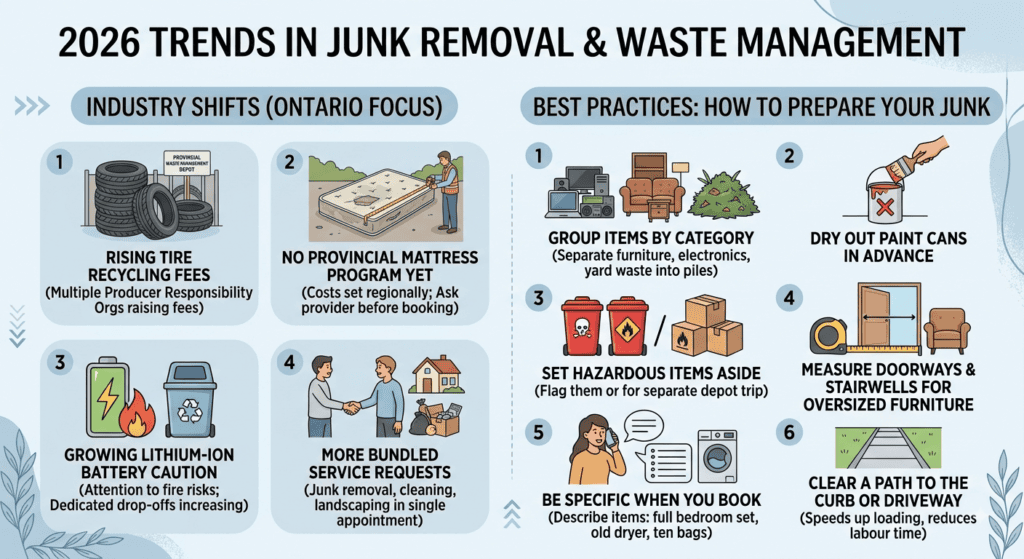
A few shifts are shaping how junk removal works this year, particularly in Ontario:
Rising tire recycling fees. Multiple Producer Responsibility Organizations operating under Ontario’s Tires Regulation have raised their recycling fees in 2026, which can affect the cost of disposing of larger quantities of tires through any channel, including junk removal.
No provincial mattress program yet. Unlike electronics, tires, and batteries, mattresses still don’t have a province-wide stewardship program in Ontario. That means disposal costs continue to be set regionally, and it’s worth asking your provider how mattress pickup is priced before you book.
Growing lithium-ion battery caution. As more households own power tools, e-bikes, and battery-powered yard equipment, junk removal companies are paying closer attention to battery-related fire risks, and dedicated battery recycling drop-off points are becoming more visible at municipal depots.
More bundled service requests. Homeowners are increasingly booking junk removal alongside cleaning or landscaping in a single appointment, especially around move-ins, move-outs, and seasonal property turnovers – a trend that’s driving more property service companies to offer combined booking options.
How to Prepare Your Junk for Pickup (Best Practices)
A little prep work makes a real difference in how smoothly your appointment goes and, often, in what it costs.
- Group items by category. Separate furniture, electronics, and yard waste into rough piles so the crew can assess the load quickly.
- Dry out paint cans in advance if you know they’ll be part of the pickup.
- Set hazardous items aside rather than mixing them into the general pile – flag them for the crew or for a separate depot trip.
- Measure doorways and stairwells for oversized furniture so the team can plan the safest removal path.
- Be specific when you book. Instead of “I have a lot of stuff,” describe it: “a full bedroom set, an old dryer, and roughly ten bags of garage clutter.” This helps the company send the right truck size and crew.
- Clear a path to the curb or driveway if possible – it speeds up loading and can reduce labour time on the bill.
Common Mistakes Homeowners Make When Booking Junk Removal
Even experienced homeowners run into a few recurring issues:
Assuming “junk” means everything. Vague booking requests lead to on-site surprises. The more specific you are up front, the more accurate your quote will be.
Forgetting about hazardous items until pickup day. Chemicals and paint discovered mid-load can delay the appointment, since they legally can’t go on the truck. Sort these out beforehand.
Not asking about weight-based vs. volume-based pricing. Renovation debris and construction materials are often priced differently than furniture, so ask how your specific load will be billed before the crew arrives.
Overlooking donation potential. Furniture and appliances in good condition can sometimes be donated rather than landfilled – ask your provider whether they offer or coordinate donation drop-offs as part of the service.
Booking too close to a deadline. If you’re on a moving timeline or preparing a property for sale, same-day availability isn’t guaranteed everywhere. Booking a few days ahead gives you more flexibility on scheduling.
DIY Disposal vs. Hiring a Junk Removal Company
Some homeowners consider handling disposal themselves – a truck rental, a few trips to the transfer station, and a weekend of heavy lifting. It can work for a small, simple load, but it comes with real trade-offs: landfill tipping fees, the physical strain of moving heavy furniture and appliances alone, multiple trips for anything beyond a single truckload, and the risk of accidentally trying to dispose of something a facility won’t accept without knowing it in advance.
Hiring a professional junk removal company solves all of that in one visit. The crew handles the heavy lifting, sorts materials into the correct disposal or recycling stream, and – critically – already knows which items need to go to a hazardous waste depot instead of the truck, so you’re not the one figuring that out mid-project.
Why Choose NLLC for Junk and Garbage Removal in Niagara
NLLC has built its reputation across the Niagara Region – including Niagara Falls, St. Catharines, Welland, Fort Erie, Niagara-on-the-Lake, Thorold, and Port Colborne – on the same principle this guide is built around: being upfront about what we can take, what needs special handling, and how we’ll get your property clear without any pickup-day surprises.
Our garbage and junk removal services cover waste management, bulk item pickup, on-demand same-day and next-day service, scheduled recurring pickups, and full junk hauling for furniture, appliances, and clutter of every kind. We also offer landscaping, residential and commercial cleaning, and snow removal – so if a cleanout also means a yard tidy-up or a deep clean before a move, we can coordinate all of it under one appointment.
You can browse our full range of offerings on our services page, read what past clients have said on our testimonials page, or catch up on more local property tips over on our blog. When you’re ready to book, our team is easiest to reach through our contact page – reach out and we’ll walk you through exactly what your load includes and how quickly we can get it cleared.
Final Thoughts
Most of what accumulates in a home – furniture, appliances, electronics, yard waste, renovation debris – is well within what a professional junk removal company can clear out in a single visit. The shorter list of exclusions (hazardous chemicals, asbestos, batteries, medical waste, explosives) exists for good reason, and knowing about it ahead of time means your pickup day goes exactly as planned, with no items left behind and no surprises.
If you’re in Niagara Falls, St. Catharines, Welland, Fort Erie, or anywhere across the Niagara Region and you’re ready to reclaim your space, get in touch with NLLC for a free quote. We’ll tell you exactly what we can take, flag anything that needs special handling, and get your property cleared out quickly and responsibly.
Frequently Asked Questions
Will a junk removal company take my old mattress? Yes, mattresses are a standard pickup item. Because Ontario has no province-wide mattress recycling program, there may be a modest per-unit fee, but removal itself is routine.
Can I put chemicals or old paint out with my other junk? Fully dried paint is usually fine. Wet paint, solvents, pesticides, and other chemical products need to go to a household hazardous waste depot instead, since they can’t legally travel in a standard hauling truck.
Do junk removal companies take appliances with refrigerant, like fridges and air conditioners? Yes, but the refrigerant needs to be recovered first, either by the company or through a licensed partner facility. It’s worth asking how your provider handles this step.
What happens to my old electronics? Reputable companies route electronics to certified e-waste recyclers rather than general landfill, in line with Ontario’s producer responsibility programs for electronics.
Can a junk removal company take construction debris after a renovation? Generally yes – drywall, wood scraps, flooring, and similar materials are accepted, though they’re often priced by volume or weight given how heavy renovation debris can get.
Is there anything a junk removal company will never take? Hazardous chemicals, asbestos-containing materials, batteries (especially lithium-ion), medical or biohazard waste, and explosives or pressurized tanks are consistently excluded across the industry for safety and legal reasons.
How far in advance should I book a pickup? Same-day or next-day service is often available, but booking a few days ahead gives you more flexibility, especially for larger cleanouts or renovation debris removal.
Can I combine a junk removal appointment with a yard cleanup or a deep clean? Yes, especially with a provider that offers multiple property services. Bundling a cleanout with landscaping or cleaning can save you from coordinating separate appointments.
Do I need to be home during the pickup? Most companies prefer someone on-site to confirm exactly what’s being removed and to answer any questions about items that need special handling, though some providers can arrange curbside pickup by prior agreement.
What should I do with old tires before booking a pickup? Let your provider know the quantity in advance. A few tires are usually a routine addition to a load, but larger quantities may need to be scheduled separately given Ontario’s tire recycling program requirements.
Are there items that are technically allowed but rarely worth removing this way? Very large volumes of loose soil, concrete, or rock are sometimes better suited to a dedicated bin rental than a standard junk removal load, simply because of how heavy and dense they are. It’s worth asking if you’re dealing with this kind of material.
Will a junk removal company recycle or donate items instead of sending everything to landfill? Many will, where possible. Furniture and appliances in good condition are sometimes routed to donation centres, and categories like electronics and metal are typically recycled rather than landfilled. Ask your provider directly about their process if this matters to you.