Every fall, there’s a small window when Niagara homeowners can still get outside in a light jacket and get ahead of winter. Blink, and it’s gone. One week you’re raking leaves in a T-shirt, and the next you’re scraping frost off the windshield and wondering if you ever got around to checking the furnace filter.
That gap between “I’ll do it this weekend” and the first real snowfall is exactly where most winter property damage gets its start. Environment and Climate Change Canada’s most recent seasonal outlook points to a winter shaped by a La Niña pattern and an early polar vortex disruption, which typically means a real, old-fashioned Canadian winter for Ontario – deep freezes mixed with milder stretches, and a storm track that keeps snow and ice in regular rotation. For homeowners across St. Catharines, Niagara Falls, Welland, and the wider Niagara Region, that’s a pretty clear signal: this isn’t the year to wing it.
Winter property maintenance tips aren’t just a checklist for peace of mind – they’re one of the few things standing between you and a five-figure repair bill. Water damage from freezing and burst pipes now accounts for a huge share of home insurance claims across Canada, with insurers reporting increases in average basement water damage repair costs over the past several years. Frozen pipes alone can turn a quiet Tuesday morning into a flooded basement, a hotel stay, and months of restoration work. The good news is that almost all of it is preventable with a few focused hours of work before the temperature drops.
This guide walks through everything a Canadian homeowner should check, fix, seal, or clean before winter really sets in – roof to foundation, inside and out. Whether you tackle it yourself over a weekend or bring in a professional property maintenance team to handle the heavy lifting, the goal is the same: protect your home, your budget, and your peace of mind for the months ahead.
Why Winter Is One of the Toughest Seasons for Canadian Homes
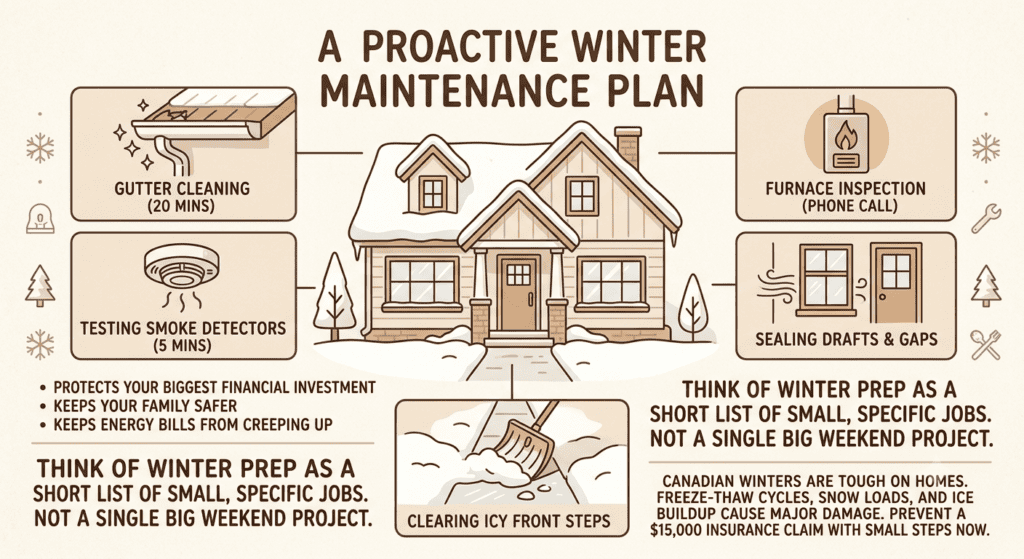
Canadian winters don’t just bring cold – they bring freeze-thaw cycles, which are far harder on a house than a steady deep freeze would be. Water gets into small cracks during a mild afternoon, then expands as it refreezes overnight. Do that dozens of times over a season and small cracks in your foundation, driveway, or roofing become big ones.
Add heavy, wet snow loads, ice buildup on roofs and gutters, and the strain that constant heating puts on furnaces and older windows, and it’s easy to see why winter causes more property damage claims than almost any other season in this country.
The hidden cost of skipping seasonal maintenance rarely shows up right away. A gutter that wasn’t cleaned in October doesn’t cause a problem in October – it causes a problem in January, when the ice buildup forces meltwater back under your shingles. A furnace that wasn’t serviced doesn’t fail in November – it fails during the coldest week of February, when every HVAC technician in the Niagara Region is already booked solid. Waiting is how a $150 maintenance call turns into a $15,000 insurance claim.
A proactive winter maintenance plan does three things: it protects the biggest financial investment most people ever make, it keeps your family safer (from carbon monoxide risks to icy front steps), and it keeps your energy bills from creeping up as your furnace fights a losing battle against drafts and gaps you never got around to sealing.
There’s also a simple mindset shift that makes this whole process easier: think of winter prep less as a single big weekend project and more as a short list of small, specific jobs. Nobody wants to spend an entire Saturday on “winterizing the house.” But checking the gutters takes twenty minutes. Testing the smoke detectors takes five. Booking a furnace inspection takes a phone call. Broken into pieces, the whole list is manageable – and every item you knock off is one less thing that can go wrong in February.
Inspect Your Roof Before Heavy Snowfall
Your roof takes on more punishment during a Canadian winter than almost any other part of your home. Snow load, ice, freeze-thaw cycling, and wind all work against it at once, which is why a fall roof inspection should be near the top of your winter property maintenance checklist.
Look for Damaged or Missing Shingles
Walk your property line and look up, or use binoculars if you’re not comfortable getting on a ladder. You’re looking for shingles that are curling, cracked, missing granules, or completely gone. Even a small gap is an entry point for meltwater once ice starts forming along your roofline. If you spot damage, get it repaired before the first snowfall – patching a roof in January, on ice, is a job nobody wants.
Remove Leaves and Debris
Leaves and branches trapped in valleys or against the roofline hold moisture against your shingles and can accelerate rot. They also clog the path water needs to take toward your gutters, which sets the stage for ice damming later in the season.
Why Roof Inspections Help Prevent Leaks and Structural Damage
A roof in good condition sheds snow and meltwater the way it’s designed to. A roof with weak spots traps water, and trapped water under freezing conditions is one of the most destructive forces a house can face – it doesn’t just stain a ceiling, it can rot roof decking, damage insulation, and eventually compromise structural framing if it goes unnoticed for a season or two.
One common mistake worth avoiding: assuming that because a roof “looks fine from the driveway,” it’s fine. Most early roof damage isn’t visible from ground level, and shingle wear near the ridge or in valleys is easy to miss without a closer look. If your roof is more than 15 years old, or you can’t remember the last time it was professionally inspected, fall is the right time to have someone take a proper look before it’s covered in snow for months.
Prevent Ice Dams Before They Form
Ice dams are one of the most misunderstood winter home maintenance issues, and one of the most damaging.
What Causes Ice Dams
An ice dam forms when heat escaping from your living space warms the upper part of your roof deck enough to melt the snow sitting on it. That meltwater runs down the roof slope until it reaches the eaves – the unheated overhang past your exterior walls – where it refreezes into a ridge of ice. As the cycle repeats, the ice ridge grows, water pools behind it, and eventually that trapped water gets forced backward, up and under your shingles, right into your attic and exterior walls.
In other words: ice dams aren’t caused by cold weather. They’re caused by heat loss. A perfectly insulated, well-sealed attic in the same cold climate rarely develops one, because the whole roof deck stays close to the outdoor temperature and the snow simply doesn’t melt unevenly.
Warning Signs Homeowners Often Ignore
- Icicles hanging along the edge of the roof (a classic early sign, not just a pretty winter photo opportunity)
- Uneven snow melt across the roof surface, with bare patches near the peak and thick snow still sitting near the eaves
- Water stains creeping across ceilings or the tops of exterior walls in late winter
- Ice building up specifically inside the gutters rather than just along the roof edge
Improve Attic Insulation and Ventilation to Reduce Risk
The fix is almost always the same two things working together: insulation and ventilation. Insulation keeps heat inside your living space where it belongs, instead of leaking up into the attic. Ventilation – through soffit intake vents and ridge or gable exhaust vents – removes whatever small amount of heat does escape, keeping the attic close to outdoor temperature so snow melts evenly (or not at all) rather than unevenly.
Air sealing matters just as much as insulation thickness. Gaps around attic hatches, recessed lighting, plumbing stacks, and exhaust fan ducts let warm, moist air leak upward constantly, and that continuous air movement transfers far more heat into the attic than most homeowners realize. If your home has a history of ice dams, a professional insulation and air-sealing assessment before winter is one of the higher-value winter property maintenance tips on this list – the payoff shows up in both damage prevention and lower heating bills.
Clean Gutters and Downspouts
This is the maintenance task most homeowners either skip or rush through, and it’s directly connected to ice dam formation and foundation problems.
Prevent Ice Buildup and Overflowing Water
A gutter packed with wet leaves and debris can’t drain properly. When meltwater has nowhere to go, it sits in the gutter, freezes, and adds to the ice dam problem right at your roofline. Clear gutters let meltwater keep moving instead of pooling and refreezing.
Direct Melting Snow Away From Your Foundation
Downspouts should extend at least a few feet away from your foundation walls, not dump water directly against the base of your home. During freeze-thaw cycles, water that pools next to the foundation can seep into small cracks, freeze, expand, and widen them – a slow but very real threat to foundation integrity over several winters.
Reduce the Risk of Basement Flooding
Basement water intrusion is one of the most common and expensive claims homeowners deal with, and clogged or poorly directed gutters are a major contributing factor. Clearing gutters and confirming downspouts drain well away from your home is a 30-minute job that meaningfully lowers your risk of a wet basement come spring thaw.
Protect Pipes From Freezing
Frozen and burst pipes are consistently one of the most common – and most expensive – winter insurance claims in Canada. Water damage overall makes up a substantial share of all home insurance claims nationwide, and a large portion of those claims trace back to freezing. Average repair costs for a serious frozen-pipe incident can run into the tens of thousands of dollars once you factor in water damage restoration, drywall, flooring, and potential mold remediation.
Insulate Exposed Pipes
Any pipe running through an unheated or poorly insulated space – basements, crawl spaces, attics, garages, or along exterior walls – is at risk. Foam pipe insulation sleeves are inexpensive and available at any hardware store, and wrapping vulnerable pipes takes an afternoon at most.
Disconnect Outdoor Hoses
Garden hoses left connected to an outdoor spigot trap water in the line. When that water freezes, it can expand back into the pipe inside your wall and crack it. Disconnect, drain, and store hoses before the first hard frost.
Winterize Exterior Faucets
Shut off the interior valve that feeds your outdoor faucets if your home has one, then open the exterior spigot to let any remaining water drain out. If you don’t have a shutoff valve, a simple insulated faucet cover is a cheap and effective backup.
Keep Indoor Temperatures Consistent During Cold Snaps
Most Canadian insurers expect homeowners to maintain an indoor temperature of at least 15°C, even when travelling, as a condition of frozen-pipe coverage. Letting a home sit unheated during an extended cold snap – even for a few days – is one of the fastest ways to end up with a burst pipe and a denied or complicated insurance claim.
This is a particularly common issue with vacant properties, cottages, and homes where the owner travels for extended periods over winter. A pipe doesn’t need days of extreme cold to fail – a single overnight cold snap in an unheated space can be enough if the plumbing isn’t insulated or the heat has been turned too low. If you’re planning to be away for more than a few days during winter, it’s worth arranging for someone to check on the property periodically, or having a property maintenance company monitor it for you.
Service Your Heating System
Your furnace works harder over a Canadian winter than any other appliance in your home, and it’s not something you want to discover is broken during a January cold snap.
Schedule a Furnace Inspection
An annual inspection by a licensed HVAC technician checks for cracked heat exchangers, worn belts, ignition issues, and general efficiency – problems that are far cheaper to catch in October than to deal with as an emergency repair in the dead of winter.
Replace HVAC Filters
A clogged filter forces your furnace to work harder, drives up energy costs, and reduces indoor air quality. Most standard filters should be replaced every one to three months during heating season – mark it on a calendar so it doesn’t slip.
Test Carbon Monoxide and Smoke Detectors
Winter means closed windows, sealed homes, and furnaces running constantly – exactly the conditions where carbon monoxide risk goes up. Test every detector in the home, replace batteries, and confirm units are within their manufacturer-recommended lifespan (most CO detectors need full replacement every five to seven years).
Improve Heating Efficiency and Indoor Air Quality
A serviced furnace with a clean filter doesn’t just run safer – it runs cheaper, and it keeps humidity and air quality more consistent through a season when your home is sealed up tight.
Seal Air Leaks Around Windows and Doors
Small drafts add up to a surprisingly large heating bill, and they’re one of the easiest winter home maintenance items to fix yourself.
Reduce Drafts
Run your hand slowly around window and door frames on a cold, windy day. Cold air movement means there’s a gap letting outdoor air in – and warm air out.
Lower Heating Bills
Air leaks around windows and doors are one of the more significant, and most fixable, sources of home heat loss. Sealing them is one of the best-value winter property maintenance tips on this list, often paying for itself within a single heating season.
Improve Indoor Comfort With Weatherstripping and Caulking
Weatherstripping around door frames and fresh caulking around window trim are inexpensive, weekend-sized projects. For older windows with more significant gaps, a plastic window insulation film kit can add a meaningful layer of protection for very little cost.
Remove Snow Safely Around Your Home
Snow removal is about more than convenience – it’s about safety, liability, and protecting your property’s structure.
Keep Walkways and Driveways Clear
Icy walkways are a leading cause of winter slip-and-fall injuries, and in much of the Niagara Region, clearing your sidewalk isn’t just good manners – it’s the law. Niagara Falls City Council adopted a new Snow Clearing By-law that requires residents to clear sidewalks adjacent to their property within 24 hours of the end of a snowfall, with enforcement beginning in the fall of 2026. St. Catharines already enforces a similar 24-hour requirement under its own Snow Removal By-law, with fines possible for non-compliance. If you’re not sure what your municipality requires, it’s worth a quick check – the rules and grace periods vary by city.
Clear Snow From Vents and Window Wells
Snowdrifts can block dryer vents, furnace intake and exhaust vents, and basement window wells. A blocked furnace vent isn’t just an efficiency problem – it can be a safety hazard, so keep these areas clear after every significant snowfall.
Prevent Foundation Moisture Problems and Ice Hazards
Piled snow directly against your foundation becomes meltwater against your foundation walls the moment temperatures rise, even briefly. Try to shovel snow at least a short distance away from the base of your home rather than banking it against the walls.
Check Trees and Landscaping
Trees and shrubs take on real stress from heavy, wet snow and ice, and a little fall attention prevents a lot of winter damage.
Remove Dead or Weak Branches
Dead or damaged branches are far more likely to snap under snow or ice load, and a falling branch can damage roofing, siding, vehicles, or power lines. A fall pruning pass – or a call to a professional landscaping crew – is cheap insurance against a winter storm claim.
Protect Shrubs and Young Trees
Wrapping burlap around vulnerable shrubs and staking young trees helps them handle heavy snow load and prevents branches from splitting under weight they’re not yet mature enough to bear.
Prevent Storm-Related Property Damage
Between wind, ice accumulation, and heavy snow, winter storms are a leading cause of property damage claims for both individual homeowners and condominium associations across Canada. A modest amount of tree and landscaping maintenance each fall measurably lowers that risk.
Inspect Your Home’s Foundation
Your foundation takes the most punishment from freeze-thaw cycling of any part of your house, simply because it’s in constant contact with ground that’s repeatedly freezing and thawing.
Look for Cracks Before Freezing Temperatures Worsen Them
Walk the exterior of your foundation and check the basement interior for any visible cracks. Even hairline cracks can widen significantly over a winter as water seeps in and freezes, so it’s worth sealing them before the ground freezes solid.
Ensure Proper Drainage
Grading around your home should slope away from the foundation, not toward it. If you notice water pooling near your foundation walls after rain, that’s worth addressing before winter locks everything in place.
Prevent Water Intrusion During Freeze-Thaw Cycles
A well-sealed, well-drained foundation is one of the biggest factors in whether your basement stays dry through spring thaw, when frozen ground finally starts releasing meltwater all at once.
Prepare an Emergency Winter Kit
Even a well-maintained home can be caught off guard by a severe storm, so it’s worth having a kit ready before you need it.
Flashlights and Batteries
Power outages are common during major winter storms. Keep flashlights (not just phone flashlights, which drain your battery fast) in a few accessible locations around the house.
Backup Heating Options
A safe, properly ventilated backup heat source – and a plan for using it safely – matters if your furnace fails or the power goes out during a deep freeze.
Ice Melt and Snow Shovel
Keep these accessible, not buried in the back of the garage behind summer patio furniture. You’ll want them within reach the morning after the first real snowfall.
Emergency Contact List for Maintenance Professionals
Keep the phone numbers for a plumber, an HVAC technician, and a property maintenance company somewhere easy to find – not saved in an app you can’t access if your power and Wi-Fi are both down.
Don’t Forget Indoor Winter Maintenance
Outdoor prep gets most of the attention, but several indoor tasks matter just as much.
Monitor Indoor Humidity
Homes tend to get drier in winter as furnaces run constantly, but poor ventilation can also trap excess humidity, which shows up as condensation on windows. Both extremes cause problems, from cracking wood trim to mold growth, so a simple hygrometer can help you keep an eye on things.
Clean Dryer Vents
A clogged dryer vent is a genuine fire risk, and it gets worse in winter as lint accumulates and airflow struggles against cold outdoor air pushing back through the vent. Clean it before your dryer works overtime through the colder months.
Test Sump Pumps
If your home has a sump pump, test it before winter and again periodically through the season. A pump that fails during a spring thaw, when it’s needed most, is one of the more preventable causes of basement flooding.
Keep Storage Areas Dry and Organized
Basements and crawl spaces are common trouble spots for winter moisture. Keep stored items off the floor and check periodically for dampness, especially after a thaw or heavy rain.
When to Hire a Professional Property Maintenance Company
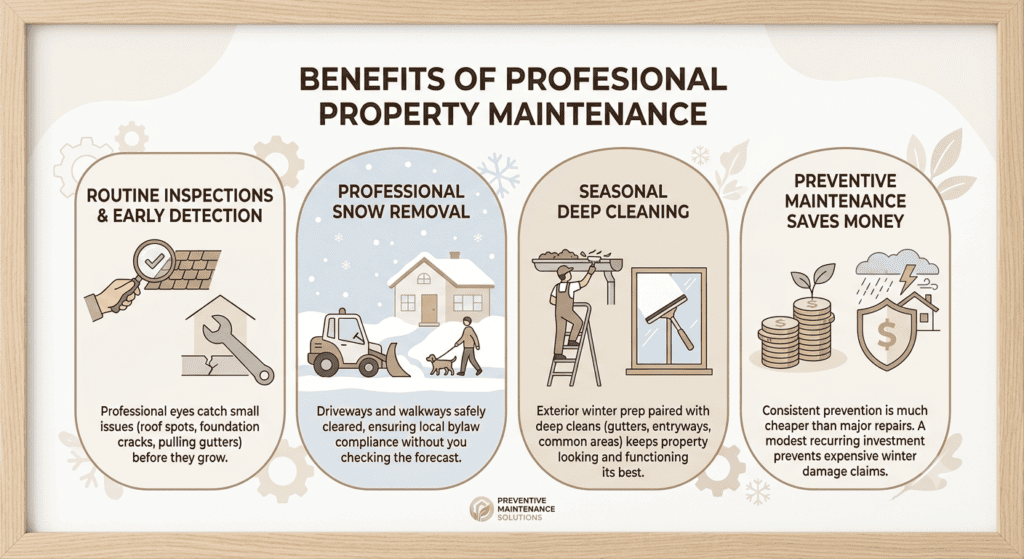
Some of this list is a weekend project for a handy homeowner. Some of it – roof inspections, furnace servicing, tree work near power lines, foundation assessments – is safer and more effective left to professionals.
Benefits of Routine Inspections
A professional property maintenance team knows what to look for and often catches small issues – a soft spot on the roof deck, an early foundation crack, a gutter pulling away from the fascia – before a homeowner would notice them on a casual walk-around.
Snow Removal and Exterior Maintenance
For homeowners across St. Catharines, Niagara Falls, Welland, Fort Erie, Niagara-on-the-Lake, Thorold, and Port Colborne, professional snow removal takes the guesswork out of local bylaw compliance and keeps driveways and walkways safely cleared without you having to check the forecast before every workday.
Seasonal Cleaning Services
Pairing exterior winter prep with a seasonal deep clean – gutters, entryways, and common areas for rental or commercial properties – keeps a property looking its best and functioning properly all winter long.
Preventive Maintenance Saves Money in the Long Run
The consistent theme across every section of this guide is the same: prevention is dramatically cheaper than repair. A modest, recurring investment in professional property maintenance is almost always less expensive than a single major winter damage claim – and it comes with far less stress.
Conclusion
None of the tasks on this list are complicated on their own. Clean the gutters. Insulate the pipes. Book the furnace inspection. Clear the walkway within 24 hours. It’s the cumulative effect of skipping a few of them, year after year, that leads to the kind of five-figure repair bill nobody plans for.
Winter property maintenance tips like these aren’t about turning your fall weekends into a chore list – they’re about protecting the biggest investment most Canadians will ever make, keeping your household safer through the coldest months, and keeping your energy bills from creeping up while you’re not looking. Small tasks done now genuinely do prevent major repair bills later, and a bit of preparation goes a long way toward a safer, more comfortable, more efficient home all winter.
If your fall to-do list already feels too long, you don’t have to tackle it all solo. Scheduling professional winter property maintenance – from gutter cleaning and exterior inspections to reliable snow removal – before severe weather arrives is one of the simplest ways to protect your property and get your winter off to a stress-free start.
Ready to check winter prep off your list?
The NLLC provides property maintenance, snow removal, gutter cleaning, and seasonal exterior services across Niagara Falls, St. Catharines, Welland, Fort Erie, Niagara-on-the-Lake, Thorold, Port Colborne, and the surrounding Niagara Region. Request your free quote today and head into winter with one less thing to worry about.
Frequently Asked Questions
1. What maintenance should be done before winter?
Before winter arrives, homeowners should inspect the roof for damaged shingles, clean gutters and downspouts, insulate exposed pipes, service the furnace, seal drafts around windows and doors, check the foundation for cracks, and trim dead or weak tree branches. Working through a winter home maintenance checklist in the fall catches most problems while they’re still cheap and easy to fix.
2. How do I protect my house from freezing temperatures?
Insulate exposed pipes in unheated areas like basements, garages, and crawl spaces, disconnect and drain outdoor hoses, keep indoor temperatures at a minimum of about 15°C even when away, and seal air leaks around windows and doors. These steps address the majority of freeze-related damage homeowners experience each winter.
3. How often should gutters be cleaned before winter?
Most homes benefit from at least one thorough gutter cleaning in late fall, after the majority of leaves have dropped, and a follow-up check once temperatures start dropping consistently. Homes surrounded by large trees may need an additional cleaning earlier in the fall.
4. What causes ice dams on roofs?
Ice dams form when heat escaping from a home’s living space melts snow on the upper roof, and the meltwater refreezes once it reaches the colder, unheated eaves. The resulting ice ridge traps more water behind it, which can eventually back up under shingles and leak into the attic and walls. Proper attic insulation and ventilation are the most effective long-term prevention.
5. Why is winter property maintenance important in Canada?
Canadian winters bring repeated freeze-thaw cycles, heavy snow loads, and extended cold snaps that put real stress on roofs, pipes, foundations, and heating systems. Water damage and freezing-related claims are among the most common and costly home insurance claims in the country, and most of that damage is preventable with proactive seasonal maintenance.
6. Should I inspect my heating system every year?
Yes. An annual furnace inspection catches worn parts, efficiency problems, and safety issues like cracked heat exchangers before they turn into a mid-winter breakdown or a carbon monoxide risk. It’s also one of the more affordable items on any winter maintenance checklist relative to the cost of an emergency furnace repair or replacement.
7. Can professional property maintenance help prevent winter damage?
Yes. A professional property maintenance team can catch early warning signs – a weak spot on the roof, an early foundation crack, poor gutter drainage – that are easy for homeowners to miss, and they can handle time-sensitive tasks like snow removal consistently, which matters for both safety and local bylaw compliance in municipalities like Niagara Falls and St. Catharines.