
Moving day is chaotic enough without wondering if you’re going to lose part of your last month’s rent over a dirty oven. If you’ve ever stood in an empty apartment at 11 p.m., exhausted, staring at a stovetop you swear you cleaned, you already know the stress that move-out cleaning creates. This guide breaks down exactly what landlords and property managers look for during a final inspection, the mistakes that cost tenants the most, and how a proper move-out cleaning checklist protects everyone involved – tenant, landlord, and the next person walking through the door.
Move-out cleaning isn’t just about vacuuming the floors and wiping the counters. It’s a detailed, room-by-room process that determines how quickly a property gets re-rented, how a landlord views the outgoing tenant, and whether a final inspection goes smoothly or turns into a dispute. A rushed, surface-level clean almost always misses the exact spots landlords check first: inside appliances, baseboards, window tracks, and grout lines.
Professional move-out cleaning saves time, reduces the back-and-forth of disputed deductions, and gives homeowners, renters, and property managers across the Niagara Region peace of mind that the property is truly ready for its next chapter. In this guide, you’ll learn what inspectors actually look for, the most common mistakes tenants make, a full room-by-room checklist, and how to decide between doing it yourself or calling in professional move-out cleaners like NLLC.
Think about the last time you toured a rental listing online. Chances are, the photos that made you stop scrolling were the ones with bright, spotless kitchens and gleaming bathroom tile. Landlords know this too. A property that looks tired or dirty in listing photos sits on the market longer, and a property that smells clean and looks cared for during an in-person showing rents faster. Move-out cleaning is the bridge between one tenancy ending and the next one beginning smoothly – and getting it right benefits everyone at the table, not just the person collecting the keys back.
Why Move-Out Cleaning Matters More Than Most People Think
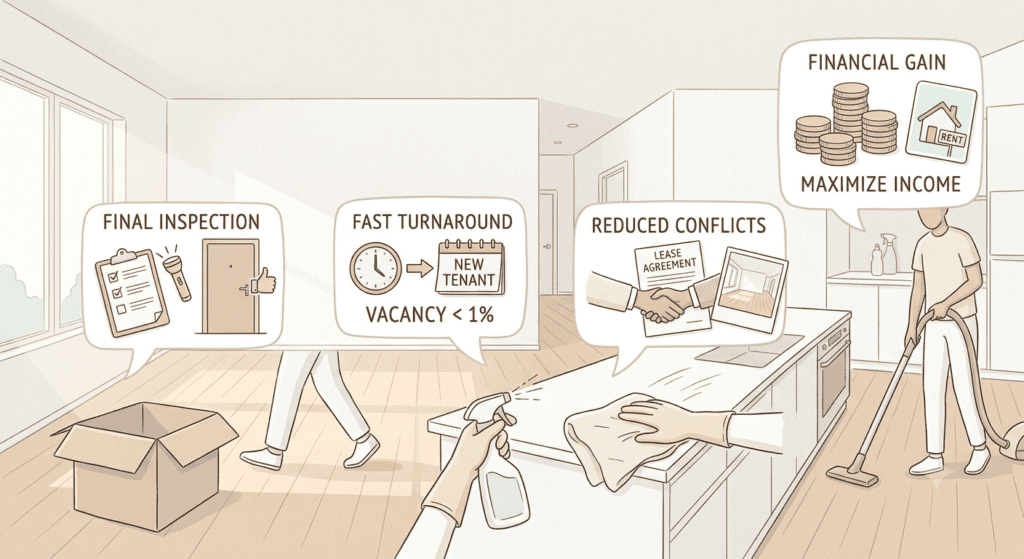
A lot of tenants assume that “clean enough” is good enough. In reality, move-out cleaning carries more weight than almost any other part of the moving process, for a few practical reasons.
First impressions during final inspection. A landlord or property manager typically walks through a unit with a checklist and a flashlight, checking corners, cabinet interiors, and appliance seals that tenants rarely think about day to day. A property that looks and smells clean the moment the door opens sets a positive tone for the entire walkthrough.
Faster preparation for new occupants. In the Niagara Region, rental demand has stayed tight, with regional vacancy rates sitting well below the national average through the past year. That means landlords want units turned around quickly – a spotless unit can be photographed, listed, and shown almost immediately, while a dirty one needs an extra cleaning day (or more) before it’s presentable.
Helps reduce complaints and delays. Disputes over cleanliness are one of the more common friction points between landlords and tenants at the end of a lease. A thorough clean, backed by photos, drastically reduces the odds of a disagreement dragging out.
Benefits for landlords, tenants, homeowners, and property managers. It isn’t just tenants who benefit. Landlords save money by not having to hire emergency cleaning crews between tenants. Homeowners preparing a property for sale benefit from the same deep-clean standard. Property managers overseeing multiple units benefit from consistency, since every unit is handed back in a similar, predictable condition.
There’s also a financial angle that’s easy to underestimate. Niagara Falls has seen a genuine surge in rental demand over the past year, with two-bedroom units in some neighbourhoods averaging well above two thousand dollars a month and vacancy rates sitting under one percent in parts of the city. When a landlord can turn a unit around in days instead of weeks, that directly protects their income. A tenant who leaves a property genuinely move-in ready is doing the landlord a real favour – and that goodwill often translates into a smoother reference for the next rental application, or a landlord who’s more flexible about timelines and minor issues during the walkthrough.
The reverse is also true. A property that needs an extra day or two of cleaning before it can be shown costs a landlord real money in lost rent, and it’s one of the fastest ways to sour an otherwise uneventful move-out. This is exactly why move-out cleaning deserves more attention than most tenants give it.
What Landlords Actually Look For During a Move-Out Inspection
This is the heart of any move-out cleaning checklist: knowing exactly what an inspector’s eyes go to first. Below are the areas that come up again and again during final walkthroughs.
Kitchen Appliances
The kitchen is usually where inspections succeed or fail. It’s also the room that takes the most time to clean properly, because appliances trap grease and food residue in places that don’t get touched during a normal week of cooking. Landlords check:
- Oven interior – baked-on grease and burnt food residue on racks and the oven floor
- Stovetop – grease buildup around burners, drip pans, and control knobs
- Range hood – grease film on the filter and the underside of the hood
- Microwave – splattered food inside and a sticky turntable
- Refrigerator inside and outside – shelves, drawers, door seals, and the top of the unit, which collects dust most tenants never think to check
A good rule of thumb: if an appliance has a door, a landlord is going to open it. Fridges and ovens left with visible grime are one of the fastest ways to leave a negative impression in the first sixty seconds of an inspection – and one of the slowest parts of the unit to clean properly if it’s left until the last minute.
Cabinets and Drawers
Cabinets look fine from a distance, but landlords open every one. They’re checking for:
- Food crumbs in the back corners
- Grease film near the stove-adjacent cabinets
- Sticky shelves from spills that were never wiped
Bathroom Cleanliness
Bathrooms are the second-most scrutinized space after the kitchen, largely because moisture makes dirt and buildup so visible. Inspectors look at:
- Soap scum on shower walls and glass doors
- Hard water stains around faucets and showerheads
- Toilets, including the base and behind the bowl
- Mirrors and any streaking
- Grout lines, which discolour quickly if not scrubbed
- The exhaust fan, which collects a surprising amount of dust
Hard water buildup is especially common across the Niagara Region, where mineral-rich water can leave visible spotting on fixtures within just a few weeks if they aren’t wiped down regularly. A descaling solution or a simple vinegar soak on showerheads and faucets makes a noticeable difference here.
Floors and Baseboards
Floors get an obvious pass, but baseboards are the detail that separates an average clean from a great one. This includes:
- Vacuuming carpets and rugs thoroughly, including under furniture footprints
- Mopping hard flooring, especially in high-traffic areas
- Dust buildup along edges and vents
- Corners, where dust and debris tend to collect unnoticed
Baseboards are worth calling out specifically because they’re one of the most commonly skipped items in a rushed clean, yet they’re one of the first things an inspector notices at eye level while walking through a room. A quick wipe with a damp microfibre cloth along every baseboard in the unit takes far less time than most tenants expect, and it makes a disproportionately large difference to how clean the whole space looks.
Walls, Doors and Light Switches
These get touched constantly during a tenancy, and it shows. Landlords check for:
- Fingerprints around light switches and door handles
- Scuff marks near baseboards and doorways
- Dust on top of door frames
- General wall cleanliness, especially near the kitchen and entryway
Windows and Window Tracks
Windows are one of the most commonly missed items in a rushed move-out clean. Inspectors check:
- Glass, inside and out where accessible
- Frames for dust and grime
- Tracks, where dirt and dead insects tend to accumulate
- Blinds, which collect dust on every slat
Closets and Storage Areas
Even empty spaces get checked. This includes:
- Empty shelves wiped down
- Dust removal from closet rods and corners
- Cobwebs in upper corners, especially in basements or rarely used closets
Trash Removal
This one seems obvious, but it’s one of the most common oversights. It includes:
- All garbage removed from every room, not just the kitchen
- Recycling bins emptied
- Forgotten belongings – a shockingly common issue, especially in closets, garages, and under beds
Landlords typically pay close attention to high-touch and high-visibility areas such as ovens, refrigerators, bathrooms, cabinets, baseboards, and window tracks because these are the places where dirt is most noticeable during a short inspection. A property manager walking through a unit for fifteen minutes isn’t going to miss a greasy stovetop or a mildew-stained shower – but they might miss a slightly faded wall mark, which typically falls under normal wear and tear anyway.
The Most Common Move-Out Cleaning Mistakes
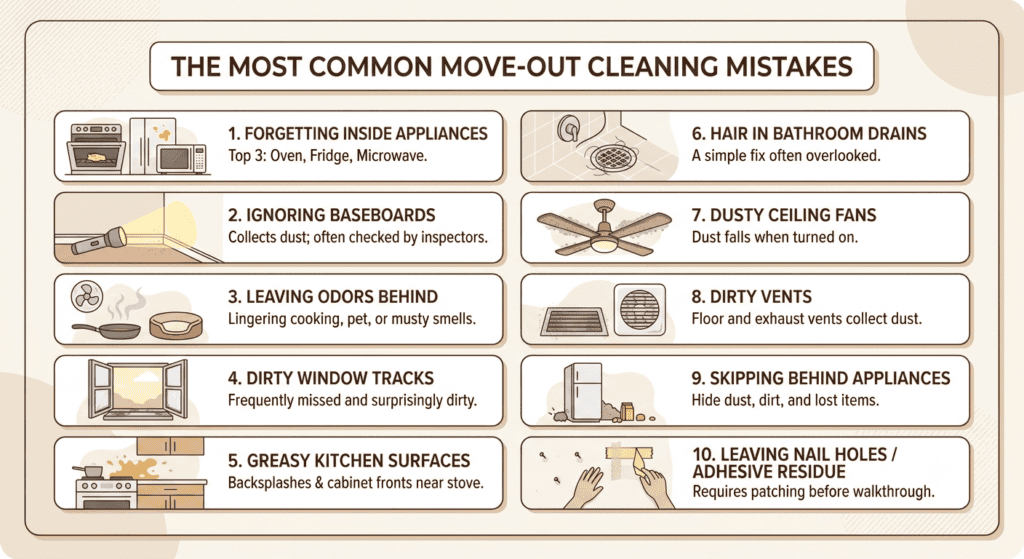
Even well-intentioned tenants leave money and goodwill on the table by missing a handful of predictable spots. The most frequent mistakes include:
- Forgetting inside appliances – the oven, fridge, and microwave are the top three most-missed areas
- Ignoring baseboards – they collect dust fast and are one of the first things a flashlight-wielding inspector notices
- Leaving odors behind – cooking smells, pet odors, or musty basement smells linger long after visible cleaning is done
- Dirty window tracks – often the single dirtiest surface in a unit, and the easiest to overlook
- Greasy kitchen surfaces – backsplashes and cabinet fronts near the stove
- Hair in bathroom drains – a quick fix that’s frequently skipped
- Dusty ceiling fans – dust falls the moment the fan is turned back on, which looks bad during a showing
- Dirty vents – both floor vents and bathroom exhaust vents collect dust that’s rarely cleaned during a regular tenancy
- Skipping behind appliances – the fridge and stove hide crumbs, dust, and sometimes small lost items
- Leaving nail holes or adhesive residue – where a lease requires patching, this is worth addressing before the final walkthrough
Room-by-Room Move-Out Cleaning Checklist
Use this breakdown as a practical, room-by-room reference – whether you’re cleaning yourself or briefing a professional crew. Working through a property systematically, room by room, is the single best way to make sure nothing gets skipped during a move that already has a hundred other things competing for your attention.
Kitchen Clean inside and outside of the fridge, oven, and microwave. Degrease the stovetop and range hood. Wipe down all cabinet interiors and exteriors. Scrub the sink and faucet. Mop the floor and wipe baseboards. Empty and wipe out the garbage bin. Don’t forget the small appliances left behind, like a dishwasher – wipe the door, gasket, and filter, since these are often overlooked.
Bathroom Scrub the tub, shower, and glass doors. Disinfect the toilet inside and out. Clean the mirror and vanity. Wipe down the exhaust fan cover. Mop the floor and check the grout. Remove hair from drains. Wipe down any towel bars, shelving, or medicine cabinets, inside and out.
Bedrooms Vacuum carpets or mop hard flooring. Wipe down closet shelving. Dust window sills, blinds, and baseboards. Check for nail holes or wall marks that may need patching. Wipe light switches and door handles. If ceiling fans or light fixtures are installed, dust them thoroughly, since dust falls the moment they’re switched on again.
Living Room Vacuum thoroughly, including under any furniture that’s being left behind. Dust all surfaces, shelving, and light fixtures. Wipe down windows and tracks. Clean any built-in shelving or fireplace surrounds. Check behind and underneath any built-in units for dust buildup that’s easy to miss during regular cleaning.
Laundry Area Wipe down the washer and dryer, including the lint trap and rubber door seal on front-load machines. Sweep or mop the floor. Wipe down any shelving or cabinets in the space. Check behind the machines if they can be safely moved, since lint and dust collect there over time.
Entryway Sweep or vacuum the floor. Wipe down the door and door handle. Clean the closet, including shelves and the floor. Wipe down any built-in shoe storage or mail nooks.
Garage (if applicable) Sweep the floor and remove all debris. Remove any oil stains where possible. Clear cobwebs from corners and overhead storage. Make sure any shelving or workbenches left behind are wiped down and free of dust.
Balcony or Patio Sweep the floor. Wipe down railings. Remove any leftover furniture, planters, or personal items that weren’t part of the original unit. Check for cobwebs in corners and under any built-in seating.
DIY Cleaning vs Hiring Professional Move-Out Cleaners
DIY Benefits
- Lower cost – no service fee, just your own time and cleaning supplies
- Flexible schedule – clean whenever it fits around your move, rather than booking around someone else’s availability
Professional Cleaning Benefits
- Thorough deep cleaning – professionals are trained to catch the details tenants miss, like grease behind the stove or grime in window tracks
- Better inspection readiness – a professional clean matches what landlords are actually looking for, since crews are familiar with move-out standards
- Saves time during moving – one less major task during an already exhausting week
- Professional equipment and products – commercial-grade tools handle baked-on grease, hard water stains, and grout discoloration far faster than household supplies
- Consistent cleaning standards – every room gets the same level of attention, rather than the last room getting rushed because energy ran out
Ontario tenants should also know that landlords cannot legally collect a separate cleaning or damage deposit – only first and last month’s rent, plus a refundable key deposit, are permitted under the Residential Tenancies Act. That means the property has to be returned in a condition that’s genuinely “ordinarily clean,” beyond normal wear and tear, or a landlord may have grounds to pursue compensation for excessive cleaning costs through the Landlord and Tenant Board. Investing in a proper move-out clean is almost always cheaper – and far less stressful – than a drawn-out dispute.
What Move-Out Cleaning Actually Costs in Ontario
Budgeting for a professional clean is a lot easier when you know what’s typical. Across Ontario in 2026, a full move-out clean generally runs between roughly $250 and $600, with the final number depending on the size of the property, its current condition, and any add-ons like carpet shampooing or inside-appliance detailing. A standard one- or two-bedroom apartment usually lands on the lower end of that range, while larger homes with multiple bathrooms, finished basements, or heavier buildup can push toward the higher end.
A few factors move the price up or down. Homes that have been cleaned consistently throughout the tenancy cost less to bring up to move-out standard than ones with years of built-up grease or grime. Pets typically add to the total because of extra hair removal and odor treatment. Add-on services – carpet cleaning, interior window washing, or garage cleanouts – are usually quoted separately from the base price. Booking early also helps, since peak moving months across the region (typically late spring through early fall) fill up cleaning company schedules quickly.
Compared to the potential cost of a disputed cleaning charge, a poor landlord reference, or the time lost redoing the job yourself under pressure, professional move-out cleaning is often one of the more reasonable expenses in an already expensive moving process.
What Landlords Cannot Charge Tenants For
It’s worth understanding the other side of the equation too. Under Ontario’s Residential Tenancies Act, landlords cannot charge tenants for what’s considered normal wear and tear – things like minor scuffs on walls, faded paint, or carpet that’s worn down after years of regular use. What landlords can pursue compensation for is uncleanliness or damage that goes beyond ordinary use: food and grease left caked on walls or cabinets, heavy pet staining, or a unit left in a condition that requires substantially more than a standard clean to make it rentable again.
If a disagreement comes up, the landlord is expected to document the issue and, if the tenant disputes it, resolve it through the Landlord and Tenant Board rather than simply withholding funds. This is exactly why photos, receipts, and a genuinely thorough move-out clean matter so much – they create a clear, dated record that protects both sides if a disagreement ever needs to be sorted out formally.
Not every move-out needs a professional crew, but certain situations make it worth the investment:
- Large home – more square footage means more time, and DIY cleaning can eat an entire weekend
- Limited time – moving day logistics (trucks, keys, utility transfers) often leave little room for a deep clean
- Pet stains – odor and hair removal usually require specialized products and equipment
- Heavy grease buildup – kitchens that haven’t been deep-cleaned in a year or more need more than a wipe-down
- Long-term occupancy – the longer a tenant has lived somewhere, the more buildup accumulates in places that get overlooked during regular cleaning
- Preparing property for sale – homeowners listing a property benefit from the same deep-clean standard as a rental turnover
- Rental turnover deadlines – property managers juggling tight leasing schedules need a fast, reliable clean to avoid extended vacancy
If more than two or three of these apply to your situation, the math almost always favours hiring a professional crew over spending a full weekend scrubbing baseboards yourself while also trying to pack boxes and coordinate movers.
What Professional Move-Out Cleaning Usually Includes
A proper move-out cleaning service goes well beyond a standard tidy-up. A typical service includes:
- Deep kitchen cleaning, including inside the oven, fridge, and microwave
- Bathroom sanitization, including grout, tile, and fixtures
- Floor cleaning – vacuuming, mopping, and edge detailing
- Window cleaning, including interior glass and tracks
- Baseboards, wiped down throughout the entire unit
- Interior appliance cleaning
- Dusting throughout, including light fixtures, vents, and ceiling fans
- Spot cleaning walls for fingerprints and scuffs
- Light fixtures wiped down and dusted
- A final quality inspection before the crew leaves, to catch anything missed on the first pass
How NLLC Helps Make Move-Outs Stress-Free
NLLC has spent years helping homeowners, renters, landlords, and property managers across the Niagara Region get through move-outs without the last-minute panic. Here’s what sets a professional partner like NLLC apart during a rental turnover:
- Reliable cleaning professionals who show up on schedule, every time, so moving day logistics don’t get thrown off
- Detailed room-by-room cleaning that matches exactly what landlords check during a final inspection
- Flexible scheduling to work around lease end dates, closing dates, or tight turnover windows
- Residential move-out expertise built specifically around what Niagara Region rental properties and homes need
- Customized cleaning plans for different property types – apartments, single-family homes, condos, and larger rental units
- Serving homeowners, renters, landlords, and property managers across Niagara Falls, St. Catharines, Welland, Fort Erie, Niagara-on-the-Lake, Thorold, Port Colborne, and the wider Niagara Region
Whether it’s a single apartment or a full portfolio of rental units, a locally based team that understands what landlords in this region expect makes the entire process faster and far less stressful. NLLC’s crews know the difference between a rushed surface clean and the kind of detailed, inspection-ready result that actually protects a tenant’s last month’s rent and helps a landlord get a unit re-listed within days rather than weeks.
Pro Tips for a Successful Final Inspection
- Clean from top to bottom – dust and debris fall as you work, so start with ceiling fans and shelves and finish with floors
- Empty every cabinet – even ones that look untouched, since inspectors open all of them
- Take before-and-after photos – this protects both tenants and landlords if there’s ever a disagreement about the unit’s condition
- Finish cleaning after furniture is removed – carpets and floors almost always reveal dust and marks once furniture is out of the way
- Use a checklist – working room by room with a written list prevents forgotten spots, especially under time pressure
- Perform a final walkthrough with fresh eyes – walk through as if you were the landlord, checking corners, cabinets, and appliances one more time before handing over the keys
A final tip that’s often overlooked: schedule the clean for the very last thing you do before returning keys, not the day before movers arrive. Boxes and furniture being carried out almost always scuff floors, leave dust trails, and track in dirt, so cleaning too early usually means redoing parts of the job anyway.
Conclusion
Move-out cleaning isn’t just a box to check before handing over the keys – it’s what determines whether a final inspection goes smoothly, whether a landlord re-rents the unit quickly, and whether a tenant walks away from the tenancy without a dispute. The small, overlooked areas – inside the oven, the window tracks, the baseboards, the cabinet corners – are almost always the details that shape a landlord’s overall impression of how well a property was cared for.
Taking the time to work through a proper move-out cleaning checklist, room by room, pays off in ways that go beyond just getting a last month’s rent deposit applied smoothly. It protects your reference for future rentals, saves the next tenant from moving into a space that still smells like the last one, and gives landlords and property managers the confidence to turn a unit around without unnecessary delays.
If you’re preparing for a move in Niagara Falls, St. Catharines, Welland, or anywhere across the Niagara Region, a professional move-out cleaning takes the guesswork (and the exhausting last-minute scrubbing) out of the process. Reach out to NLLC to schedule a professional move-out cleaning and hand back the keys with confidence.
Frequently Asked Questions
Is professional move-out cleaning worth it?
For most tenants and homeowners, yes. A professional move-out cleaning service typically costs a few hundred dollars, which is often far less than the cost of a disputed deduction, a rushed re-clean, or a poor reference from a frustrated landlord. It also frees up an entire day during what’s usually one of the busiest weeks of the year.
How long does move-out cleaning usually take?
Most standard-sized apartments take a professional crew a few hours, while larger homes with multiple bedrooms and bathrooms can take closer to half a day, depending on condition and square footage. DIY cleaning tends to take considerably longer, especially for a first-time deep clean of appliances and grout.
What is included in a move-out cleaning service?
A full service typically covers the kitchen (including inside appliances), bathrooms, floors, baseboards, windows and tracks, dusting throughout, and a final inspection to confirm nothing was missed. Add-ons like carpet shampooing or garage cleanouts are usually quoted separately.
What areas do landlords inspect first?
Kitchens and bathrooms almost always get the closest look first, since they show dirt and buildup the fastest. Baseboards, window tracks, and inside appliances are close behind, followed by closets and storage areas that tenants often assume don’t need attention since they’re empty.
Can professional cleaning help avoid cleaning-related disputes?
Yes. A professional clean, paired with dated photos, creates a clear record of the unit’s condition at move-out, which is one of the strongest forms of evidence if a disagreement ever needs to be resolved through the Landlord and Tenant Board.
Should carpets be professionally cleaned?
If the lease requires it, or if the carpet shows stains beyond normal wear, a professional carpet cleaning is worth adding. Regular wear from everyday use is not something a landlord can charge for under Ontario tenancy rules, but visible staining or odor usually is, so it’s often cheaper to address it proactively than to dispute a charge later.