If you have ever stood in your driveway looking at your neighbour’s lawn and wondered why theirs looks like a golf course while yours looks patchy, tired, and a little embarrassing, you are not alone. Most homeowners in the Niagara Region are doing more lawn work than they need to, and still not getting the results they want. They are watering at the wrong time, mowing too short, fertilizing on the wrong schedule, and fighting weeds and grubs without ever addressing what’s actually causing them.
The truth is, a great lawn is not about luck, expensive equipment, or spending every Saturday behind a mower. It comes down to understanding a handful of core principles and applying them consistently, at the right time of year, for your specific soil and climate. That is exactly what professional lawn care does – and it is exactly what this guide will walk you through, step by step.
Whether you are a homeowner in Niagara Falls trying to get your lawn back on track, a business owner who wants a property that reflects well on your brand, or simply someone who wants to understand what you are paying for when you hire a lawn care company, this guide covers everything: mowing, fertilizing, watering, aeration, pest control, seasonal timing, current industry trends, and realistic 2026 pricing for Ontario.
What Does a Full Lawn Care Program Actually Include?
When people hear “lawn care,” they usually picture someone pushing a mower across a yard once a week. In reality, professional lawn care is a coordinated program built around your grass’s biology and your region’s growing season. It is the difference between reacting to problems as they show up and preventing them before they start.
Core Services in a Full Lawn Care Program
A complete lawn care program typically includes several layered services that work together rather than in isolation:
- Mowing and edging on a consistent schedule that respects the grass’s natural growth rate
- A lawn fertilization schedule timed to the plant’s actual nutrient needs across the season
- Weed control, both preventive (pre-emergent) and reactive (spot treatment)
- Lawn aeration to relieve soil compaction and let water, air, and nutrients reach the roots
- Overseeding to thicken thin areas and crowd out weeds naturally
- Pest and disease monitoring, including grub and chinch bug prevention
- Seasonal cleanups in spring and fall to remove debris, thatch, and leaves
- Irrigation guidance so watering supports root depth instead of just surface greening
None of these services work particularly well on their own. Fertilizing a lawn that is mowed too short, for example, just feeds grass that cannot hold onto the nutrients. Aerating a lawn that is never overseeded leaves the holes open for crabgrass to move into. The value of a coordinated program is that each step supports the next one.
How a Professionally Managed Lawn Differs From DIY Maintenance
DIY lawn care is not a bad idea – plenty of homeowners maintain excellent lawns on their own. The difference usually comes down to three things: timing, equipment, and diagnosis.
A professional crew mows with sharp, properly calibrated commercial blades, applies fertilizer at rates matched to your soil rather than a generic bag instruction, and has seen enough lawns to recognize the early signs of grub damage or fungal disease before they spread. A homeowner fertilizing based on when the bag happens to be on sale at the hardware store, or mowing whenever the weekend allows, is working against the plant’s schedule rather than with it. That mismatch is the single biggest reason DIY lawns underperform compared to professionally maintained ones, even when the homeowner is putting in real effort.
Understanding Your Niagara Region Lawn
Before touching a mower or a fertilizer spreader, it helps to understand what you are actually working with. Grass in the Niagara Region – covering Niagara Falls, St. Catharines, Welland, Fort Erie, Niagara-on-the-Lake, Thorold, and Port Colborne – behaves differently than grass in warmer or drier parts of the continent, and treating it like a generic “lawn” is where a lot of homeowners go wrong.
Common Grass Types in the Niagara Region
The overwhelming majority of lawns across Southern Ontario are made up of cool-season grasses, primarily Kentucky bluegrass, perennial ryegrass, and various fescues, often blended together. Cool-season grasses have two natural growth surges each year: one in spring as soil warms, and a stronger one in fall as temperatures drop and moisture returns. They go semi-dormant during the peak heat of July and August, which is exactly when homeowners tend to panic and over-water or over-fertilize, often making things worse.
Understanding this growth pattern changes how you should approach almost every part of maintenance. It explains why fall, not spring, is the season professionals treat as the most important for feeding, seeding, and repair work.
Soil and Climate Factors That Affect Growth
Niagara’s clay-heavy soil in many neighbourhoods holds water and nutrients longer than sandy soil, which sounds like an advantage until you realize it also compacts easily and drains poorly after heavy rain. Compacted clay soil is one of the most common hidden reasons a lawn looks thin no matter how much fertilizer goes down – the roots simply cannot access what they need underground. The region’s humid summers also create ideal conditions for certain fungal diseases and surface-feeding insects, which is worth keeping in mind later in this guide.
Mowing the Right Way
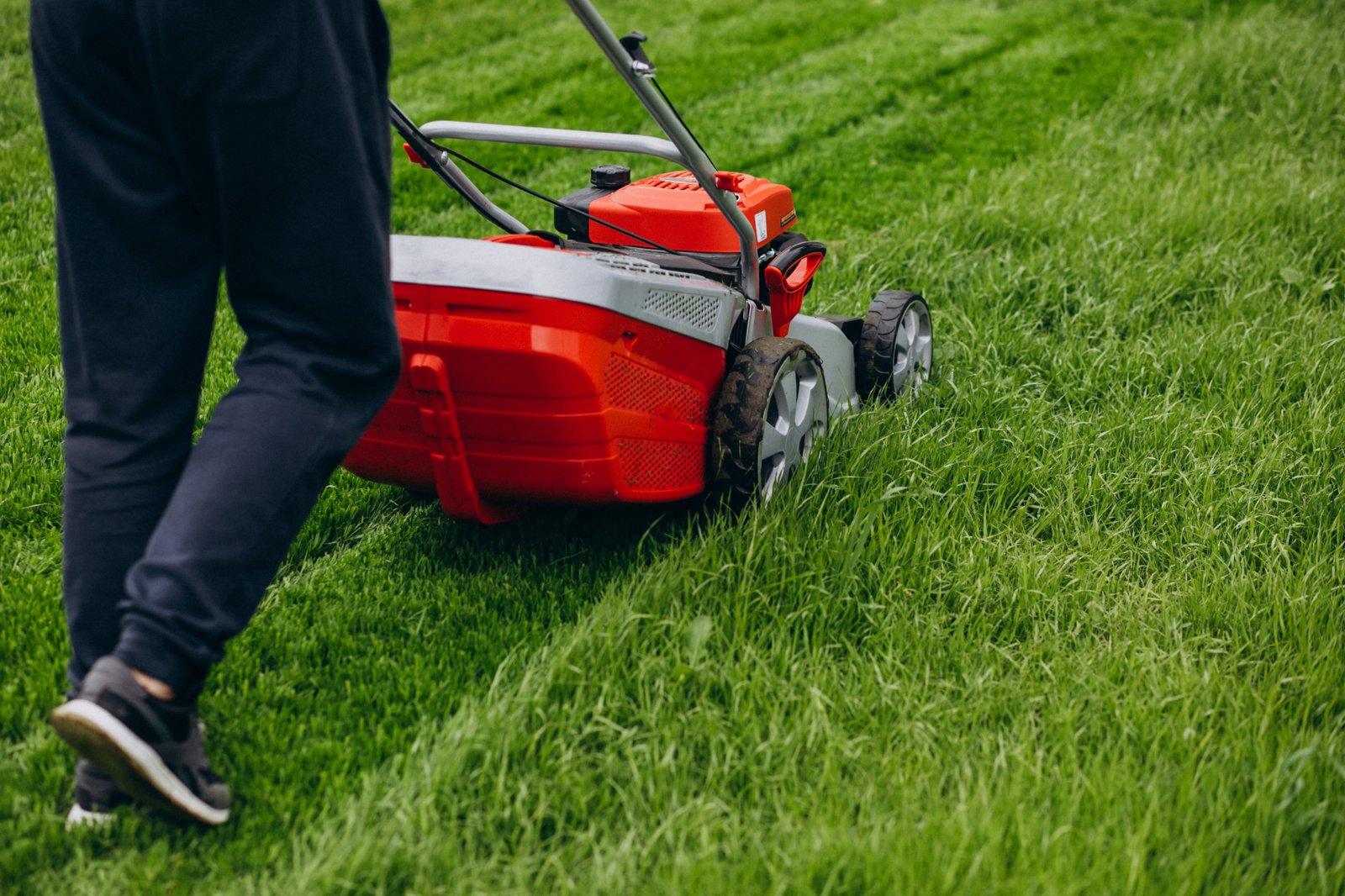
Mowing feels like the simplest part of lawn care, and it is also the part homeowners get wrong most often. The mistake almost always goes in the same direction: cutting too short.
Cool-season grasses like the bluegrass and fescue common across Niagara should generally be kept between 2.5 and 4 inches, and most turf specialists now recommend staying toward the taller end of that range, especially through summer. Longer grass blades shade the soil, which keeps roots cooler, reduces water loss, and blocks sunlight from reaching weed seeds before they can germinate. Grass cut too short does the opposite – it stresses the plant, exposes bare soil, and invites weeds and pests to move in.
The other rule that matters just as much as height is the one-third rule: never remove more than one-third of the grass blade in a single cut. If your lawn is at 4 inches, the lowest you should mow it is 2.5 to 3 inches. Removing more than that in one pass shocks the plant and can trigger a stress response that shows up as yellowing days later. During peak spring growth, this often means mowing more frequently rather than cutting shorter, so you never need to remove more than that top third at once.
A few other mowing habits make a measurable difference over a season:
- Keep mower blades sharp – dull blades tear grass rather than cutting it cleanly, leaving ragged tips that turn brown and become entry points for disease
- Mow when the grass is dry, ideally not in the middle of the hottest part of the day
- Leave clippings on the lawn when they are short enough to filter down between blades, since they break down and return nitrogen to the soil
- Vary your mowing direction periodically to prevent ruts and compacted tracks from repeated mower passes
The Ideal Fertilizing Timeline for Ontario Lawns
Fertilizer timing is where a lot of well-intentioned homeowners waste money. The instinct is to feed the lawn in spring when it looks green and hungry, but that is often the least effective time to apply. In spring, cool-season grass is drawing on energy reserves stored in its roots from the previous fall – it is not actually short on nutrients yet. Fertilizing heavily at that point mostly feeds a burst of top growth that requires more frequent mowing without building a stronger plant underneath.
Spring Feeding: What to Apply and When
If you fertilize in spring at all, wait until the spring growth flush has slowed – typically late May in most of the Niagara Region – rather than applying the moment the lawn turns green. A lighter, balanced application at this stage supports the plant without pushing excessive blade growth. Applying too early, while soil is still cold, mostly wastes product, since grass roots cannot take up nutrients efficiently until soil temperature climbs consistently above about 10°C.
Summer Maintenance Feeding
Summer applications are optional and should be approached cautiously. Cool-season grass is under heat stress in July and August, and heavy nitrogen feeding during a heatwave can actually burn the lawn rather than help it. If you do feed in summer, use a lighter, slow-release formulation, and avoid applying immediately before or during a stretch of temperatures above roughly 28°C.
Fall: The Most Important Application of the Year
Most lawn care professionals agree that the late-summer to fall application, generally applied through September and again in late fall before the ground freezes, does more for lawn health than every other application combined. As temperatures drop, cool-season grass shifts its energy toward root development and storage rather than blade growth, which means nutrients applied in fall get used far more efficiently. A late-fall application, sometimes called a winterizer, is typically higher in potassium, which strengthens cell walls and helps grass survive freeze-thaw cycles through winter. Lawns that receive this application consistently green up earlier and thicker the following spring compared to lawns that only get fed once in spring.
Reading Fertilizer Numbers (NPK Explained)
Every fertilizer bag lists three numbers, representing nitrogen, phosphorus, and potassium in that order. Nitrogen drives leaf and blade growth and is the reason grass looks greener shortly after application. Phosphorus supports root establishment, which matters most for new seed or sod. Potassium strengthens the plant’s overall resilience against drought, disease, and cold. A typical spring or summer feeding leans higher in nitrogen, while a fall winterizer formula shifts toward higher potassium relative to nitrogen.
Watering Your Lawn the Right Way
Watering habits are the second most common source of lawn problems after mowing height, and the fix is almost always the same: water less often, but more deeply.
How Much and How Often
Most established cool-season lawns need roughly 2.5 to 3 cm (about one inch) of water per week, including rainfall, delivered in one or two deep sessions rather than a little bit every day. Frequent shallow watering trains roots to stay near the surface, where they are far more vulnerable to heat and drought stress. Deep, infrequent watering pushes roots downward in search of moisture, building the kind of drought resilience that gets a lawn through a hot, dry stretch of July without going brown.
Early morning is the best time to water, generally before 10 a.m. Watering in the evening leaves grass blades wet overnight, which creates ideal conditions for fungal disease to take hold, particularly in Niagara’s humid summer air.
Common Watering Mistakes
The most frequent mistakes homeowners make with irrigation are watering on a fixed daily schedule regardless of rainfall, watering the lawn right before mowing (which clumps clippings and leads to an uneven cut), and assuming a brown lawn in August is dying rather than simply dormant. Cool-season grass often goes semi-dormant and brown during extended summer heat as a survival mechanism – it is not necessarily dead, and resuming normal watering in fall typically brings it back green within a few weeks.
Aeration, Overseeding, and Soil Health
If mowing and fertilizing are the visible parts of lawn care, aeration is the part happening underground that most homeowners skip entirely – and it is often the single biggest reason a lawn stays thin year after year despite everything else being done correctly.
Why Compacted Soil Hurts Your Lawn
Foot traffic, mowing equipment, clay-heavy soil, and Ontario’s freeze-thaw cycles all compact soil over time. Compacted soil has less pore space for air, water, and nutrients to reach the root zone, which means even a well-fertilized lawn on compacted ground struggles to actually absorb what has been applied. Core aeration, which pulls small plugs of soil out of the lawn, relieves that compaction and immediately improves how effectively water and fertilizer reach the roots.
Best Times to Aerate and Overseed
Aeration works best when done during active growth periods, either spring or – preferably – early fall, when cooler temperatures and typically higher rainfall give newly seeded areas the best chance to establish before winter. Overseeding right after aeration is one of the most effective combinations in lawn care: the holes left by aeration give grass seed direct soil contact instead of getting stranded on top of existing thatch, dramatically improving germination rates. This combination is also one of the most effective long-term weed control strategies available, since a thick, dense lawn simply leaves weeds nowhere to establish.
Identifying and Treating Common Lawn Pests and Diseases
A lawn that suddenly develops brown patches in the middle of an otherwise healthy season is rarely a mowing or watering issue – it is usually a pest or disease problem, and Niagara’s warm, humid summers create favourable conditions for several of the most common ones.
Grubs
Grubs are the larvae of beetles, most commonly the European chafer and Japanese beetle across Southern Ontario, and they feed on grass roots from below. Signs of a grub infestation include turf that feels spongy underfoot, patches that lift or peel back easily like loose carpet because the root system has been eaten away, and increased digging activity from skunks, raccoons, or birds hunting for a meal. Grub damage typically becomes visible in late summer, but the treatment window that actually works is narrower than most homeowners realize – targeting young larvae in late summer through early fall, when they are feeding close to the surface, is far more effective than treating in spring, when mature grubs are less active and closer to pupating.
Chinch Bugs
Chinch bugs are tiny, sap-sucking insects that feed on grass blades and inject a substance that blocks the plant from absorbing water, which is why chinch bug damage is so frequently mistaken for simple drought stress. Damage typically starts in the hottest, driest parts of a lawn – along driveways, sidewalks, and south-facing slopes – and spreads outward as the population grows. A simple way to confirm chinch bugs rather than guess is to cut both ends off a tin can, push it a few inches into the soil at the edge of a damaged patch, fill it with soapy water, and watch for the insects floating to the surface within a few minutes.
Fungal Diseases and Patch Problems
Warm, humid nights combined with overwatering or watering in the evening create ideal conditions for fungal disease in lawns. Circular or irregular discoloured patches that do not respond to watering are a common sign. Improving air circulation, watering only in the early morning, avoiding excess nitrogen in summer, and not mowing when the grass is wet all reduce the conditions fungal disease needs to spread.
Weed Control Without Overusing Chemicals
The most sustainable approach to weeds is not a stronger herbicide – it is a lawn that is too thick and healthy for weeds to get a foothold in the first place.
Cultural Weed Prevention
Mowing at the taller end of the recommended range shades out weed seeds before they can germinate. A properly timed fertilization schedule keeps grass dense enough to out-compete weeds for light, water, and space. Aeration and overseeding fill in the bare or thin patches that would otherwise become an open invitation for crabgrass or dandelions. Together, these three habits do more long-term weed prevention than most spot treatments ever will.
When Spot Treatment Makes Sense
Even a well-maintained lawn will occasionally need targeted treatment, particularly for stubborn broadleaf weeds or an early crabgrass outbreak. The key is precision – treating the specific problem area rather than blanket-spraying the entire lawn, which reduces both cost and unnecessary chemical use while still solving the problem effectively.
Seasonal Lawn Care Calendar
Bringing all of the above together into a single seasonal rhythm makes it far easier to stay on track without guessing what your lawn needs each month.
Spring
Once the ground has thawed and the lawn is actively growing, rake up any matted leaves or debris left from winter, do a light first mow slightly shorter than your normal summer height to remove dead growth, and hold off on heavy fertilizing until the initial growth flush slows in late May. Spring is also a good window for aeration if it was not done the previous fall.
Summer
Raise your mowing height, water deeply but infrequently and only in the early morning, and keep an eye out for the early signs of chinch bug or grub activity, particularly during hot, dry stretches. Avoid heavy fertilizer applications during heatwaves.
Fall
This is the season that matters most. Apply your primary fertilization here, aerate and overseed thin areas, keep mowing until growth stops for the year, and continue raking leaves regularly so they do not smother the grass underneath.
Winter Prep
Before the ground freezes, apply a final winterizer application if you have not already, keep leaves cleared through the last weeks of fall, and avoid heavy foot traffic on frozen or frost-covered grass, which can damage dormant blades.
2026 Lawn Care Trends Worth Knowing
Lawn care has changed noticeably over the past few years, and several trends shaping 2026 are worth understanding, even if you are not ready to adopt all of them yet.
Robotic Mowers and Smart Irrigation
Robotic mowers have moved well beyond the wire-boundary systems of a few years ago. Newer models use GPS and app-based virtual boundaries, can navigate slopes and obstacles, and mow in frequent, short passes that many lawn care professionals consider healthier for the grass than a single weekly cut, since each pass removes far less than one-third of the blade at a time. Smart irrigation controllers that adjust watering based on real-time weather and soil moisture data are following a similar path, reducing water waste while improving consistency.
Native Plantings and Reduced-Turf Landscaping
More homeowners are converting sections of high-maintenance turf, particularly shaded or oddly shaped areas that never thrived as lawn anyway, into native plant beds. Native lawn alternatives typically need less water and virtually no fertilizer once established, and they support local pollinators in a way that a monoculture lawn cannot. This does not mean giving up your lawn entirely – most homeowners are simply being more selective about which parts of the property actually need to be turf.
Eco-Friendly and Pet-Safe Treatments
Demand for pet-safe, lower-impact lawn treatments continues to grow, including beneficial nematodes for grub control as a chemical-free alternative and organic-based fertilizer blends. These approaches often take slightly longer to show results than conventional chemical treatments, but they align with a broader shift toward sustainability that is increasingly common across the lawn care industry.
The Real Cost of Lawn Care in Ontario
Budgeting for lawn care is easier when you understand what drives the price up or down, rather than comparing a single quote in isolation.
DIY Costs vs Professional Packages
Basic weekly mowing across Ontario generally runs in the range of $45 to $75 per visit for a typical suburban lot, which adds up to roughly $1,200 to $1,800 across a full April-to-October season for mowing alone. A full-service seasonal package that bundles mowing with fertilization, weed control, aeration, and seasonal cleanups typically lands between $1,800 and $3,200 for a standard residential property, with larger or more complex properties running higher. Individual services outside of a package – a single fertilizer application, an aeration visit, or a spring cleanup – are usually priced separately and can range anywhere from $50 to $200 depending on lot size and scope.
DIY costs are easy to underestimate. A quality mower, spreader, edger, and basic fertilizer and weed control products can easily run several hundred dollars in the first year alone, before accounting for the time investment or the cost of correcting mistakes like over-fertilizing or scalping the lawn.
What Drives Pricing Up or Down
Lot size is the single biggest factor in most quotes, followed by terrain complexity, the number of garden beds requiring trim work, and how far the lawn has been neglected before a professional gets involved – a lawn recovering from years of grub damage or compacted soil takes considerably more work than one that has simply been on autopilot. Bundled seasonal packages consistently offer better value than paying for each service individually, since they are priced to reflect ongoing maintenance rather than one-off emergency fixes.
Benefits of Hiring a Lawn Care Company
Beyond simply saving time, a professional program brings a level of diagnosis and consistency that is difficult to replicate on your own. A professional crew recognizes the early, subtle signs of grub or chinch bug activity before the damage is visible from the sidewalk. They calibrate fertilizer and treatment rates to your specific soil and lawn condition instead of a generic bag recommendation. They use commercial-grade, properly maintained equipment that produces a cleaner cut with less stress on the grass. And because they are working across many properties in the same region, they know exactly how Niagara’s soil, climate, and seasonal patterns behave – knowledge that takes most homeowners years of trial and error to build up on their own.
There is also a real property value angle here. A well-maintained lawn and landscape is consistently cited by real estate professionals as one of the highest-return improvements before listing a home, and it is the first thing a visitor, client, or potential buyer notices before they ever step through the front door.
Common Lawn Care Mistakes Homeowners Make
A few mistakes show up in almost every problem lawn, regardless of the specific symptoms:
- Mowing too short, which stresses the plant and opens the door to weeds and pests
- Fertilizing in spring only, missing the far more impactful fall application
- Watering shallow and daily instead of deep and infrequent
- Skipping aeration entirely, letting compacted soil undermine every other maintenance step
- Treating symptoms instead of causes, such as spraying for weeds repeatedly without ever thickening the lawn that keeps letting them in
- Ignoring early pest signs like spongy turf or small brown patches until the damage has spread across the yard
- Watering or mowing at the wrong time of day, increasing disease risk or stressing the grass unnecessarily
Catching even two or three of these and correcting them is often enough to see a visible difference within a single growing season.
Why Choose NLLC for Your Niagara Property
At NLLC – Niagara Landscaping, Lawn Care & Cleaning – this entire guide reflects the approach our team takes on every property we maintain across Niagara Falls, St. Catharines, Welland, Fort Erie, Niagara-on-the-Lake, Thorold, and Port Colborne. We do not believe in one-size-fits-all lawn care. Every property gets a program built around its specific soil, sun exposure, grass type, and history, whether that means a full seasonal package or a single targeted service like aeration or insect treatment.
Beyond lawn care and landscaping, our team also handles residential and commercial cleaning, garbage and junk removal, and snow removal, which means your property has one trusted local partner for maintenance year-round instead of juggling multiple contractors. You can browse our full range of lawncare and landscaping services to see everything included in a typical program, or explore the specific communities we serve in the Niagara Region.
If your lawn has been more frustration than curb appeal lately, our team would be glad to take a look and put together a plan. Reach out through our contact page for a free, no-obligation quote, and we will walk you through exactly what your property needs and what it will cost to get there.
Conclusion
A healthy, thick, green lawn is not the result of luck, expensive products, or one dramatic overhaul in a single weekend. It comes from a handful of fundamentals – proper mowing height, a fertilization schedule built around fall rather than spring, deep and infrequent watering, regular aeration, and catching pest problems early – applied consistently across the season. Professional lawn care exists to take the guesswork and timing pressure out of that process, so your property looks its best without becoming a part-time job.
If you would rather hand that work over to a team that knows the Niagara Region’s soil, climate, and seasonal rhythm inside and out, NLLC is here to help. Visit our contact page to request a free quote, or explore our full range of services to see how a coordinated lawn care, landscaping, and property maintenance plan can keep your property looking great in every season.
Frequently Asked Questions
How often should I mow my lawn during the growing season? Most Niagara lawns need mowing every five to seven days during peak spring and fall growth, and less frequently during summer dormancy. The right frequency depends on growth rate, not the calendar – the goal is always to avoid removing more than one-third of the blade height in a single cut.
What is the best time of year to fertilize my lawn? Fall is the most important application for cool-season grass common across Ontario, generally split between a September feeding and a late-fall winterizer before the ground freezes. A lighter spring application after the initial growth flush slows is a useful addition but should not be the only feeding of the year.
Why does my lawn turn brown in the summer even though I water it? This is often natural summer dormancy rather than a dying lawn, particularly if watering is shallow and frequent rather than deep and infrequent. It can also indicate chinch bug activity, since their damage closely mimics drought stress – checking for insects at the edge of the brown patch is the easiest way to tell the difference.
How do I know if I have grubs or chinch bugs? Grub-damaged turf feels spongy and lifts easily from the soil because the roots have been eaten away, often accompanied by digging from birds or animals. Chinch bug damage tends to stay rooted in the soil but looks dry and brittle, starting in the hottest, sunniest parts of the lawn and spreading outward.
Is aeration really necessary every year? Not every year for every lawn, but most properties with clay soil or regular foot traffic benefit from aeration annually or every other year. If your lawn feels hard underfoot or water tends to pool rather than absorb after rain, that is a strong sign it is overdue.
Can I switch to a robotic mower for my property? Robotic mowers work well for many residential lawns, particularly properties without a lot of obstacles or steep slopes, and the frequent light mowing pattern is genuinely good for grass health. They are a bigger upfront investment than a standard mower, so it is worth weighing that cost against the time saved over a full season.
How much does professional lawn care cost in the Niagara Region? Pricing depends heavily on lot size and scope of service, but a full seasonal package including mowing, fertilization, weed control, and aeration typically falls between $1,800 and $3,200 for a standard residential property in Ontario. Reaching out for a property-specific quote is the most accurate way to budget, since factors like terrain and current lawn condition can shift pricing in either direction.
Do I need to remove grass clippings after mowing? In most cases, no. Clippings that are short enough to filter down between the remaining blades break down and return nitrogen to the soil, effectively acting as a light, free fertilizer. Only remove clippings if they are clumping thickly enough to smother the grass underneath, which usually happens after a heavy rain delay between mows.